The desert region of the Middle East is vast in scope, encompassing a diverse array of environments such as arid plains, saline-alkaline flats, open-pit mining sites, oilfield operations zones, and newly developed desert cities. It is characterized by typical environmental extremes: year-round scorching heat, frequent sandstorms, severe soil salinization, acute water scarcity, and complex, rugged road conditions. Engineering vehicles—including water sprinkler trucks—operating in this region face rigorous challenges posed by extreme temperatures, dust storms, arid air, and difficult terrain.
As demand continues to rise for infrastructure projects, energy sector development, urban ecological restoration, and road maintenance across the Middle East, water sprinkler trucks have emerged as essential sanitation equipment supporting these engineering endeavors. They are widely deployed in operational scenarios ranging from dust suppression at construction sites and road maintenance to desert greening, dust control in mining areas, and site cooling. Unlike standard urban water sprinkler trucks, the specific operating conditions of the Middle East desert impose exceptionally high demands on vehicle durability, environmental adaptability, and operational performance. Relying on ordinary, consumer-grade water sprinkler models in this environment inevitably leads to frequent mechanical failures, accelerated corrosion and material degradation, insufficient off-road capability, and severely compromised operational efficiency. Drawing upon the structural characteristics of heavy-duty engineering vehicles and the unique attributes of extreme desert environments, this article outlines the five critical factors to consider when selecting water sprinkler trucks for the Middle East desert region, serving as a professional technical reference for engineering procurement and equipment selection processes.
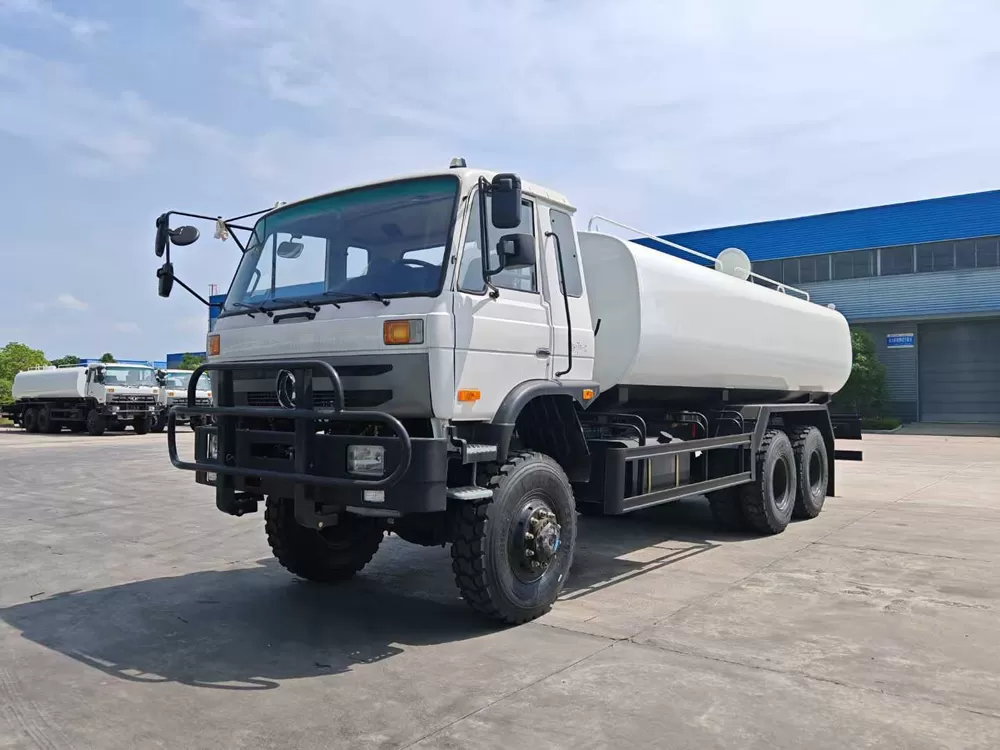
During the summer months in the Middle East desert, extreme air temperatures routinely exceed 45°C, with ground surface temperatures often soaring above 60°C. Prolonged exposure to such intense heat—compounded by persistent, abrasive sandstorms—constitutes the primary cause of wear and tear on water sprinkler trucks; consequently, resistance to these environmental stressors stands as the foremost criterion for vehicle selection.
Regarding the powertrain and core components, priority must be given to selecting "engineering-grade" reinforced cooling systems. This entails enlarging the surface area of the water tank radiator, upgrading to high-temperature-resistant hydraulic fluids, and utilizing flame-retardant, anti-aging hoses and sealing strips to prevent hose ruptures, hydraulic system failures, and engine overheating shutdowns under extreme heat. Furthermore, the entire vehicle structure must incorporate a fully sealed, dust-proof design. Critical areas—such as the engine compartment, electronic control systems, braking systems, and air storage tanks—must be equipped with multi-stage dust filtration mechanisms and protective sealing kits to effectively block the ingress of fine sand particles, thereby preventing abrasive wear on gears, bearings, and electronic components. Furthermore, the exterior paintwork and the surface of the tank body must feature specialized coatings that are resistant to UV radiation and intense sunlight. This serves to retard aging, fading, and cracking caused by prolonged sun exposure, thereby meeting the operational demands of engineering projects that involve long-term outdoor parking and all-weather operation in desert environments, while significantly reducing equipment failure rates and maintenance costs.
Engine Power and Cooling Capacity: In high-temperature environments, the engine cooling system must be highly efficient and reliable to prevent overheating and subsequent shutdowns. It is recommended to select models equipped with oversized radiators, dual-fan systems, or enhanced air-cooling mechanisms.
Fuel Adaptability: In certain desert regions, fuel quality can be inconsistent; therefore, diesel engines must be capable of operating on lower-grade fuels. Additionally, they should be equipped with robust fuel filtration systems to prevent the ingress of sand and dust into the engine.
Dust Protection Design: The engine air intake and air filter housing should be fitted with high-efficiency dust filtration elements. These components ensure adequate airflow while effectively blocking sand and dust particles, thereby extending the operational lifespan of the engine.
The deserts of the Middle East are not merely environments of pure sand; they encompass vast tracts of saline-alkaline soil, inland saltwater lakes, and coastal zones subject to saline mist dispersion. Coupled with the high salinity and alkalinity of local water sources, conventional carbon steel tanks are highly susceptible to internal corrosion, perforation, and leakage—issues that drastically shorten the equipment's service life.
When making a purchase, one should avoid standard, basic carbon steel tanks. Instead, priority should be given to engineering-grade configurations featuring aluminum alloy tanks, fiberglass-reinforced plastic (FRP) anti-corrosion tanks, or thickened carbon steel tanks treated with a dual-layer anti-corrosion coating. These materials possess superior resistance to acids, alkalis, salt corrosion, and oxidation, making them suitable for the long-term storage and transport of highly saline and alkaline water. Furthermore, given the severe bumps and vibrations characteristic of desert road conditions, the tank body should be reinforced with internal baffle plates and constructed using thicker steel plates. This enhances overall structural integrity, preventing tank deformation and weld seam cracking during transit. Finally, considering the scarcity of water replenishment points in these regions, priority may be given to custom-built, large-capacity tanks to minimize the frequency of refueling stops and enhance continuous operational capabilities.
Operational scenarios in the Middle Eastern deserts typically involve soft sand and gravel surfaces, dirt tracks, and rugged, unpaved roads within mining zones. Standard urban water sprinklers—which feature lightweight chassis designs—are ill-equipped to handle loose sand and complex road conditions; consequently, they are prone to issues such as getting stuck, chassis scraping, and suspension failure.
When selecting a chassis, it is imperative to base the choice on a heavy-duty, engineering-grade off-road platform, with a primary focus on three key parameters:
First: Increased ground clearance, coupled with a reinforced off-road suspension and shock absorption system, to withstand the impact of gravel and rough terrain.
Second: Priority given to features such as selectable four-wheel drive, differential locks, and large-tread off-road/sand tires to enhance traction on sandy surfaces and improve vehicle recovery capabilities.
Third: The use of heavy-duty axles and a thickened frame (chassis beams) to meet the structural strength requirements for sustained heavy-load transport and long-distance field operations.
Unlike standard municipal water sprinklers, the "Desert Engineering Edition" water sprinkler must strike a balance between load-bearing capacity and off-road capability, ensuring it is fully adapted for routine operations in remote and complex environments—such as oil fields, mining sites, and remote infrastructure construction zones.
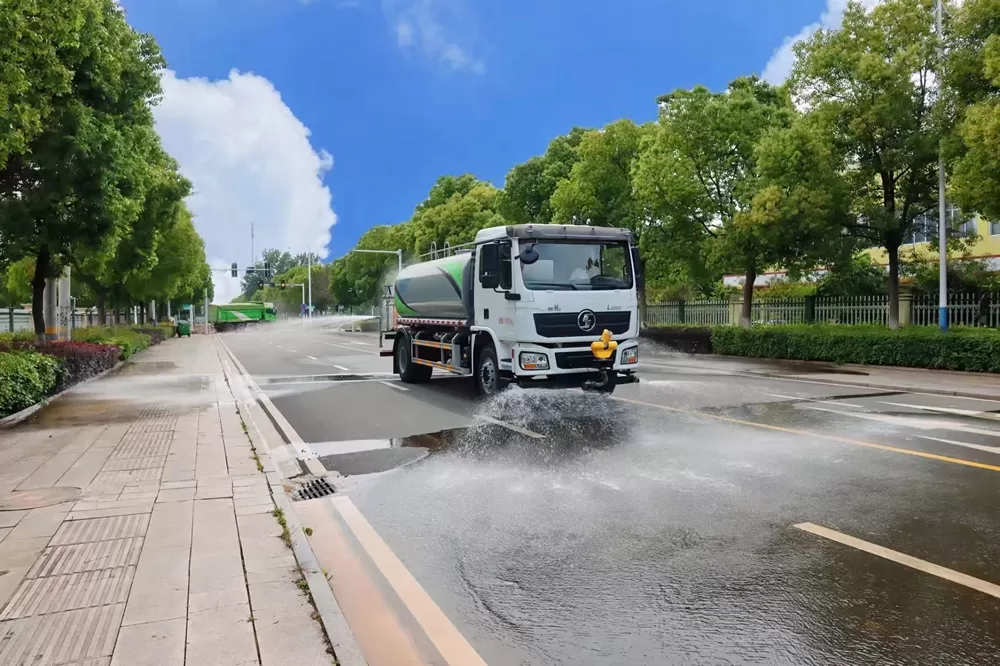
Water scarcity constitutes the most critical constraint on development within the Middle Eastern desert regions. Inefficient, indiscriminate water-sprinkling practices not only waste precious resources but also drive up water consumption costs and place added strain on water replenishment logistics. Consequently, prioritizing water-efficient and multi-functional operational systems is a pivotal factor in vehicle selection.
A high-quality, desert-specific water sprinkler must be equipped with a multi-mode intelligent spraying system. This system should support various operational modes—including high-pressure mist cannon dust suppression, low-pressure road watering, precision landscaping misting, and targeted humidification—allowing for flexible adjustments to water flow volume, spray range, and atomization intensity based on dust concentration levels and specific operational contexts. The high-pressure misting mode for dust suppression is particularly effective, achieving efficient dust control with significantly less water, thereby resulting in substantial water savings. Furthermore, the vehicle is equipped with features such as an intelligent electronic control system, real-time liquid level monitoring, and automatic start-stop controls to minimize operational losses caused by human error. The piping and valves utilize engineering-grade components designed to resist sand clogging and facilitate easy cleaning, thereby preventing sand and dust from obstructing nozzles and pipelines. This ensures stable water discharge even in harsh environments, effectively balancing operational performance with the requirements for water conservation and environmental protection.
Spraying Modes: A combination of front, rear, and side-mounted spray nozzles allows for multi-purpose applications, including road dust suppression, landscape irrigation, and operations at construction sites.
Pump and Piping: The system features a high-temperature-resistant, high-flow pump unit, while the piping is constructed from UV-resistant and corrosion-resistant materials to minimize wear and tear during prolonged operation.
Adjustable Spray Distance: The spray distance can be adjusted to compensate for strong winds, ensuring that the water mist effectively covers the target area without being dispersed by the wind.
In certain parts of the Middle East, fuel quality can be inconsistent; moreover, field operations often involve long distances and widely dispersed maintenance centers. Consequently, the stability of the vehicle's powertrain and the convenience of subsequent maintenance directly determine the efficiency of engineering operations.
Powertrain: The vehicle must be equipped with a high-horsepower, high-torque, engineering-specific engine capable of operating on lower-grade fuels. This is paired with a high-temperature-resistant cooling system and wear-resistant transmission components to ensure continuous operation under high temperatures and heavy loads without stalling or experiencing power degradation. The vehicle's entire electrical wiring, connectors, and electronic components undergo special treatments—including moisture-proofing, sand-proofing, and corrosion resistance—to minimize the probability of electrical failures in complex field environments.
Post-Sale Operations and Maintenance: Priority is given to vehicle models featuring high parts commonality, as well as established local spare parts supply chains and after-sales service networks within the Middle East region. The structural design of wear-and-tear parts is simplified, and preference is given to durable, easy-to-replace standard components. This approach reduces waiting times for repairs over long distances, minimizes downtime losses during field engineering operations, and enhances the overall cost-effectiveness of the equipment throughout its entire lifecycle.
Ease of Maintenance: The layout of the engine, pump assembly, and piping is designed to facilitate easy inspection and filter replacement, thereby minimizing downtime.
Durable Components: Priority is given to selecting piping, valves, and pump assemblies that are highly resistant to both high temperatures and abrasive wear.
Local Parts Support: Prior to procurement, it is essential to verify that the local supply chain can provide critical spare parts in a timely manner to ensure the vehicle's long-term reliability and operational continuity.
The core logic behind selecting water sprinklers for the Middle East's desert regions is to de-emphasize urban commuting capabilities while prioritizing off-road engineering performance, adaptability to extreme environments, and resource efficiency. Five key factors—high-temperature dust suppression, corrosion-resistant tanks, off-road chassis, water-saving systems, and stable power coupled with maintenance compatibility—are interconnected and indispensable; the absence of any one renders the others ineffective.
Engineering firms and procurement entities must tailor vehicle configurations to their specific operational scenarios—such as dust suppression in mining areas, oilfield operations and maintenance, municipal landscaping, and road construction projects—to address their distinct requirements. By doing so, they can enhance equipment durability and reduce operational and maintenance costs while simultaneously meeting operational standards. Ultimately, this ensures that water sprinklers are optimally adapted to the extreme working conditions of the Middle East's deserts, thereby providing reliable equipment support for regional engineering construction and ecological environment management.

