
As a critical piece of engineering equipment in fields such as urban sanitation, landscaping, and road maintenance, the stability of a sprinkler truck's water pump system directly determines the overall vehicle's operational efficiency and service life. Through years of practical field maintenance experience, I have observed that approximately 70% of sprinkler truck malfunctions are related to the water pump system; furthermore, the majority of these issues could be prevented—or quickly resolved—through standardized routine maintenance and proper troubleshooting procedures.
This article provides a systematic overview of key points regarding routine maintenance for sprinkler truck water pumps, as well as methods for diagnosing and resolving common malfunctions. Its aim is to assist operators and maintenance technicians in enhancing their equipment management capabilities, reducing failure rates, and extending the service life of their equipment.
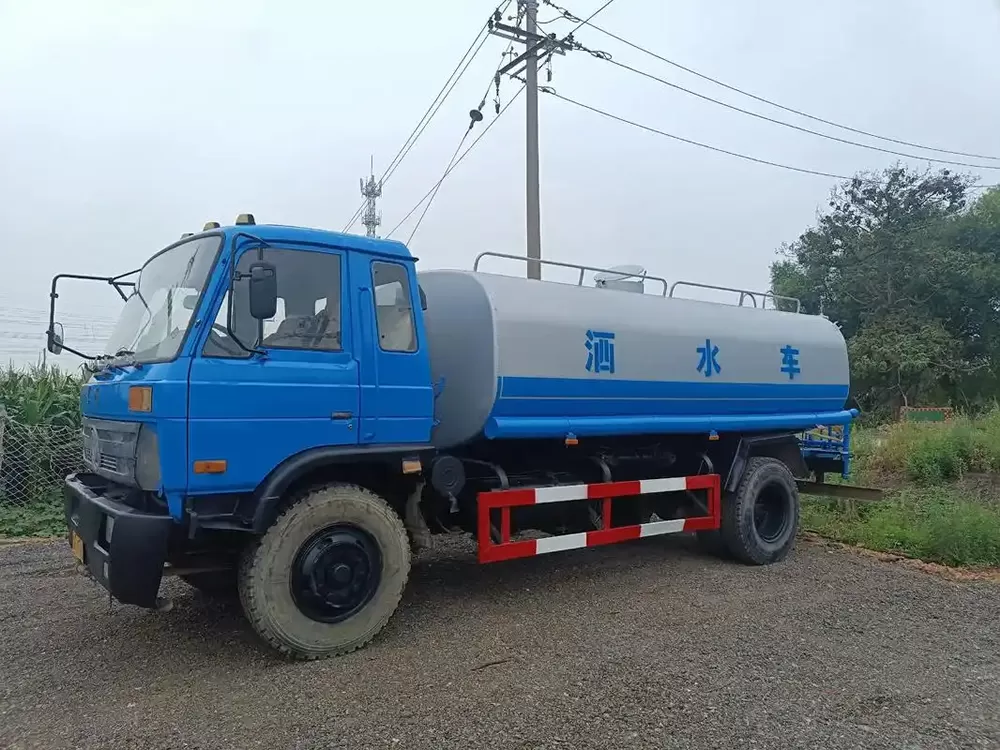
1.1 Pump Types and Structure
Currently, sprinkler trucks manufactured in China are primarily equipped with two types of water pumps:
1.1.1 Centrifugal Sprinkler Pump (mainly models such as 80QZ60/90, 65QZ50/110, etc.)
Adopts a single-stage, single-suction centrifugal pump structure.
Rated Flow: 60–90 m³/h
Rated Head: 90–110 m
Required Power: 22–30 kW
1.1.2 Self-priming Sprinkler Pump
Features a self-priming function, with a suction lift reaching 6–8 meters.
Does not require manual priming (filling with water) before each operation, making operation more convenient.
Suitable for operational scenarios where the water source is located at a considerable distance.
1.1.3 Composition of Key Components
|
Component Name |
Function Description |
fragility |
|
impeller |
The core working component generates centrifugal force. |
★★★★☆ |
|
mechanical seal |
Prevent liquid leakage |
★★★★★ |
|
bearings |
Support rotor rotation |
★★★★☆ |
|
Pump casing/pump body |
It accommodates the impeller and forms the flow channel. |
★★☆☆☆ |
|
Suction pipe |
Connect water source and pump inlet |
★★★☆☆ |
|
power take-off |
Transmitting power to the water pump |
★★★☆☆ |
2.1 Immediate Post-Operation Inspection (Mandatory after every operation)
2.1.1 Piping System Inspection
A. Drain Residual Water: Upon completion of operations, the pump drain valve (or pressure relief valve) must be opened to thoroughly drain all residual water from the pump body and piping.
This is particularly critical after winter operations to prevent freezing and cracking.
Operation Location: The drain plug at the bottom of the pump or a dedicated drain valve.
B. Inspect All Connection Points
Check whether the suction pipe and discharge pipe joints are loose.
Inspect the O-rings (seals) on the quick-release couplings to ensure they are intact.
Verify that the strainer/filter screen is free of damage or clogging.
2.1.2 Sealing Component Inspection
Observe the mechanical seal area for any signs of seepage (a minor amount of seepage is permissible; however, active dripping is not).
Check the leakage rate at the stuffing box (if a packing seal is used); adjust the gland bolts as necessary.
Check the oil seals for any signs of oil leakage.
2.1.3 Drive System Inspection
Verify that the Power Take-Off (PTO) connection is secure and functioning normally.
Confirm that the universal joints on the drive shaft are not loose.
Listen for any abnormal noises during operation.
2.2 Periodic Maintenance (Based on operating hours or calendar intervals)
2.2.1 Daily Maintenance (Before/After daily operations)
|
Inspection items |
Inspection points |
processing method |
|
Liquid storage inspection |
Is the liquid level in the pump sufficient? |
Add water if needed |
|
Filter cleaning |
Is there any debris in the inlet filter? |
Remove debris and replace if necessary. |
|
Visual inspection |
Are there any obvious damages to the pump body and pipelines? |
Repair or replace promptly |
|
Fastener Inspection |
Are the bolts in each part loose? |
Tighten to the specified torque. |
2.2.2 Weekly Maintenance
A. Bearing Lubrication Inspection
Check the oil level in the bearing housing (if grease-lubricated, check the bearing temperature).
Replenish or replace the grease.
Recommended grease: Lithium-based grease (ZL-2).
B. Mechanical Seal Inspection
Conduct a detailed inspection of the wear on the mechanical seal's rotating and stationary rings.
Clean the sealing surfaces and remove any accumulated deposits.
If severe wear or cracks are detected, replace the seal immediately.
2.2.3 Monthly Maintenance
A. Impeller Inspection
Remove and inspect the impeller; clear away any entangled debris (plastic bags, cloth strips, etc.).
Check the impeller blades for signs of wear, corrosion, or deformation.
Measure the clearance between the impeller and the pump casing (standard value is typically 0.5–1.0 mm).
B. Sealing Ring Inspection
Check the clearance between the impeller sealing ring and the pump body sealing ring.
If the clearance is excessive (exceeding 2 mm), the sealing rings should be replaced.
Check the sealing rings for any cracks or severe wear.
C. Drive Component Maintenance
Check the bearings on the drive shaft for signs of wear.
Lubricate the PTO (Power Take-Off) shift fork and its connecting points.
Check the tension of the drive belts (if belt-driven).
2.2.4 Seasonal Maintenance
Summer (High-Temperature Period) Maintenance:
Intensify inspections of the cooling system to prevent high temperatures from causing seal degradation.
Monitor for any changes in the leakage rate of the mechanical seal.
Periodically clean dust and debris from the exterior of the pump body.
Winter (Low-Temperature Period) Maintenance:
After operation, the pump body and associated piping must be thoroughly drained of all residual water.
For vehicles that will be out of service for an extended period, it is recommended to remove the water pump and store it indoors.
Check the integrity of the drain valve seal to prevent freezing.
3.1 Fault 1: Water Pump Fails to Self-Prime or Experiences Difficulty Priming
Fault Symptoms:
Failure to establish a vacuum within a reasonable time after startup.
Excessively long priming time, resulting in significantly reduced efficiency.
Failure to draw water, or severely insufficient water intake volume.
Cause Analysis and Troubleshooting Methods:
|
Serial Number |
Possible reasons |
Inspection methods |
Exclusion measures |
|
1 |
Insufficient liquid storage in the pump or lack of priming water |
Open the water inlet to check. |
Add the storage liquid to the specified level. |
|
2 |
Air leakage in the suction line |
Visually inspect the connectors and test them with soapy water. |
Tighten the connector and replace the gasket. |
|
3 |
Inhalation tubing too long or inhalation too high |
Measure the actual suction head |
Shorten the pipeline or reduce the suction head (≤6 meters). |
|
4 |
Clogged water inlet filter |
Disassembly and inspection of filter screen |
Remove debris and clean regularly. |
|
5 |
Impeller damage or blockage |
Pump disassembly and inspection |
Remove tangled material or replace impeller |
|
6 |
Too low speed |
Check engine speed/power take-off ratio |
Adjust to rated speed |
|
7 |
Mechanical seal leaking severely |
Observe the leakage at the seal. |
Replace mechanical seal assembly |
Maintenance Engineer's Tip:
When using a self-priming pump for the first time—or after it has been out of service for an extended period—it is mandatory to first add "priming water" (initial fill). When adding priming water, observe the following precautions: the centerline of the quick-release coupling must be positioned higher than the centerline of the pump shaft, and all pipeline connections must be tightly sealed.
3.2 Fault 2: Insufficient Outlet Pressure
Symptoms:
Spray distance is significantly reduced
Atomization quality deteriorates; water is discharged as a solid stream rather than a fine mist
Water flow lacks force during high-level spraying operations
Cause Analysis and Troubleshooting:
|
Serial Number |
Possible reasons |
Inspection methods |
Exclusion measures |
|
1 |
Insufficient liquid storage in the pump or lack of priming water |
Open the water inlet to check. |
Add the storage liquid to the specified level. |
|
2 |
Air leakage in the suction line |
Visually inspect the connectors and test them with soapy water. |
Tighten the connector and replace the gasket. |
|
3 |
Inhalation tubing too long or inhalation too high |
Measure the actual suction head |
Shorten the pipeline or reduce the suction head (≤6 meters). |
|
4 |
Clogged water inlet filter |
Disassembly and inspection of filter screen |
Remove debris and clean regularly. |
|
5 |
Impeller damage or blockage |
Pump disassembly and inspection |
Remove tangled material or replace impeller |
|
6 |
Too low speed |
Check engine speed/power take-off ratio |
Adjust to rated speed |
|
7 |
Mechanical seal leaking severely |
Observe the leakage at the seal. |
Replace mechanical seal assembly |
Maintenance Engineer's Tip:
For every 0.1 mm increase in the clearance of the wear rings, the water pump's efficiency decreases by approximately 2%. If the wear ring clearance exceeds the standard limit by a factor of two (i.e., is double the standard value), immediate replacement is recommended; otherwise, this will not only result in fuel waste but also accelerate impeller wear.
3.3 Fault 3: Abnormal Vibration and Noise from the Water Pump
Symptoms:
Severe vibration occurs during operation
Emits a "humming" sound, metallic grinding noises, or cavitation noise
Associated piping resonates in conjunction with the pump
Cause Analysis and Troubleshooting:
|
Serial Number |
Possible reasons |
Inspection methods |
Exclusion measures |
|
1 |
The base is not installed securely |
Check anchor bolts |
Tighten bolts, and add washers if necessary. |
|
2 |
Cavitation phenomenon (insufficient water intake) |
Observe the inhalation vacuum and listen to the sound. |
Check the filter, reduce the suction head, and improve the inlet water conditions. |
|
3 |
Bearing wear |
Disassemble and inspect the bearings, check the clearance. |
Replace bearing |
|
4 |
There is debris inside the pump or the impeller is stuck. |
Pump disassembly and inspection |
Remove debris and calibrate the impeller. |
|
5 |
The pump shaft and the power unit shaft are not coaxial. |
Use a dial indicator to check coaxiality. |
Adjust coaxiality (≤0.1mm) |
|
6 |
Impeller imbalance |
Perform dynamic balancing test |
Rebalance or replace the impeller |
Maintenance Engineer's Tip:
Cavitation is the "silent killer" of water pumps. Mild cavitation manifests as increased noise, while severe cavitation can cause the impeller to become perforated and rendered irreparable within a very short period. As soon as any signs of cavitation are detected, the unit must be shut down immediately for inspection.
3.4 Fault 4: Mechanical Seal Leakage
Fault Symptoms:
Severe dripping at the seal location
Water ingress into the bearing housing
Emulsification and deterioration of the lubricating oil
Fault Classification and Remedial Actions:
Minor Seepage (a few drops per minute):
Considered normal; no immediate action required.
However, monitor closely to check for any worsening of the condition.
Moderate Leakage (continuous stream/trickle):
Inspect the sealing faces for impurities.
If leakage persists after cleaning, replace the mechanical seal.
Severe Leakage (jet-like spray):
Immediately shut down the equipment and replace the mechanical seal.
Inspect the shaft sleeve for wear.
Inspect the seal spring for failure.
Key Points for Mechanical Seal Replacement:
A. During disassembly, take care to protect the sealing faces to prevent scratches.
B. Inspect the sealing faces of both the rotating and stationary rings for cracks or wear grooves.
C. Replace the O-rings (must use materials resistant to both water and oil).
D. Maintain cleanliness during installation; apply a small amount of grease to facilitate assembly.
E. Before the initial startup, manually rotate the shaft to confirm there is no binding or seizing.
3.5 Fault 5: PTO and Transmission Faults
Fault Symptoms:
Failure to engage the Power Take-Off (PTO), or difficulty shifting gears.
Abnormal noises in the transmission system.
Intermittent operation of the water pump (starting and stopping).
Cause Analysis and Troubleshooting Methods:
|
Serial Number |
Possible reasons |
Inspection methods |
Exclusion measures |
|
1 |
The base is not installed securely |
Check anchor bolts |
Tighten bolts, and add washers if necessary. |
|
2 |
Cavitation phenomenon (insufficient water intake) |
Observe the inhalation vacuum and listen to the sound. |
Check the filter, reduce the suction head, and improve the inlet water conditions. |
|
3 |
Bearing wear |
Disassemble and inspect the bearings, check the clearance. |
Replace bearing |
|
4 |
There is debris inside the pump or the impeller is stuck. |
Pump disassembly and inspection |
Remove debris and calibrate the impeller. |
|
5 |
The pump shaft and the power unit shaft are not coaxial. |
Use a dial indicator to check coaxiality. |
Adjust coaxiality (≤0.1mm) |
|
6 |
Impeller imbalance |
Perform dynamic balancing test |
Rebalance or replace the impeller |
Case 1: Winter Freeze-Cracking Incident
Fault Symptoms: Upon resuming operations in the spring, cracks were discovered in the water pump casing, resulting in severe water leakage.
Fault Cause: After winter operations, residual water was not thoroughly drained from the pump; subsequent freezing and expansion caused the pump casing to crack.
Remedial Measures:
A. Replace the entire pump casing assembly.
B. Inspect other components—such as the impeller and seals—for damage.
C. Provide training to operators regarding proper winter maintenance procedures.
Preventive Recommendations:
The drain valve must be opened to drain water after every operation.
In northern regions, it is recommended to add antifreeze or install an electric heating device.
If the equipment is to remain idle for an extended period, the water pump should be removed and stored indoors.
Case 2: Impeller Scrapping Due to Cavitation
Fault Symptoms: Three months after installing a new water pump, the discharge pressure dropped abruptly; upon disassembly and inspection, honeycomb-like pitting was discovered on the impeller blades. Cause of Failure: Significant fluctuations in the water level at the intake point frequently cause the suction lift to exceed 6 meters. This, combined with a partially clogged intake strainer, has resulted in prolonged operation under cavitation conditions.
Corrective Actions:
Replace the impeller assembly (estimated cost: approx. 2,000 RMB).
Replace the intake strainer with one featuring a larger mesh size.
Adjust operating procedures to avoid high-flow water intake when water levels are low.
Maintenance Engineer's Tip:
Cavitation damage is cumulative; initially, it may manifest only as minor noise, but the damage will progressively worsen. It is recommended to install a vacuum/pressure gauge on the suction line to monitor intake conditions in real-time.
5.1 List of Common Wear Parts
|
Name of vulnerable parts |
Applicable models |
Recommended replacement cycle |
Reference Price (RMB) |
|
mechanical seal |
80QZ60/90 |
6-12 months |
80-150 |
|
mechanical seal |
65QZ50/110 |
6-12 months |
60-120 |
|
Bearing (sleeve) |
Various models |
12-18 months |
50-100 |
|
impeller |
Various models |
24-36 months |
300-600 |
|
mouth ring (sleeve) |
Various models |
12-18 months |
80-150 |
|
oil seal |
Various models |
6-12 months |
20-40 |
|
drain valve |
Various models |
As needed |
30-60 |
5.2 Spare Parts Stocking Recommendations
Recommended to carry on the vehicle:
Mechanical Seal: 1 set (most frequently required)
O-rings: 2–3 pieces of each common size
Bearings: 1 set (for emergency use)
Impeller Bolts: Several pieces
Recommended to stock at the maintenance facility:
Complete sets of seals, bearings, and impellers
Pump casing, pump cover, and other housing components
6.1 Maintenance Safety Protocols
A. Shutdown for Maintenance: All maintenance tasks must be performed only after the engine has been shut off and the Power Take-Off (PTO) has been disengaged.
B. Pressure Relief: Before performing maintenance, the drain valve must be opened to relieve pressure and prevent high-pressure water spray.
C. High-Temperature Protection: Do not directly touch the water pump or piping while the engine is hot.
D. Rotating Components: When inspecting transmission components, ensure that the PTO is completely disengaged.
6.2 Warnings Regarding Common Hazardous Operations
|
Dangerous operation |
Possible consequences |
Correct approach |
|
Close the inlet valve when drawing water. |
Cavitation damage to impeller |
Keep the water inlet unobstructed |
|
Running dry for more than 1 minute |
Mechanical seal burnout |
Ensure there is water in the pump or stop the pump immediately. |
|
Storage without drainage in winter |
Pump casing cracked due to freezing |
Drain thoroughly after each operation |
|
Operating above rated speed |
bearing overheating failure |
Run at the specified speed |
|
|
Recurrence of leakage in the short term |
Use genuine or high-quality parts |
The reliable operation of a sprinkler truck's water pump system depends on standardized routine maintenance and timely troubleshooting. As a maintenance engineer with many years of experience in the field, I have come to deeply appreciate that the cost of preventive maintenance is far lower than that of reactive repairs. I hope that the maintenance protocols and troubleshooting methods outlined in this article will serve as a practical reference for the many users and technicians of sprinkler trucks.
Finally, I recommend that all operating units establish comprehensive equipment maintenance records—documenting every maintenance activity, component replacement, and troubleshooting resolution—to enable continuous optimization of maintenance strategies through data analysis, thereby achieving refined lifecycle management of the equipment. Technical Consultation and Exchange:
If you encounter specific technical issues during actual operation that are not covered in this article, you are encouraged to consult and exchange insights with technical professionals within the industry. The technology behind sprinkler trucks is evolving rapidly; continuous learning and the sharing of experience remain the most effective means of enhancing maintenance proficiency.
Appendix: Reference Table of Common Sprinkler Pump Models and Specifications
|
model |
Flow rate (m³/h) |
Head (m) |
Input shaft speed (r/min) |
Shaft power (kW) |
Self-priming height (m) |
|
80QZ60/90 |
60 |
90 |
1180 |
22.5 |
6.5 |
|
65QZ50/110 |
50 |
110 |
1180 |
twenty four |
6.5 |
|
65QZ40/50 |
40 |
50 |
1450 |
9.25 |
6.5 |
|
65QZ40/45 |
40 |
45 |
1450 |
9.25 |
6.5 |
The parameters listed above are provided for reference purposes only; please refer to the manufacturer's technical manuals for definitive specifications.

