
Lawn mowers are indispensable power machines in landscaping and lawn maintenance. Their core working components include the cutting disc and blades (responsible for actually cutting the grass) and the power transmission system (responsible for transmitting power from the engine/motor to the cutting disc).
During daily mowing operations, the engine or motor transmits power to the cutting disc via belts, gears, or a hydraulic system, causing the blades mounted on the disc to rotate at high speed to cut the grass. The cutting disc system includes blades, the cutting disc spindle, and the cutting disc cover; the power transmission system includes belts, couplings, drive shafts, and speed-changing components (such as gearboxes or hydraulic motors). Both systems work together to ensure mowing efficiency and overall machine stability.
After daily operation, these two systems often experience the most direct impact and wear; therefore, scientific and meticulous maintenance is crucial.
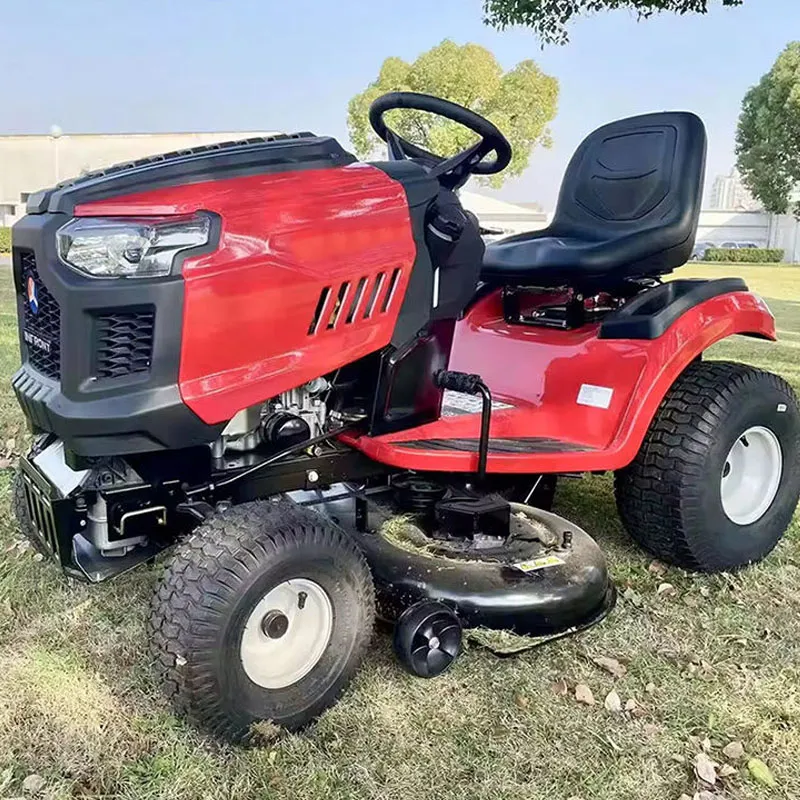
1.1 Cleaning Residue from the Cutter Head and Blades
After each mowing operation, grass clippings, dirt, and wet grass juice adhere to the cutter head and blades. If these residues accumulate over time, they will reduce blade cutting efficiency, increase irregular friction, and even cause blade corrosion or jamming. Therefore:
Use a stiff-bristled brush or plastic scraper to remove grass clippings from the top and bottom of the cutter head.
Avoid touching sharp blades directly with your hands. If rinsing with water is necessary, always disconnect the power or turn off the engine first.
After cleaning, wipe dry with a clean cloth to prevent moisture from causing rust.
Inspect the blades for curling, nicks, cracks, or bending. Blades worn more than 30% of their original thickness or with nicks ≥3mm must be replaced in pairs (for rotary cutter heads, replacement must be symmetrical to avoid imbalance).
1.2 Sharpening and Inspecting the Blades
The sharpness of the blades directly determines the cutting quality. Dull or chipped blades not only result in poor mowing performance but also create additional load on the blade disc and drive system due to uneven cutting.
Sharpen blades approximately every 20–25 hours of use or within a season, or more frequently depending on grass conditions.
After sharpening, perform a balance check to ensure even weight distribution; otherwise, vibration may be introduced, damaging bearings and belts.
If the blades show significant bending or cracking, replace them immediately rather than simply sharpening them.
Good blade condition not only improves mowing performance but also effectively reduces vibration and wear on the power system.
1.3 Disassembly and Installation Procedures
Disconnect the power supply or pull out the spark plug high-voltage wire;
Use a wrench to tighten the blade shaft, loosening the center bolt counterclockwise (most are left-hand threads);
Remove the old blades and inspect the blade shaft keyway and bearing housing for wear;
When installing new blades, ensure the cutting edge is facing down and the marked side is facing outwards. After pre-tightening the bolts, use a torque wrench to tighten to 20–25 Nm.
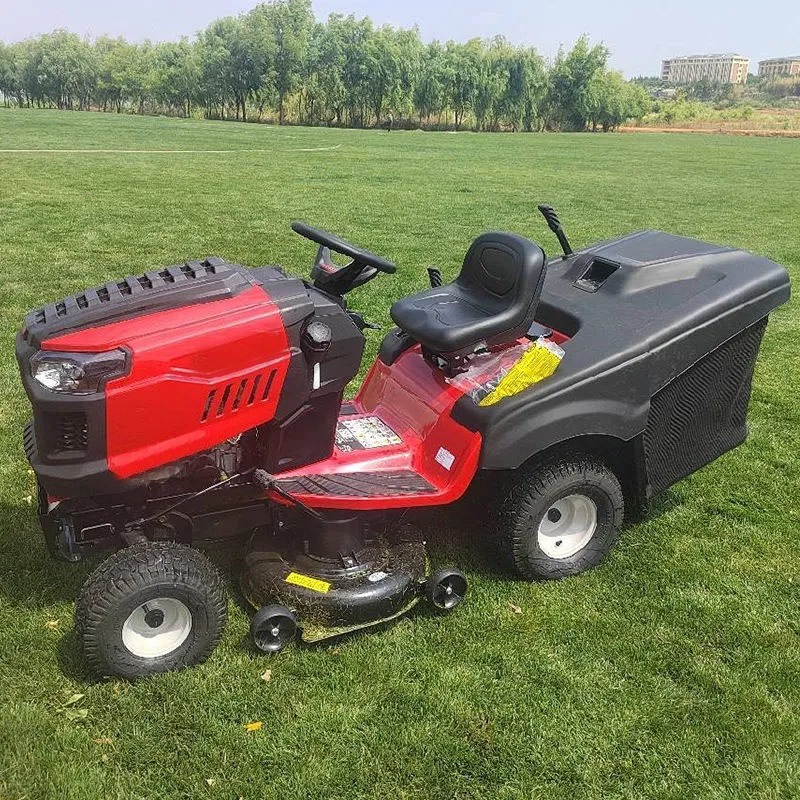
The power transmission system is responsible for safely and stably transmitting power from the engine/motor to the cutter head. This system typically consists of belts, couplings, a transmission mechanism, and bearings.
2.1 Cleaning and Inspecting Transmission Components
After operation, grass clippings and dirt can enter the transmission area, especially between the belt and pulleys. These foreign objects can cause belt slippage and impaired power transmission.
Use an air gun or soft brush to remove debris from the transmission area.
Inspect the belt for cracks, wear, hardened rubber, etc.; replace it immediately if found.
Inspect the tensioner and guide pulleys to ensure there is no abnormal wear or jamming.
Some modern lawnmowers also use hydraulic or gear transmission mechanisms; refer to the specific equipment manual to check each lubrication point.
2.2 Checking Tension and Lubrication
If the drive belt tension is too loose, it will slip and reduce efficiency; if the tension is too tight, it will increase the load on the bearings. The tension should be adjusted according to the equipment manual's specifications. A common practice is:
When pressing the middle of the belt with your finger, it should have a slight elasticity, but should not sink excessively.
Check that the tensioning mechanism and automatic tensioner are functioning properly.
In addition, the transmission bearings and related rolling parts also need regular lubrication to prevent dry friction from accelerating wear.
2.3 Hydraulic/Gear Transmission Inspection
For high-end models with hydraulic transmission systems, it is also necessary to check the hydraulic oil level, temperature, and quality, and change the hydraulic oil and filter regularly. The transmission gearbox should have its lubricating oil changed according to the manufacturer's specifications.
|
Components |
Inspection items |
Maintenance methods |
Maintenance cycle |
|
Drive belt |
Cracks, aging, wear, delamination |
Press down with your thumb; the standard tension is 10–15 mm. Too loose and it will slip, too tight and it will accelerate bearing wear. |
Check every 10–15 hours and replace every 50 hours. |
|
Clutch release bearing |
Stuck, abnormal noise, overheating |
After disassembly, clean with diesel fuel, immerse in calcium-based grease heated to 60°Cto penetrate, and reassemble after cooling. |
Pre-operation maintenance |
|
Gearbox |
Oil leak, blackened oil, increased noise |
Use 75W-90 gear oil, and fill it to the center line of the oil level gauge through the grease fitting; do not mix with engine oil. |
Replenish every 25 hours, replace completely every 100 hours. |
|
Drive shaft and coupling |
Axial movement, loose bolts |
Check the universal joint cross shaft clearance and apply high-temperature lithium-based grease; tighten all connecting bolts to the rated torque. |
Check every 10 hours and lubricate every 30 hours. |
|
project |
electric lawnmower |
Gasoline lawnmower |
|
Blade replacement |
Every 80–100 hours |
Every 50–70 hours |
|
Drive belt replacement |
Every 120 hours |
Every 50 hours |
|
Bearing lubrication |
Every 40 hours |
Every 25 hours |
|
Oil change |
not applicable |
Every 25 hours or every quarter |
|
Air filter cleaning |
Blow ash every 10 hours |
Clean every 5 hours and replace every 25 hours. |
|
Battery maintenance |
Check the voltage monthly to prevent deep discharge. |
not applicable |
|
Long-term storage (>30 days) |
Charge to 80%, then disconnect the negative terminal. |
Empty the fuel tank, dry the carburetor, and spray with rust inhibitor. |
In maintenance practice, we often see some unscientific practices:
Using a high-pressure water gun to directly wash the transmission and bearing parts (this will wash away the grease, leading to insufficient lubrication and accelerated wear).
Ignoring blade balance and only pursuing sharpness may actually cause more serious vibration problems.
The maintenance frequency should not be adjusted according to the actual workload (the frequency of inspections after each mowing session should be flexibly adjusted based on the difficulty and workload of the task).
A correct maintenance strategy should be based on preventative maintenance rather than repairing after a malfunction occurs.
The blade and power transmission system of a lawnmower are key components of the equipment's operation. Thorough inspection, cleaning, and maintenance after daily operations can not only improve mowing efficiency but also significantly extend the equipment's lifespan.

