
Spider cranes, known for their compact size, maneuverability, and ability to operate stably in confined spaces, are widely used in construction, assembly, and industrial maintenance. Unlike traditional large cranes, the core stability system of a spider crane consists of its hydraulic outriggers and the hydraulic cylinders that drive their movements. These components are subjected to high loads and frequent reciprocating motion during load bearing and adjustment, therefore, scientific and meticulous maintenance is fundamental to ensuring operational safety and equipment lifespan.
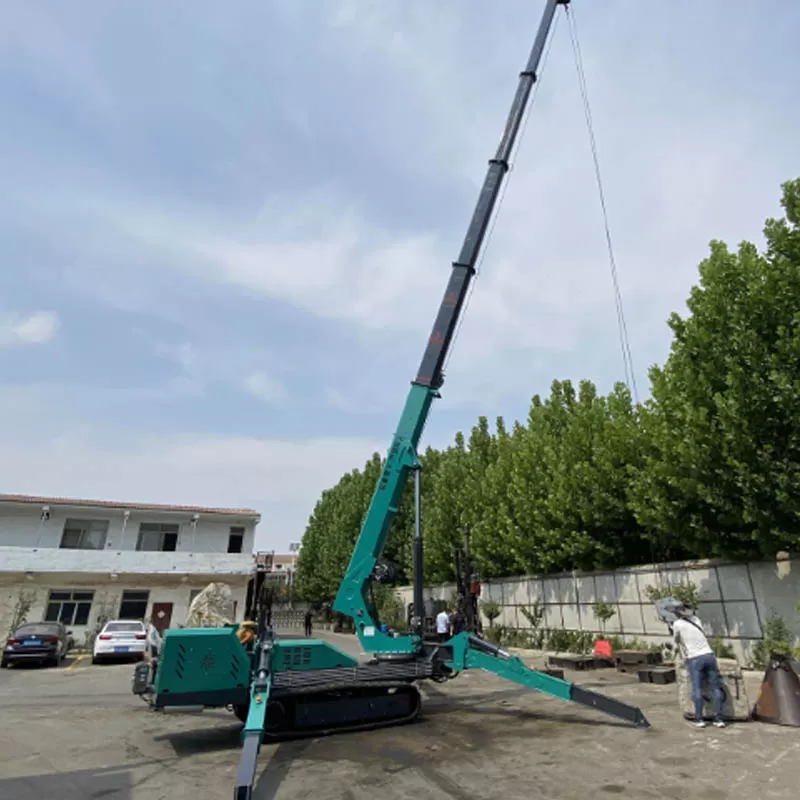
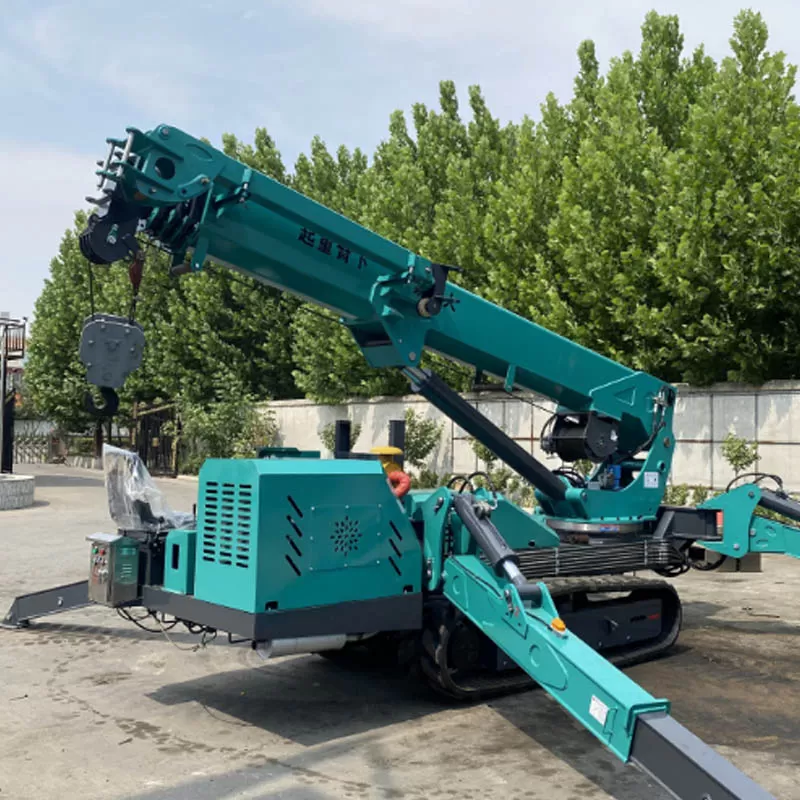
The outrigger system typically consists of four independent hydraulic outriggers, driven by hydraulic cylinders to extend or retract, providing stable support and horizontal adjustment. The hydraulic cylinder is the core actuator of this system, responsible for converting the energy of the hydraulic system into mechanical thrust, ensuring reliable positioning of the outriggers on uneven ground.
These hydraulic cylinders are present in both the outrigger system and the boom extension and slewing mechanisms, serving as the power source for precise control of the spider crane. Therefore:
The stability of the outriggers determines the safety limits of the entire crane; the condition of the hydraulic cylinders directly affects the speed of movement, balance, and response accuracy. These two types of components require special attention to lubrication, cleaning, leak inspection, and monitoring of the hydraulic system's health.
2.1 Cleaning and Surface Protection
After each daily operation, the outrigger structure should be thoroughly cleaned. Accumulation of dirt, dust, grit, and chemical contaminants can form abrasive media on metal moving surfaces and welds, promoting corrosion and accelerating wear. Especially after rain, snow, or humid weather, accumulated water may cause localized corrosion; therefore, it should be dried promptly, and the surface should be checked for signs of rust.
2.2 Lubrication and Maintenance of Moving Connections
The outrigger arm sections, hinge pins, and any rolling or sliding contact points must be lubricated according to the manufacturer's recommended schedule. The choice of lubricant should consider both pressure resistance and water resistance; in winter, low-temperature lubricants can be used to prevent freezing. Poor lubrication can lead to movement blockage and even accelerated hinge wear. Lubrication is not just about "applying grease"; it's crucial to ensure that old grease is thoroughly removed to prevent it from mixing with dust and dirt particles, forming an abrasive paste that accelerates wear.
2.3 Structural and Fastener Inspection
Each connecting bolt and fastener of the outriggers is at risk of loosening under prolonged vibration and load cycles. Routine inspections should include:
Rechecking critical bolts using a torque wrench;
Checking hinge pins for wear, eccentricity, or cracks;
Ensuring that the outrigger pads and base plates show no signs of cracks or deformation.
These checks can detect potential risks early and prevent structural instability.
2.4 Outrigger System Special Inspection
|
Inspection items |
Inspection methods |
Qualification Standard |
Handling measures |
|
Deformation of outrigger structure |
Visual inspection + laser rangefinder measurement of diagonal deviation |
Deviation ≤3mm/m |
If the specifications are exceeded, the machine must be shut down and sent for repair, calibration, or replacement of the support beams. |
|
Wear of hinge pin |
Measure the pin diameter with calipers and compare it with the original size. |
Wear amount ≤ 3% of original diameter |
Replace the pins and bushings, and lubricate them simultaneously. |
|
Outrigger pads corroded |
Inspect the area of rust spots by touch and visual inspection |
No flaking or pitting |
After rust removal, spray with epoxy anti-rust paint (thickness ≥ 80μm). |
|
Hydraulic outrigger hoses are aging. |
Bending test + surface crack inspection |
No cracks, no bulges |
Replace with an oil-resistant and cold-resistant high-pressure hose (compliant with ISO 18752). |
|
outrigger lubrication points |
Check if the grease fitting is clear. |
Even grease overflow |
Apply lithium-based grease (NLGI Grade 2) after each day's work. |
The health of the hydraulic cylinder determines the precision and safety of outrigger extension and retraction. Maintenance mainly focuses on inspecting seals, controlling leaks, and maintaining the cleanliness of the hydraulic system:
3.1 Regular Seal Inspection and Leak Prevention
Hydraulic cylinder seals are crucial for preventing high-pressure oil leaks. After each operation, visually inspect the hydraulic cylinder surface for oil traces, dirt, or oil film. Even minor leaks indicate seal wear, and if not addressed promptly, will lead to increased hydraulic oil consumption and sluggish operation.
If a hydraulic oil leak is detected, immediately stop the machine and inspect the seals and fasteners, replacing the seal components as needed. For long-term high-pressure applications, it is recommended to proactively replace seals according to the manufacturer's schedule, rather than waiting until failure occurs.
External leakage: Oil film or dripping oil on the piston rod surface → Immediately replace the piston rod seal (usually a combination of a Glyd ring and a U-cup seal).
Internal leakage: Cylinder slowly retracts under no load, or sluggish movement under load → Inspect the piston seal and guide ring; disassembly is required for inspection.
Aging assessment: Seals become hard, brittle, and lose elasticity → Replacement cycle should not exceed 1200 hours (reduced to 800 hours in humid environments).
3.2 Inspection and Maintenance of Pipelines and Fittings
The hydraulic cylinder linkage, control valves, pipes, and fittings often loosen due to pressure changes or vibration. Weekly Inspection: Check for loose pipe fittings; cracks or bulges in hoses; and the stability of pipe clamps and supports.
Damaged hoses and loose fittings are common sources of hydraulic leaks; timely replacement can greatly improve reliability.
3.3 Hydraulic Oil and Filter Management
Hydraulic oil is the "blood" of the entire hydraulic cylinder and outrigger system. Regularly check the oil level to ensure it is neither too high nor too low, and replace the hydraulic oil and filters as required. Dirty and aged oil not only reduces transmission efficiency but also damages pumps and valves.
It is generally recommended to replace the hydraulic oil every 500 operating hours or according to the manufacturer's specified cycle, while also cleaning the oil tank and filter element and draining any accumulated old oil from inside each hydraulic cylinder.
Hydraulic Oil Maintenance Standards:
|
Testing items |
Detection methods |
Replacement cycle |
Alert value |
|
Cleanliness |
Particle counter (ISO 4406) |
Every 500 hours |
≥18/16/13 |
|
Moisture content |
Karl Fischer titration |
Every 1000 hours |
>0.05% |
|
Viscosity |
Kinematic viscosity determination (40℃) |
Every 2000 hours |
±10% deviation from the new fuel value |
|
Acid value |
Titration |
Every 2000 hours |
>0.5mg KOH/g |
A portable oil fluid analyzer can be used to quickly assess the oil condition on-site, avoiding unnecessary oil changes.
3.4 Piston Rod Scratch Treatment
|
Scratch depth |
Handling method |
Precautions |
|
≤0.1mm |
Use a 600-grit oilstone to lightly grind along the axial direction until smooth. |
Do not grind horizontally to avoid damaging the coating. |
|
0.1–0.3mm |
Nickel plating repair using an electric brush (recommended process) |
For coating thickness ≥ 0.02 mm, a salt spray test is required. |
|
>0.3mm |
Replace piston rod assembly |
It is irreparable; forced use will cause the seal to fail instantly. |
Daily Inspection: Clean, check the smooth movement of the outriggers and hydraulic oil level, and check for signs of leaks.
Weekly Inspection: Recheck fastener torque, ensure complete lubrication coverage, and inspect the integrity of hydraulic pipelines.
Periodic Maintenance (e.g., every 500 hours, quarterly): Hydraulic oil and filter replacement, seal replacement, and in-depth inspection of the hydraulic cylinder and outrigger connection structure.
This layered maintenance approach ensures immediate safety and significantly extends component lifespan during long-term operation.
Safety Warnings
Strictly Prohibited: Operating under pressure: Before disassembling any hydraulic pipelines or seals, ensure the system is completely depressurized.
Do Not Mix Oils: Mixing different brands or types of hydraulic oil may cause additive reactions, leading to system blockage.
Personal Protective Equipment: Wear oil-resistant gloves and safety glasses when handling hydraulic oil to avoid skin contact and inhalation of oil mist.
The outriggers and hydraulic cylinders of the spider crane are the foundation of on-site stability and operational precision. We are not simply "fixing things," but rather using meticulous observation, precise inspection, and proactive prevention to ensure the machine remains as stable as a spider's legs, working accurately and reliably on complex terrain. Thorough maintenance after each operation is a dual responsibility towards both human lives and equipment.
Consistent daily maintenance not only reduces unexpected malfunctions but also minimizes costly downtime and repair expenses. This maintenance is not just about mechanical upkeep, but also a practical application of engineering wisdom.

