
Road rollers are crucial equipment on asphalt pavement and various uneven road surface construction sites. Their operation directly affects pavement quality and service life. Below are some precautions for road roller operators during construction.
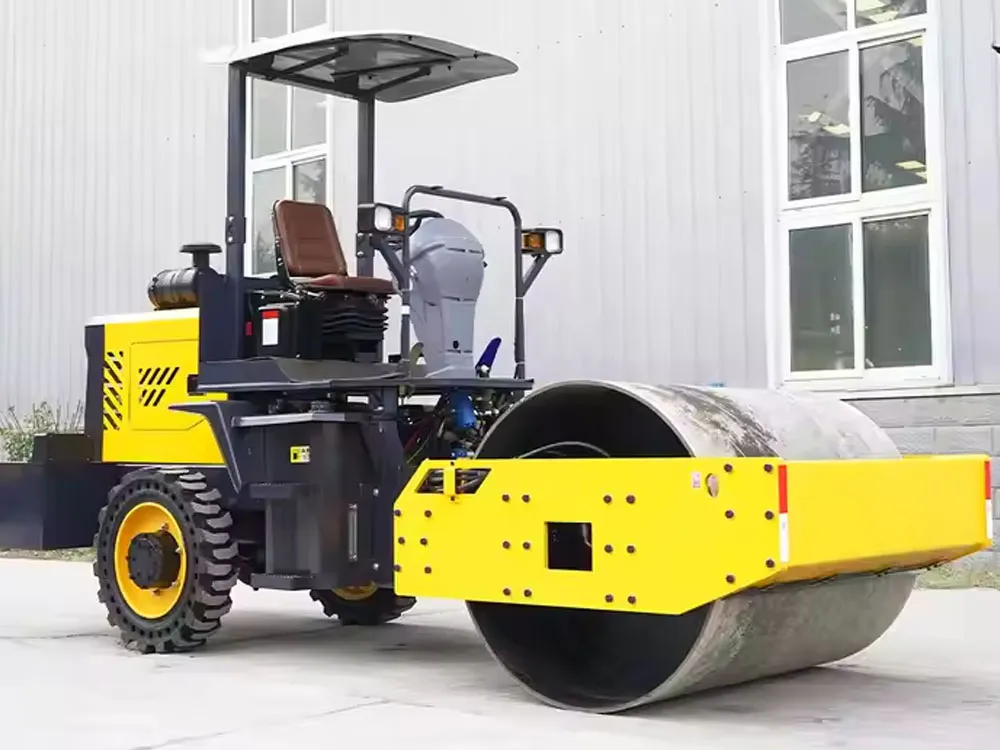
1.1 Selecting the Appropriate Road Roller Type and Configuration
The type of road roller should match the thickness of the asphalt mixture structural layers and the pavement design. Common types include steel-drum static rollers, vibratory rollers, and pneumatic tire rollers.
Road rollers should be well-maintained: the roller surface should not have severe wear or pits; steel-drum rollers should move smoothly and without backlash when switching between forward and backward movement.
Tire pressure (for pneumatic tire rollers) or roller condition should meet requirements. Water spraying systems, scrapers (anti-sticking devices), and other accessories should be in good condition to prevent asphalt from sticking to the rollers and damaging the pavement.
1.2 Strictly Controlling Asphalt Mixture Temperature and Compaction Timing
The temperature of the asphalt mixture is critical. Generally, the mixture temperature needs to be relatively high during initial compaction, depending on the type of mixture.
If the temperature is too low, the mixture viscosity decreases, making compaction difficult; if it is too high, it may cause the mixture to shift, sink, or peel.
The roller should closely follow the paver during compaction to minimize temperature loss between paving and rolling.
1.3 Reasonable Arrangement of Compaction Flow and Rolling Method
The general principle is "from top to bottom, static first then vibratory, slow first then fast."
Specific Recommendations:
Initial Compaction: Use a steel-drum roller for static compaction (or low vibration) 1-2 passes, controlling the speed within a relatively slow range (e.g., 1.5–2 km/h).
Intermediate and Secondary Compaction: Vibration can be turned on, and vibration should be adjusted according to the mixture layer thickness and design requirements. The target density is achieved through the number of rolling passes and vibration intensity.
Final Compaction: Finish with static compaction to eliminate roller marks and make the surface smooth and dense.
Rolling technique control is also crucial:
Each roll should overlap the previous one by 15–20 cm laterally to ensure no areas are missed.
Abruptly turning or stopping while the mixture is still in a plastic (uncooled) state, and avoiding vibration or turning in place, are also prohibited.
When rolling on slopes, edges, or shoulders, ensure the drive wheels are pointing towards the lower end and follow a half-width rolling principle to prevent tilting, loose edges, and shoulder collapse.
1.4 Prevent asphalt "sticking" to the roller and roller contamination
Roller rollers (or steel wheels, tires) should be appropriately moistened or treated with a release agent to prevent hot asphalt from adhering.
Avoid excessive water spraying, as too much water will rapidly cool the mixture, weakening compaction and affecting density and durability.
The roller surface should be kept clean, and the rollers should be cleaned promptly after use to prevent residual asphalt from hardening and affecting subsequent use.
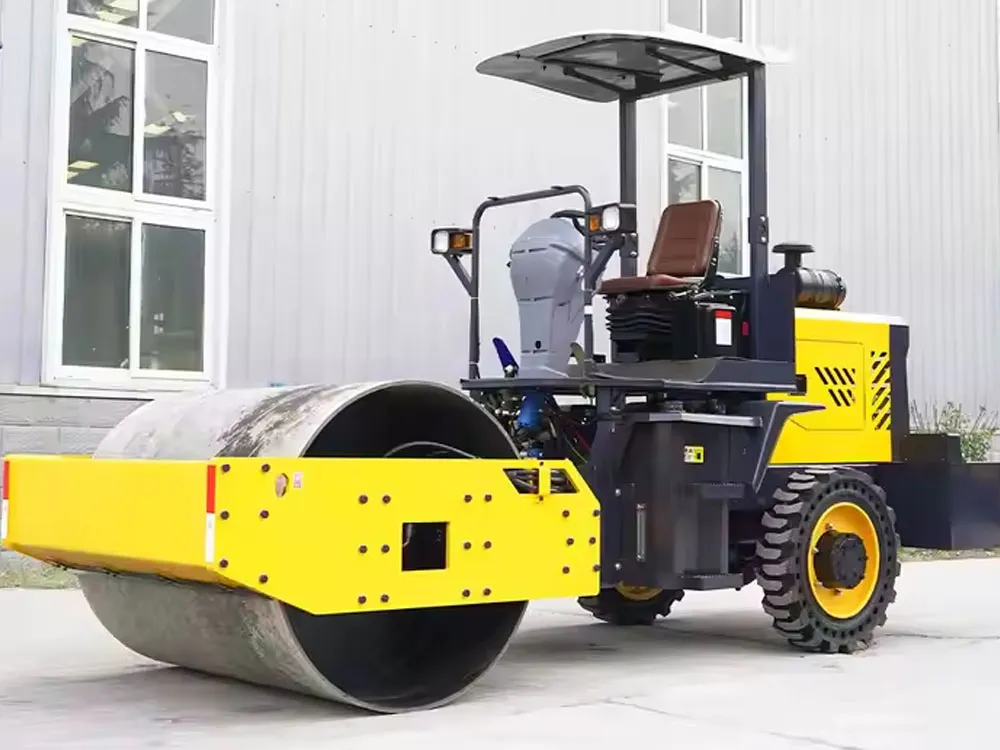
Road rollers are crucial not only to construction quality but also to personnel safety and on-site management. The following are points that safety personnel and supervisors should pay particular attention to:
2.1 Ensuring Pre-Construction Preparation and Equipment Inspection
Before compaction, confirm that the road roller is in normal mechanical condition: no oil pump leaks, tracks or tires in good condition, and the water spray and anti-sticking systems functioning correctly.
Ensure clear demarcation of the construction site, clear division of labor and responsibilities among personnel, and prohibit unauthorized personnel from approaching the road roller's working area, especially around the "blind spots."
In high-temperature asphalt construction environments, provide necessary protection for on-site personnel (such as heat-resistant gloves, safety shoes, and clearly visible warning signs) to prevent burns or accidents.
2.2 Monitoring Temperature, Compaction Sequence, and Time Control
Assign a dedicated person to monitor the temperature of the asphalt mixture, ensuring that compaction is carried out within a reasonable temperature range, and promptly remind the driver to start or stop compaction operations. As some sources indicate, if the mixture temperature is abnormal, the construction rhythm or heating equipment should be adjusted promptly to ensure compaction quality.
Strictly supervise the compaction sequence (initial compaction → intermediate compaction → final compaction) and rolling method (overlap, half-width, from edge to center, from low to high, etc.) to prevent construction personnel from arbitrarily changing the sequence or rhythm, which could lead to uneven compaction or pavement defects.
2.3 Prevent rollers from stopping or vibrating on uncooled asphalt pavement
It is absolutely forbidden for rollers to remain stationary, reverse, turn, or vibrate on asphalt layers that have not yet cooled and hardened. These actions will damage the pavement structure, causing unevenness, wheel tracks, cracks, and other problems.
If multiple rollers are required at the construction site, the operation sequence and time should be reasonably arranged to avoid excessive vibration or rapid temperature drop caused by multiple machines operating simultaneously.
2.4 Construction Records and Quality Inspection
For each compaction operation, key parameters such as equipment number, operator, number of compactions, temperature, speed, vibration frequency, and rolling path should be recorded for subsequent quality inspection and accountability. After compaction, the road surface should be checked for smoothness (e.g., using a 3-meter straightedge to measure deviations at uneven areas; deviations should generally not exceed design requirements, such as a low point not exceeding 10 mm or the design specification value).
If obvious defects are found (insufficient compaction, high porosity, uneven surface, wheel tracks, looseness, etc.), traffic should be immediately suspended, and rework and compaction or repaving should be carried out.
2.5 Emphasize on-site personnel safety and warnings
Set up clear safety warning signs and barriers to ensure that unauthorized personnel, pedestrians, or vehicles do not enter the roller operating area.
Educate and remind all on-site personnel to be aware of the roller's "blind spots" and danger zones, and not to approach the rollers, tires, or vibrating components.
Drivers are not allowed to operate the machine under the influence of alcohol. Distractions (such as using mobile phones, smoking, etc.) are prohibited during operation; a high level of concentration must be maintained.
Based on the above operational and safety requirements, we can see that neglecting any aspect can lead to the following problems:
Insufficient Compaction: Due to excessively low temperature, pressure, insufficient vibration, improper rolling frequency or method, too many air pores result. The consequence is moisture penetration, poor water resistance, easy cracking, and a significantly shortened service life.
Over-Compaction or Excessive Vibration: If the vibration frequency is too high, vibration is started or stopped at the wrong stage, or the roller vibrates in place, it may cause asphalt "oil seepage," aggregate displacement, surface ripples, wheel tracks, or cracks—ultimately reducing pavement strength and aesthetics.
Uneven Surface and Edge Settlement: Improper rolling sequence (such as rolling the middle before the edges, rolling without overlap, or delayed edge rolling) and improper slope control may lead to uneven pavement, edge collapse, and poor drainage.
Construction Safety Accidents: Blind spots of the roller, failure to maintain safe distances, improper operation, and equipment malfunctions can all lead to personal injury, machinery damage, and project delays.
Road rollers play a crucial role in asphalt paving construction, determining the final pavement quality, smoothness, durability, and safety. High-quality construction requires not only skilled operators and equipment maintenance awareness from the driver, but also strict supervision by on-site safety personnel and supervisors overseeing temperature, compaction procedures, rolling methods, and personnel safety.
The following recommendations are made for each asphalt paving project:
4.1 Develop a detailed "Rolling Construction Plan," clearly defining the rolling sequence, compaction temperature, rolling speed, and vibration settings.
4.2 Configure sufficient qualified road rollers and spare equipment, and regularly inspect and maintain the equipment.
4.3 Assign a dedicated supervisor or "temperature + density monitor" to record and control temperature, rolling, and density throughout the entire construction process.
4.4 Strengthen safety training and on-site management, ensuring that unauthorized personnel do not enter hazardous areas and that drivers operate safely.
By strictly controlling these aspects, the construction quality and durability of the asphalt pavement can be maximized.

