
Spider cranes (also known as "spider hoists" or "mini spider cranes") are specially designed lifting equipment widely used in construction, maintenance, and special operations due to their compact size, strong adaptability, and excellent stability. This article, based on the structural characteristics of spider cranes, systematically introduces the key points of their maintenance and care from the perspective of professional maintenance technicians and equipment managers. It covers daily maintenance, periodic inspections, and upkeep, aiming to help machinery users ensure equipment safety, stable performance, and extend its service life.
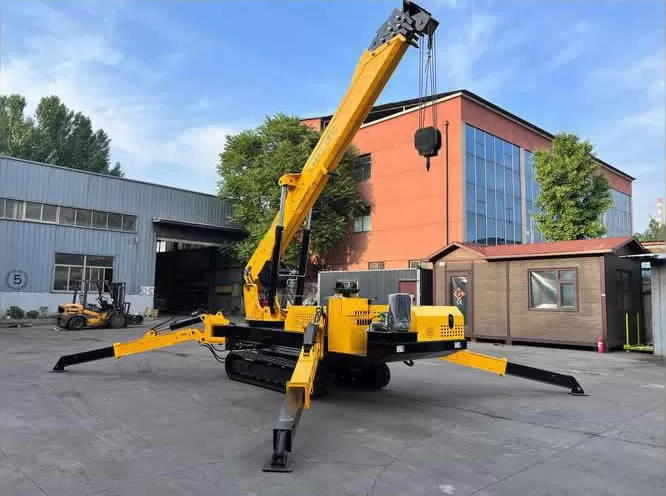
Spider cranes combine the flexibility and adaptability of a spider. Their core structure includes:
Crawler travel mechanism: Provides excellent ground adaptability, enabling stable travel on various terrains;
Four independent outrigger systems: Significantly increases the load-bearing area after extension and leveling, ensuring operational stability;
Hydraulic telescopic boom system: Achieves precise lifting through the extension, retraction, and rotation of multiple boom sections;
Integrated control system: Typically, all operations can be completed through 2-3 control levers;
These structural characteristics determine that the maintenance focus of spider cranes lies in the hydraulic system, outrigger mechanism, travel system, and electrical control system.
2.1 Safety Attributes: Spider cranes fall under the category of lifting machinery and are typical aerial work platforms and special equipment.
2.2 Complex Structure and Numerous Stress-Bearing, Hydraulic, and Electrical Control Systems: Includes multiple key structures and systems such as the hoisting mechanism, slewing mechanism, hydraulic system, safety protection, control system, outriggers, wire ropes, hook, braking, and clutch devices.
2.3 Variable Environmental and Working Conditions: Outdoor operations, rain and snow, complex terrain, and frequent start-ups and shutdowns can expose machinery to dust, mud, corrosion, and wear.
Therefore, establishing a strict and systematic maintenance and inspection system is crucial for ensuring the safe and stable operation of equipment.
Below is a suggested cycle table, along with the specific maintenance and inspection contents to be performed in each cycle.
|
cycle |
Main maintenance and inspection contents |
|
Daily (after completing assignments) |
Clean the machine body and working mechanism; lubricate the transmission components; check and tighten any loose parts. |
|
weekly |
In addition to the daily tasks, check the appearance, the condition of the hook and lifting device, the safety of the wire rope and rope ends, and the sensitivity of the brakes, clutches, and emergency alarm devices. |
|
per month |
Conduct a comprehensive functional and condition check on the power system, hoisting mechanism, slewing mechanism, and hydraulic system. Inspect for wear, deformation, cracks, corrosion, and other problems, and replace any abnormal parts promptly. |
|
Annually (or based on usage intensity) |
Conduct a comprehensive inspection and maintenance, including structural components, safety protection devices, electrical control systems, hydraulic systems, wire ropes, chains, lifting tools, and safety devices. It is recommended to establish and archive maintenance records. |
Note: Specific cycles should be adjusted based on equipment usage frequency, working environment (indoor, outdoor, humidity, dust, etc.), and the manufacturer's manual or inspection standards.
4.1 Cleaning and Corrosion Prevention
Clean the machine body and outriggers: Remove dirt, dust, and debris daily or after operation, especially from the outriggers, chassis, and slewing mechanism, to prevent rust or structural wear caused by dirt and sand accumulation.
Special Inspection After Rain, Snow, or Damp Weather: After operating equipment in rain, snow, or damp weather, thoroughly clean and dry the hydraulic cylinders, hydraulic lines, electrical system connectors, control panels, etc., to prevent moisture from entering the hydraulic or electrical systems, causing contamination, short circuits, or performance degradation.
4.2 Hydraulic System Maintenance
Hydraulic Oil Inspection and Replacement: Regularly check the hydraulic oil level and quality. If moisture, impurities, or a drop in oil quality are found, replace it immediately.
Hydraulic Line and Cylinder Inspection: Inspect the lines for aging, cracks, or leaks. Check the cylinder seals for integrity. If leaks or wear are found, replace the seals or damaged parts promptly.
4.3 Lifting and Hoisting Mechanism Maintenance
Wire Rope, Hook, and Safety Locking Devices: Weekly inspect the wire rope for wear, broken strands, and the condition of the rope ends; check the hook for deformation or cracks; and verify the reliability of the safety locking devices.
4.4 Brakes, Clutch, Alarms and Safety Devices
Check the braking system, clutch system, overload protection, safety alarms, tilt and stability detection devices for sensitivity and reliability.
4.5 Outriggers and Chassis Structure Inspection
Outrigger and Support System Condition: Ensure the outrigger extension and locking mechanisms are flexible and reliable. Check outrigger joints, welds, hinges, etc., for cracks, corrosion, or deformation.
Chassis, Tracks, and Track Pads (for tracked spider cranes): Inspect tracks and tires for wear and damage. Avoid driving on rough or sharp surfaces such as sharp rocks, scrap steel, or debris to prevent damage to the tracks or chassis structure.
4.6 Electrical and Control System Inspection
Control Panels, Terminal Blocks, Switches, Buttons, Instruments, Limit Switches, and Alarm Systems: Regularly check for normal operation, short circuits, poor contact, moisture, etc. Pay special attention to drying after rain to prevent malfunctions and short circuits.
Safety and Overload Protection Systems: These include overload alarms, slewing limits, tilt detection, outrigger improper locking monitoring, wire rope minimum clearance alarms, and hook locking. They must be kept in good working order; never modify or bypass these safety systems.
4.7 Lubrication and Fastening
Regularly lubricate all joints, hinge points, pins, sprockets, pulleys, slewing bearings, and cylinder hinge points to prevent metal-to-metal friction wear and jamming.
Check bolts, pins, fasteners, and flange connections for looseness or missing parts. Tighten any loose parts immediately.

Rain, snow, humidity, high temperatures, low temperatures, and other harsh weather conditions: After operation, thoroughly clean and dry the equipment, paying particular attention to the hydraulic system seals, electrical system, and rust prevention. Remove any water stains, mud, or dirt found after operation in rain or snow.
Complex, rugged terrain and confined indoor spaces: Pay special attention to the tracks, chassis, outrigger extension mechanisms, and ground contact condition. Before moving or setting up the outriggers, ensure the ground is flat and firm, and that the outriggers are securely grounded.
For high-frequency use and heavy-load operations: Maintenance and inspection cycles should be shortened, especially for critical components such as wire ropes, hydraulic systems, slewing mechanisms, and outrigger systems. Wear parts should be inspected and replaced more frequently.
To ensure each spider crane receives proper and timely maintenance, it is recommended that your organization and construction site establish the following management mechanisms:
Maintenance Responsibility System: Clearly define who is responsible for daily inspections, monthly and annual inspections, and who is responsible for repairs and parts replacement. Maintenance responsibilities, dates, and repair details should be posted or recorded in a prominent location.
Maintenance and Inspection Records: Each inspection and repair should be recorded in detail, including equipment model, serial number, inspected and replaced parts, problem description, handling results, responsible person, and signature. This facilitates traceability and complies with regulations regarding the management of "special equipment."
Regular Training and Qualification Requirements: Operators and maintenance personnel should possess the corresponding qualifications and training, and strictly follow the equipment manufacturer's instructions and safety regulations during operation and maintenance.
As a maintenance technician, when maintaining a spider crane, the following practical details should be noted:
7.1 Walking or moving the crane under load is strictly prohibited. If it is necessary to move the chassis, the load lifted by the hook should be unloaded first, the boom retracted, the hook lowered and locked, and it should be ensured that the outriggers are retracted and the chassis is stable.
7.2 Outrigger deployment and grounding must be stable and reliable. During the outrigger deployment phase, it is essential to ensure that the ground is flat and firm, and that the outriggers bear weight independently and evenly to prevent uneven stress that could lead to overturning or structural damage.
7.3 If any abnormal sounds, noises, deformation, leaks, or unstable oil pressure are detected, the machine should be stopped immediately for inspection. Do not continue operation with defects; diagnosis and repair should be carried out as soon as possible.
7.4 Strictly adhere to the integrity of safety devices and protection systems; never bypass them or make "emergency modifications." All limit switches, overload protection, interlocking, and safety alarm systems must be effective and reliable.
Spider cranes, with their compact structure, maneuverability, and adaptability to confined spaces and complex working conditions, are widely used in modern construction, assembly, installation, repair, maintenance, and indoor and outdoor construction.
However, precisely because of their complex structure, diverse systems, and variable operating environments, failure to perform rigorous and systematic maintenance can significantly shorten the equipment's lifespan and potentially lead to serious safety accidents.
Therefore, from the perspective of maintenance technicians, establishing standardized maintenance cycle systems, detailed records and responsibility management, strict inspection and maintenance procedures, and conducting targeted maintenance based on actual working conditions can extend the lifespan of spider cranes by more than 30%, reduce the failure rate by 50%-60%, and significantly improve operational safety.

