
Long-distance transportation of heavy construction machinery, especially bulldozers, is a high-risk, high-responsibility undertaking. Improper loading, unstable securing, and insufficient protective measures can lead to equipment damage, road hazards, transportation accidents, and even personal injury. As transportation safety officers, we must make thorough preparations beforehand to ensure that the bulldozer arrives at its destination "intact, safe, and on time." The following systematically analyzes the precautions to be taken in each stage, from loading preparation, protective measures, securing and reinforcing, monitoring and protection during transportation, to unloading and acceptance.
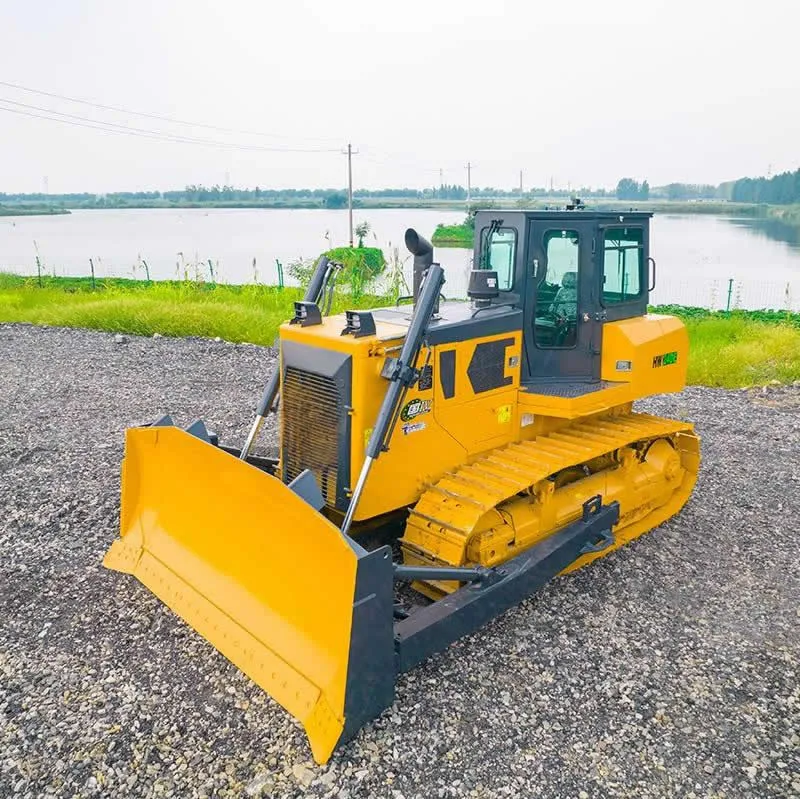
Before loading the bulldozer onto a low-bed trailer or other transport vehicle, a comprehensive and detailed inspection and preparation should be carried out.
1.1 Inspecting the Machine Condition
It must be confirmed that the bulldozer's engine, hydraulic system, chassis, tracks, blade, connecting rods, bolts, and other components are free from obvious damage, cracks, or looseness. Any discovered cracks, oil leaks, or fluid leaks must be repaired, reinforced, or have parts replaced immediately. Otherwise, further damage may occur during long-distance transport due to vibration and bumps. This is similar to the requirements of routine pre-operation inspections—checking for leaks in pipelines, tightness of connections, and compliance with track tension standards.
1.2 Cleaning and Decontamination
After use on a construction site, bulldozers typically accumulate a large amount of mud, sand, and debris on the chassis, tracks, blade, and hydraulic cylinders. If not cleaned properly, this debris may fall off during transport, posing a road safety hazard, or it may get stuck or collide with sensitive components (such as the hydraulic system, filters, and radiators). Many experienced transport companies emphasize that the equipment chassis, tracks, blade, and connecting joints must be thoroughly cleaned with high-pressure water guns or similar equipment before loading.
1.3 Removing or Secured Detachable/Movable Components
If the bulldozer is equipped with detachable attachments (such as a rear ripper, additional counterweights, tilting blade mechanisms, etc.), their removal and separate transport should be considered according to transportation standards, or these components must be securely locked. Loosening of movable components during transport may cause equipment displacement or damage due to inertia or road bumps. The industry emphasizes against using a one-size-fits-all approach for heavy equipment transport; different models and structures require specific solutions.
1.4 Selecting Appropriate Transport Vehicles
For large, heavy, and low-center-of-gravity equipment like bulldozers, but whose width and height may exceed the limits of ordinary trucks, low-bed trailers, step-deck trailers, or dedicated heavy equipment trailers should be prioritized to ensure compliance with load capacity, chassis height, and width requirements, and to meet road traffic and bridge load-bearing requirements.
In addition to loading and reinforcement, machine protection is also crucial for long-distance transport.
2.1 Vibration and Impact Protection
Critical components of the bulldozer, such as the chassis, hydraulic cylinders, tracks, and blade, are easily damaged during transportation due to vibration, uneven road surfaces, and bridge bumps. Anti-collision pads, covers, or protective wooden or rubber blocks should be installed on the blade edges, tracks, and hydraulic lines to reduce damage from direct metal impacts or vibrations.
2.2 Waterproofing, Dustproofing, and Rust Prevention
If the transportation route passes through rainy seasons, dusty areas, or slippery sections, exposed metal parts and hydraulic connections should be appropriately protected. Rust inhibitors can be sprayed, and critical hydraulic pipe openings or exposed interfaces can be sealed to prevent water and mud from entering. At the same time, ensure that accessories such as the blade are locked to prevent shaking that could cause cracks or loosening.
2.3 Reduce High-Protrusion and Lower Overall Height and Width
For bulldozers exceeding the height and width standards, it is recommended to lower the blade, retract extended parts, and remove unnecessary accessories where possible to reduce the risk of traffic restrictions, bridge collisions, and rollovers caused by exceeding height or width standards. If the standard is still exceeded, an oversized transport permit is required, along with warning signs and escort vehicles.
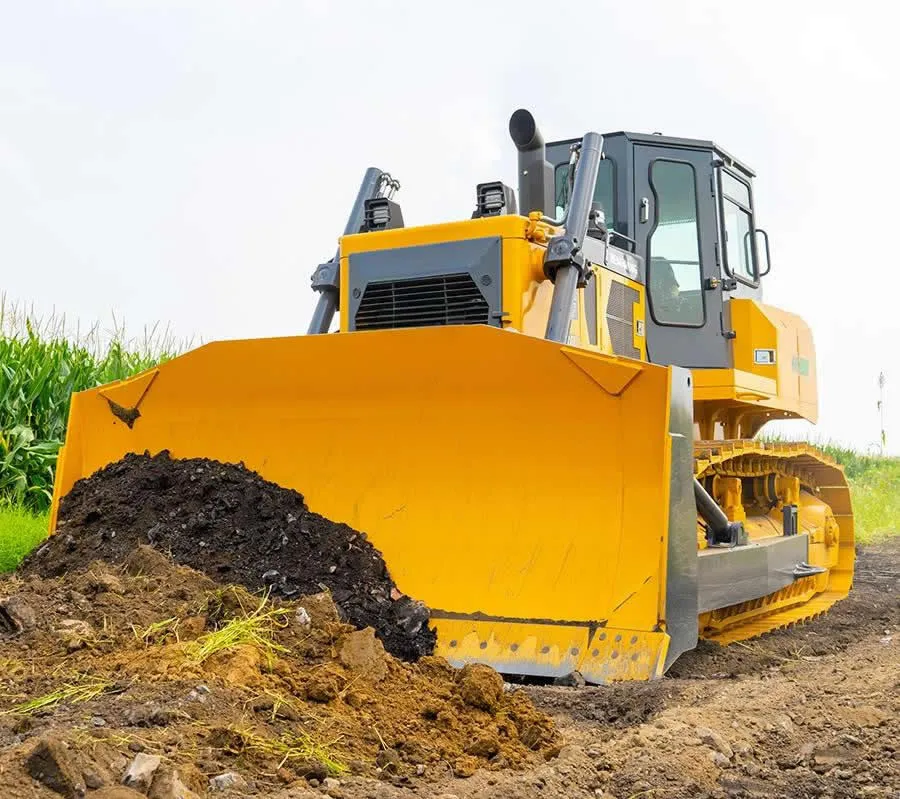
Securing and securing the bulldozer after loading it onto a suitable vehicle is crucial for transport safety. As the safety officer, you should ensure that the following are strictly followed:
3.1 Use High-Strength Chains/Binders for Reinforcement
It is recommended to use heavy-duty chains of Grade 70 and above, and tighten them with ratchet and lever binders. The chain should be secured to a robust structure of the bulldozer (such as the chassis main beam and frame structure), avoiding binding to vulnerable parts such as hydraulic cylinders and the blade. At least four anchor points should be used (one each at the front, rear, left, and right). For heavier models or machines with attachments, the number of anchor points should be increased accordingly.
3.2 Blade and Attachments Should Be Fully Lowered and Locked
The bulldozer's blade, ripper, etc., must be lowered to the lowest position and locked to prevent vertical vibration and swaying during transport. All moving parts (boom, blade, counterweight, rear attachments) must be locked or removed.
3.3 Track and Tire Fixing and Anti-Rolling Measures
For wheeled bulldozers, wheel chocks should be placed in front of and behind the wheels, or track stoppers/cradles should be used to prevent slippage. Even for tracked bulldozers, ensure proper track tension and consider adding anti-slip mats or wooden blocks to the underbody to increase friction and reduce slippage during transport.
3.4 Confirm the Strength, Load Capacity, and Tie-down Point Design of the Transport Vehicle
Trailers or trailers used to transport bulldozers must have sufficient load capacity, and their tie-down points (D-rings, tie-down points) must be properly designed, have sufficient load rating, and effectively distribute the weight and inertial load of the machine. The transport vehicle's tires, braking system, lights, warning signals, reflective markings, etc., must also be checked and confirmed to be in good working order beforehand.
Even after loading and departure, vigilance is crucial. During long-distance transport, continuous monitoring of the safety status is essential.
4.1 Regularly Check the Tie-down Status
It is generally recommended to stop and check approximately 50 miles (or equivalent mileage and time) after departure to rule out risks such as chain slack or tie-down point shifting due to wear, vibration, or loosening. Afterward, it is recommended to check again every 150 miles or every 3 hours, and also at each driver handover, stop, bridge crossing, and checkpoint.
4.2 Maintain Good Driving Habits
When transporting heavy equipment, drivers should avoid sudden braking, sharp turns, sudden lane changes, and significant acceleration or braking. When turning, drivers must fully consider the trailer's sway angle and the equipment's center of gravity shift, slowing down in advance and widening the turning radius. Avoid speeding over uneven surfaces, potholes, bridges, and sloping sections.
4.3 Comply with Warning Signs and Escort Requirements (if applicable)
If the bulldozer is oversized or overloaded, it must display an "OVERSIZE LOAD" banner, a red flag, and reflective warning lights as required by road transport regulations. Depending on regulations, a lead vehicle, following vehicle, or warning vehicle escort may be required. All signal lights, brake lights, and indicator lights must be functional to ensure other road users can identify and avoid the equipment.
4.4 Re-inspection of Machine Protection During Transportation
Especially in rainy weather, muddy or bumpy roads, long-distance bridges, mountain roads, or highway maintenance/construction sections, a simple inspection of the machine should be conducted during intermediate stops: Check for abnormal displacement, twisting, oil leaks, or loosening at the tracks, chassis, and hydraulic interfaces; check for detached or displaced protective pads and covers; check the tension of chains and straps.
After the bulldozer safely arrives at its destination, it is crucial to complete the process. Unloading and acceptance are the final and critical links in the entire transportation chain.
5.1 Selecting a Flat, Firm, and Spacious Unloading Site
The unloading site should have a flat, load-bearing, and unsloping surface, free of loose soil or soft foundations, to prevent equipment slippage or overturning due to unstable or tilted ground. The blade and tracks should not be aligned with the downhill direction.
5.2 Unload and Check Locking Devices in the Correct Sequence
Before starting unloading, ensure all securing chains and straps are released and safely retracted, ensuring the blade is stable and the tracks are not slipping. Slowly and smoothly move the machine away from the trailer. Simultaneously check the hydraulic system, chassis, tracks, and body structure for abnormal vibrations, cracks, deformation, or looseness.
5.3 Conduct a Comprehensive Acceptance and Test Run
Immediately after unloading, inspect and test run the engine, hydraulic system, steering system, braking system, track tension, control levers, and blade locking/unlocking mechanism to ensure the equipment was not damaged during transport. If any problems are found, record them, take photos, and report them to the maintenance or insurance department for handling.
To ensure that every long-distance bulldozer transport meets safety standards and achieves closed-loop management from pre-loading to post-loading, the following systems and processes are recommended:
6.1 Pre-Transport Machine Inspection Checklist & Documentation
Develop a standard inspection checklist (including machine structure, hydraulic system, tracks, blade, accessories, cleanliness, etc.), which must be jointly signed and confirmed by the transportation safety officer and the machinery manager.
6.2 Selection of Qualified Transportation Carriers & Standardized Transportation Vehicles
Only carriers with experience in heavy machinery transportation, specialized low-bed trailers, trailers, compliant straps, chains, anchor points, and vehicles in good working order should be selected.
6.3 On-site Supervision of Loading and Reinforcement + Photo and Video Recording
The loading and reinforcement process must be monitored by supervisors, and photos or videos must be taken as evidence for future traceability.
6.4 Regular Inspection System During Transportation
Drivers and safety officers cooperate to conduct fixed-point, strap, and machine condition checks at predetermined intervals (e.g., every 3 hours, every 150 miles, driver handover, etc.), and record and report the findings.
6.5 Unloading and Acceptance Process + Subsequent Maintenance Inspection
After unloading, the mechanical maintenance and engineering team conducts acceptance inspections according to the machine inspection checklist, promptly addressing and recording any issues found.
6.6 Personnel Training and PPE Standards
All personnel involved in loading, securing, transporting, unloading, and inspection must receive professional training and strictly wear safety shoes, helmets, gloves, goggles, and other PPE (protective footwear, gloves, safety glasses, dustproof, noise-canceling earmuffs, etc.) to prevent accidents.
Long-distance bulldozer transportation is a systematic project. From thorough pre-loading inspection and cleaning, to the selection of suitable transportation vehicles, to loading and securing, machine protection, transportation process monitoring, and final unloading and acceptance—every step is crucial. As safety officers, our responsibility is not only to "get it on the vehicle," but also to "ensure it arrives safely and intact."
Only through rigorous procedures, standardized operations, detailed records, and continuous supervision can we minimize transportation risks, ensure equipment safety, and safeguard road transport and personnel safety.

