
Road rollers are key equipment in asphalt pavement construction, and proper operation is crucial to ensuring road quality. The following are the main precautions for using road rollers when laying asphalt roads:
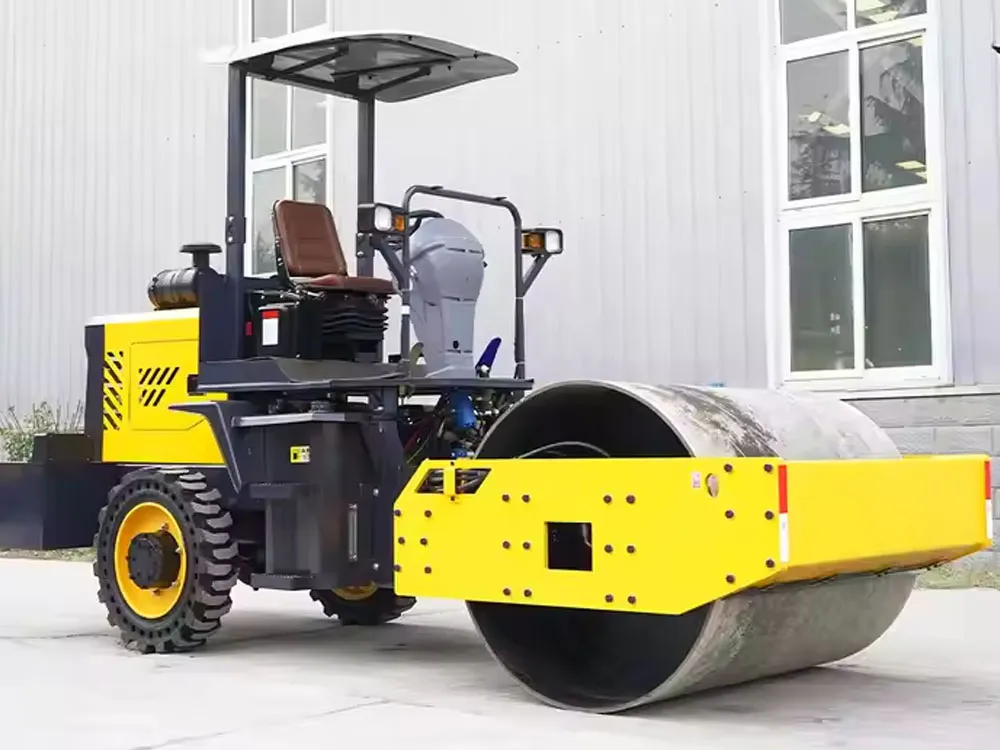
1.1 Personnel Training
Operators must undergo professional training, be familiar with the performance and operation methods of the road roller, and hold relevant operating qualification certificates. Untrained personnel may not be able to correctly adjust the compaction parameters, resulting in poor compaction.
1.2 Equipment Inspection
Before construction, a comprehensive inspection of all components of the road roller should be conducted, including the engine, braking system, tires, rollers, hydraulic system, etc., to ensure they are in good working condition. Tire wear or insufficient tire pressure will affect the road roller's driving stability and compaction quality.
1.3 Construction Survey
Understand the terrain, geology, and environmental conditions of the construction site and develop a reasonable construction plan. Weather forecasts should be checked in advance before paving asphalt mixtures to avoid construction on rainy days.
2.1 Pre-operation Inspection:
Inspect all systems, pipelines, and joints of the roller to ensure there are no cracks, loose connections, or leaks.
Check that the rollers and scrapers are level and that all fasteners are secure.
For pneumatic tire rollers, check tire pressure and only start operation after confirming it is normal.
2.2 Temperature Control:
Initial compaction temperature must be above 150℃. Use a steel-drum roller for static compaction 1-2 passes at a speed of 1.5-2 km/h.
Secondary compaction temperature should not be lower than 125℃. First, use a heavy-duty double-drum roller for vibratory compaction 4 passes at a speed of 4-5 km/h.
Final compaction temperature should not be lower than 110℃. Use a double-drum vibratory roller for static compaction 2 passes at a speed of 2-3 km/h.
2.3 Compaction Sequence:
Compact from the outside to the center, with adjacent compaction strips overlapping by 1/3-1/2 of the roller width.
When compacting slopes, the drive wheel should be at the lower position.
When two or more rollers are operating simultaneously, the distance between them should not be less than 3 meters.
2.4 Special Operations:
Change direction (forward or backward) only after the rollers have stopped.
Select the appropriate gear before going uphill or downhill; do not shift gears on the slope.
Do not coast in neutral downhill.
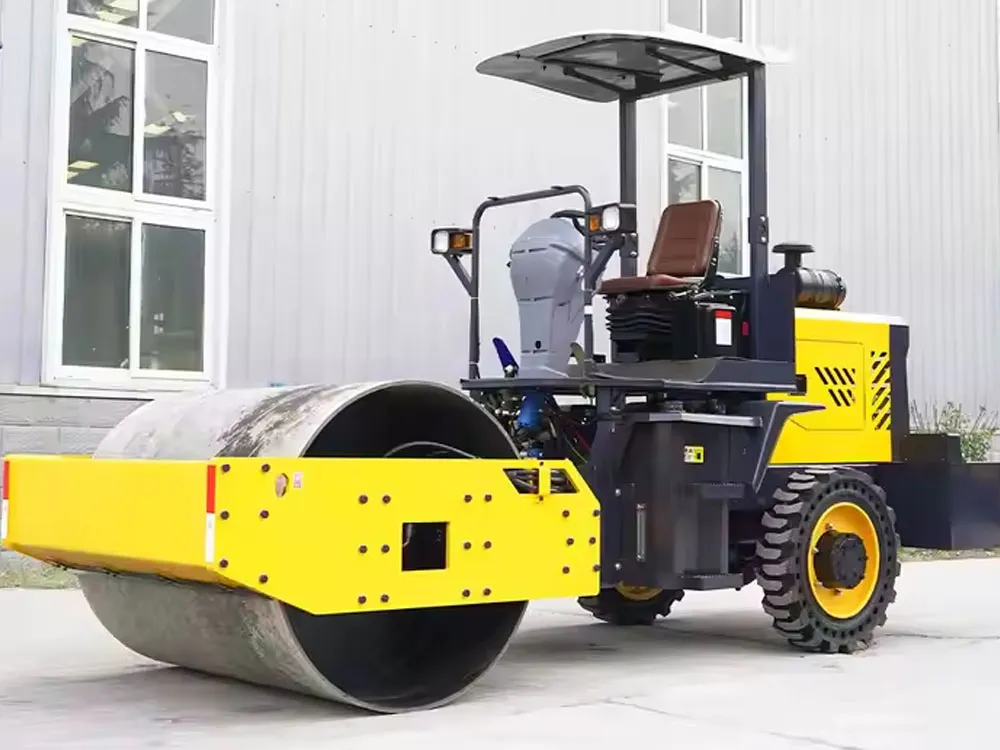
3.1 Safety Distance Management:
Standing or walking within the roller's operating radius is strictly prohibited.
The distance between a static roller and the edge of the roadbed should not be less than 1 meter.
Safety distance between a vibratory roller and structures: Bridge abutments 5-10 meters, culverts 5 meters, retaining walls 2-2.5 meters.
3.2 Key Points for On-Site Command:
Set up clear warning signs and safety isolation areas.
Before starting the roller, confirm there are no obstacles or personnel nearby.
When multiple rollers are operating, coordinate the distance between them (not less than 5m) and their travel routes.
3.3 Emergency Handling:
In case of equipment failure, immediately stop the machine and set up warning signs.
Check critical components such as fuel, electrical circuits, and engine.
If you cannot troubleshoot the problem yourself, contact professional maintenance personnel.
3.4 Environmental Monitoring:
Suspend construction in severe weather such as rain, snow, and fog.
Stop asphalt mixture construction when the wind force is level 6 or above.
Set up drainage measures in the construction area to prevent water accumulation.
4.1 Joint Treatment:
Longitudinal cold joints: Add baffles or roughen the surface, apply tack coat, and then lay new material.
Longitudinal hot joints: Leave a 100-200mm wide uncompacted surface as a reference surface.
Transverse joints: Use vertical flat joints; mechanically cut and remove any insufficient layer thickness.
4.2 Temperature Control:
Asphalt mixtures must be covered for insulation during transportation.
Paving temperature must be controlled within the specified range (150-180℃ for petroleum asphalt).
Ambient temperature during construction must not be lower than 10℃.
4.3 Compaction Process:
Follow the principle of "light compaction first, then heavier compaction; slow compaction first, then faster compaction."
Control compaction speed and number of passes.
Use small compaction equipment around curbs, manhole covers, etc.
Safety Regulations and Standards
4.4 Operating Procedures:
Operators must be certified.
Forcibly starting internal combustion engines using traction methods is strictly prohibited.
Parking on slopes is prohibited; in special circumstances, wooden stakes must be driven in to prevent slippage.
4.5 Construction Standards:
The asphalt mixture mix proportion must meet design requirements.
Base course flatness deviation must not exceed 2.4mm.
Compaction degree, flatness, and thickness must meet specification requirements.
4.6 Equipment Maintenance:
Regularly change wear parts such as engine oil and filters.
Promptly clean any adhering substances from the rollers.
After work, park the equipment in a flat, safe area.
By strictly adhering to the above precautions and operating procedures, the quality and safety of asphalt pavement construction can be ensured, and the service life of the pavement can be extended. Drivers and on-site safety personnel must cooperate closely to ensure the smooth progress of the construction process.

