
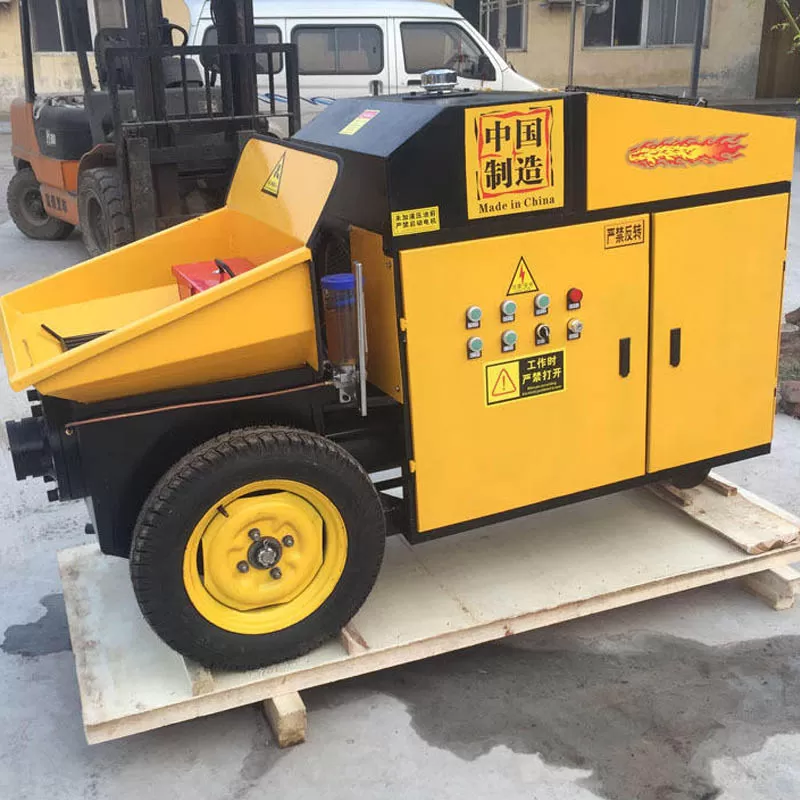
As a core equipment in modern construction, concrete pumps rely on high pressure to push concrete through the pipeline system to the pouring location during pumping operations. Their conveying efficiency directly affects project progress. However, pipe blockage is one of the most common failures in pumping operations. Once the flow in the pipeline is interrupted, it can lead to construction delays at best, and equipment damage or even casualties at worst. This article systematically analyzes the causes of pipe blockage and proposes rapid unblocking solutions for different scenarios, providing practical solutions for frontline operators.
In the field, most concrete pump pipe blockages are not "sudden occurrences," but rather have discernible signs. They can be summarized into the following categories:
1.1 Improper Concrete Conditions
The concrete mix design, slump, and water content affect its rheological properties. An unreasonable mix design (too dry, oversized coarse aggregate, or discontinuous aggregate gradation) will increase pumping resistance, even leading to "aggregate blockage." This type of blockage is more likely to occur when the ratio of coarse aggregate size to pipe diameter is too large. For example, oversized aggregate particles, insufficient sand content and segregation, and improper use of admixtures and additives can all lead to concrete pump pipe blockage.
1.2 Unreasonable Pipeline Design and Equipment Matching
Improper pump selection, insufficient pumping pressure, mismatch between pipe diameter and aggregate size, excessive bends, and sharp-angle bends will all increase pipe resistance; aging or leaking seals in the pipeline, such as gaskets and joints, can damage the lubrication layer, reducing concrete fluidity and causing accumulation and blockage. If the water in the water tank becomes cloudy quickly after replacing the piston, it indicates severe wear on the inner wall of the conveying cylinder (the cylinder needs to be replaced).
1.3 Improper Human Operation
Failure to adequately lubricate the pipeline (e.g., using grout or lubricant as a base), pumping too fast, or starting with high-speed pumping will cause the concrete to be forced into the system before a stable flow state is established, thus forming a blockage. 1.4 Insufficient Daily Maintenance of Equipment and Pipelines
Failure to thoroughly clean the pipelines before pumping, failure to promptly flush out residual concrete after pumping, and wear of the rubber lining can all lead to increased frictional resistance on the inner wall. Over time, accumulated aging residue becomes a hidden source of blockage.
During the pumping process, closely observe the pressure gauge and the conveying status. Be highly vigilant for blockages if any of the following situations occur:
The pump pressure suddenly increases and the concrete flow rate decreases significantly;
The discharge port is not continuous or shows intermittent flow;
Increased vibration of the pipeline and pump body;
Listen to the sound of tapping the pipeline: a clear sound indicates unobstructed flow, while a solid "dull sound" often indicates a blockage. A classic method in field experience is to "tap" the rubber hose to feel the blockage location: changes in the hardness of the pipe section can indicate the blockage point.
More reasons for operational and layout errors:
2.1 Improper Pumping Speed Control
The first pumping should start at a low speed (≤5m³/h), and the speed should be increased only after the pipeline resistance stabilizes.
2.2 Non-compliant Pipeline Layout
"S-shaped bends" or sharp bends (radius of curvature <1m) are prohibited. The length of the horizontal pipe must be ≥ 15% of the length of the vertical pipe.
2.3 Negligence in Shutdown Management
If the machine is shut down for more than 30 minutes, short-stroke pumping should be started every 15 minutes to prevent the concrete from initial setting.

Dealing with blockages must not be done haphazardly; it must be done sequentially and according to specifications. Here is an emergency procedure combining experience and industry guidelines:
3.1 Mild Blockage: Reverse Pumping + Tapping Method (Applicable to newly occurring blockages)
Operating steps:
Immediately switch to reverse pumping mode, and continuously reverse pump for 2-3 strokes to suck the concrete back into the hopper.
Tap the pipeline lightly with a rubber hammer, checking section by section from the pump outlet to the far end. The dull sound indicates the blockage point.
Repeatedly tap near the blockage point and perform short-term reverse pumping to clear the blockage using vibration and negative pressure. Case Study: During concrete pumping of C30 concrete at a construction site, the pressure suddenly increased to 18MPa. The operator used this method and successfully cleared the blockage in the bent pipe 15m away from the pump body within 3 minutes.
3.2 Moderate Blockage: Mechanical Disassembly Method (Applicable when reverse pumping is ineffective)
Safety Regulations:
Turn off the main motor, release the residual pressure in the system, and wear safety glasses and gloves.
Loosen the pipe clamps section by section from near to far (loosen first, but do not remove), observe whether concrete is squeezed out, and determine the blocked section.
Cleaning Key Points:
Use a high-pressure water gun (pressure ≤10MPa) to flush out residual material in the pipe, avoiding damage to the pipe wall.
Check the pipe wall for wear. If the scratch depth is >0.3mm, the pipe needs to be replaced.
Lesson Learned: At a construction site, forcibly striking the solidified blockage caused the pipe to rupture, and flying concrete fragments caused minor injuries to one person.
3.3 Severe Blockage: Sectional Disassembly + Intelligent Assistance (Applicable to hard blockages)
Intelligent Equipment Application:
Use a pump pipe unblocking rod (with a camera) to locate the blockage in real time and assess the degree of blockage.
Use a high-pressure air cannon (pressure 15-20MPa) to impact and break up hard blockages.
Data Support: A super high-rise project adopted this solution, reducing the processing time for severe pipe blockages from the traditional 2 hours to 40 minutes.
Attempting to clear a blockage with compressed air is a "forbidden" practice. Actual cases have proven that it not only fails to resolve the blockage but has also led to serious personal injury and even death.
Do not open the pressure valve without pre-pressure treatment; set up isolation areas during pipe disassembly and blockage clearing to keep personnel away; workers must wear protective equipment such as safety glasses and gloves.
5.1 Material Control: Reducing Risks at the Source
Strictly test the concrete slump (160-220mm is optimal), sampling each truckload once.
Use a grading analyzer to ensure continuous aggregate grading, with needle-shaped and flaky particles content ≤10%.
5.2 Equipment Maintenance: Establishing a Full Lifecycle Record
Inspect the sealing rings and piston wear daily, and record the replacement cycle.
After every 500 m³ of pumping volume, inspect the inner wall of the conveying cylinder using an endoscope.
5.3 Operation Training: Standardized Operating Procedures
Establish a "Three Checks and Three Confirmations" system:
Before pumping: Check pipe sealing, check lubrication, and check remaining material quantity.
During pumping: Confirm stable pressure, confirm reasonable speed, and confirm no abnormal vibrations.
After shutdown: Confirm thorough cleaning, confirm pipe clamp tightening, and confirm equipment power is off.
Concrete pump pipe blockage is a typical "preventable and controllable" failure, the core of which lies in the precise control of the three elements: materials, equipment, and operation. By establishing a full-process management system of "prevention-monitoring-emergency response," coupled with the assistance of intelligent equipment, the incidence of pipe blockage can be significantly reduced, ensuring construction safety and efficiency. Each blockage incident is not just a technical problem, but rather an imbalance in a dynamic system. Only by combining pre-blockage warnings, accurate localization, rapid clearing according to procedures, and strict safety regulations can downtime losses and safety risks be minimized.

