
The self-loading concrete mixer truck is one of the most flexible and efficient concrete production and transportation equipment used in on-site construction. It integrates loading, mixing, transportation, and unloading functions. As a maintenance engineer, I understand that the condition of the mixing drum, a core component, directly affects concrete quality, equipment lifespan, and construction efficiency. Therefore, proper maintenance after daily operation is crucial.

The mixing drum of a self-loading concrete mixer truck is the core of the entire machine. Its structure consists of the drum body, spiral blades, liner plates, support rollers, raceways, bearings, and sealing rings.
Drum body and liner plates: Made of high-strength wear-resistant steel (such as NM400), with a standard thickness of ≥3mm. They are prone to localized thinning due to long-term friction from concrete.
Blades: Welded to the inner wall of the drum, arranged in a double-helix cross pattern. Made of high-manganese steel, they are responsible for material lifting and axial turning, and are the area subject to the most severe wear.
Sealing system: The shaft head sealing rings are mostly double-layer lip-type NBR rubber or metal + felt composite structures to prevent slurry from entering the bearing cavity.
Support system: The contact surface between the support rollers and the raceway bears heavy loads and requires continuous lubrication to prevent pitting and deformation.
⚠️ Key Tip: If the liner plates are not replaced in time after wear, it will lead to uneven concrete mixing, increased segregation, and even scratching of the drum wall.
Cleaning the inside of the mixing drum immediately after each operation is the "first iron rule" of mixer truck maintenance. If concrete remains in the drum for too long, it will begin to harden, forming hard lumps, and even a thick layer of hardened deposits on the inner wall. Once formed, this will cause serious wear and performance degradation to the drum and mixing blades. Cleaning steps usually include:
After the concrete is completely unloaded, use a high-pressure water gun to clean the residue inside the drum. If necessary, use cleaning agents and manual cleaning to ensure no solid residue remains. During cleaning, the drum rotation function should be activated so that the water flow can reach every corner.
If the concrete has already started to harden, cleaning will be much more difficult and may require mechanical hammering or professional chemical cleaning agents.
|
step |
Operation content |
Parameter requirements |
Safety Warning |
|
1 |
Preliminary rinse |
Immediately after unloading, use the on-board water gun to rinse the feed hopper, unloading chute, and roller area. |
Water pressure ≤ 0.5MPa; avoid direct contact with electrical components and hydraulic joints. |
|
2 |
In-drum cleaning |
Pour150–200L of clean water into the cylinderand rotate it at high speed (14–18 rpm) for5–10 minutes . |
This must be done after the engine is off and the power take-off is disconnected; personnel are strictly prohibited from entering the cylinder while the power is still on. |
|
3 |
Completely drain |
Drain the wastewater and check the bottom of the cylinder and the base of the blades for any residue or clumps. |
Use a wooden mallet to gently tap the cylinder wall to help dislodge the hard block;do not use a hammer or chisel. |
The mixing blades inside the mixing drum are critical components for ensuring concrete uniformity. After daily cleaning, I focus on checking:
Whether the clearance between the mixing blades and the inner wall of the drum is normal; if the clearance is found to be excessive or the blades are significantly worn, they should be replaced promptly. Excessive blade wear not only reduces the mixing effect but also leads to substandard concrete quality.
In long-term use, friction between the steel blades and the steel drum wall is inevitable. Therefore, establishing a regular replacement plan and scrap standards is an important part of maintenance management.
|
Testing items |
Detection methods |
Qualification Standard |
Judgment basis |
|
Liner thickness |
Ultrasonic thickness gauge(Model: Olympus 38DL PLUS) |
Minimum remaining thickness ≥ 2.5mm |
The original thickness is 3mm; it needs to be replaced when wear exceeds 1.5mm. |
|
blade deformation |
Visual inspection + caliper measurement |
Blade angle deviation ≤ 5°, no breakage or curling. |
Blade root cracks ≥3mm require machine shutdown and welding repair. |
|
bearing clearance |
Manual shaking detection + dial indicator |
The radial clearance of the rolling bearing is ≤0.1mm. |
Replace bearings immediately if abnormal noise and vibration worsen. |
|
Sealing ring condition |
Disassembly and inspection |
No cracks, hardening, or deformation |
Signs of grout leakage are a sign of failure and require immediate replacement. |
The rotation of the mixing drum relies on the transmission mechanism and lubrication system. In daily maintenance, I always adhere to:
Regularly checking the lubrication status of components such as the mixing drum main bearing, gears, and transmission chain. If dryness, abnormal noise, or overheating occurs, lubricating grease should be added or the oil replaced promptly, and the seals should be checked for aging.
In addition, the connecting bolts of the mixing drum drive system and the fixing bolts of the support frame are also prone to loosening due to vibration. During maintenance, these should be checked and tightened one by one to prevent breakage during operation and avoid more serious damage.
|
Lubrication points |
part |
Lubricant type |
cycle |
Key points of operation |
|
1 |
roller bearing |
00# Lithium-based grease |
Once a day |
Use a grease gun to inject grease until old grease comes out, clean the nozzle, and then seal the cap. |
|
2 |
Raceway contact surface |
Molybdenum disulfide heavy-duty grease |
Once every 3 days |
After removing old sludge, apply a thin layer to avoid excessive buildup. |
|
3 |
Gearbox |
VG150 Heavy Duty Gear Oil |
Every 2000 working hours or per year |
Change the oil after 500 hours of initial use, keeping the oil level at the middle mark on the dipstick. |
|
4 |
Hydraulic system |
L-HM46 High-Pressure Anti-Wear Hydraulic Oil |
Every 2000 working hours or per year |
Check the oil level in the tank; oil temperature ≤ 60℃; replace the filter element every 1000 hours. |
|
5 |
Shaft head seal lubrication pump |
NLGI 0# (Winter) / 1# (Summer) Grease |
Before starting each day |
Ensure continuous grease injection into the sealing lip to prevent dry friction. |
|
6 |
Control mechanism linkage |
00# Lithium-based grease |
Once a week |
Apply evenly to joints to remove accumulated dust. |
Most modern self-loading concrete mixers use hydraulic drive for the mixing drum. The state of the hydraulic system directly affects the rotation efficiency and operational stability of the drum. As an engineer, I focus on the following in daily maintenance:
Whether the hydraulic oil quality is clean and the oil level is within the specified range; if emulsification, discoloration, or sedimentation is found, the oil should be replaced promptly. Regularly replace the filter element and check the working status of the hydraulic pump and motor to prevent hydraulic system failures caused by oil quality problems.
Such inspections not only protect the hydraulic components but also reduce failures such as mixing drum stoppage and unstable rotation speed caused by abnormal system pressure.
|
Fault phenomenon |
Possible reasons |
Preventive measures |
|
Abnormal noise from the cylinder |
The roller bearing is lacking oil, the raceway is worn, and the blades are loose. |
Lubricate the rollers daily and tighten the blade bolts monthly. |
|
Hydraulic system pressure fluctuation |
Oil contamination, filter clogging, motor internal leakage |
Change the hydraulic oil and filter every 2000 hours, using specialized oil. |
|
Leakage from sealing ring |
Sealing aging, shaft misalignment, insufficient lubrication |
Replace the seals every 6 months to ensure a continuous lubrication pump supply. |
|
Uneven mixing |
Severe blade wear, partial liner detachment, and unbalanced filler ratio |
Control the load to 70-80% and regularly check the blade integrity. |
|
Increased cylinder vibration |
Out-of-round support rollers, loose subframe bolts, and unbalanced cylinder body |
Tighten the subframe U-bolts every two weeks and perform dynamic balancing annually. |
Before entering the mixing drum for inspection or cleaning, be sure to cut off the power, disconnect the electricity, and take locking/tagging measures to prevent accidental startup. During maintenance, ensure that the tank cannot rotate to avoid personal injury.
In the actual field, I also recommend using appropriate protective equipment, such as protective gloves and safety glasses, to protect the safety of maintenance personnel and help complete maintenance tasks efficiently. 7. Maintenance Cycle and Long-Term Plan
Wear parts (such as mechanical seals, liners, oil seals, etc.) should be replaced after the specified time or operating hours. The first comprehensive maintenance should be performed within the first 50–100 hours of initial use, and regular replacement of hydraulic oil and filters can prevent early failures.
A long-term maintenance plan facilitates predictive maintenance and preventive replacement, keeping the equipment in optimal condition and reducing the impact of unexpected downtime on construction progress.
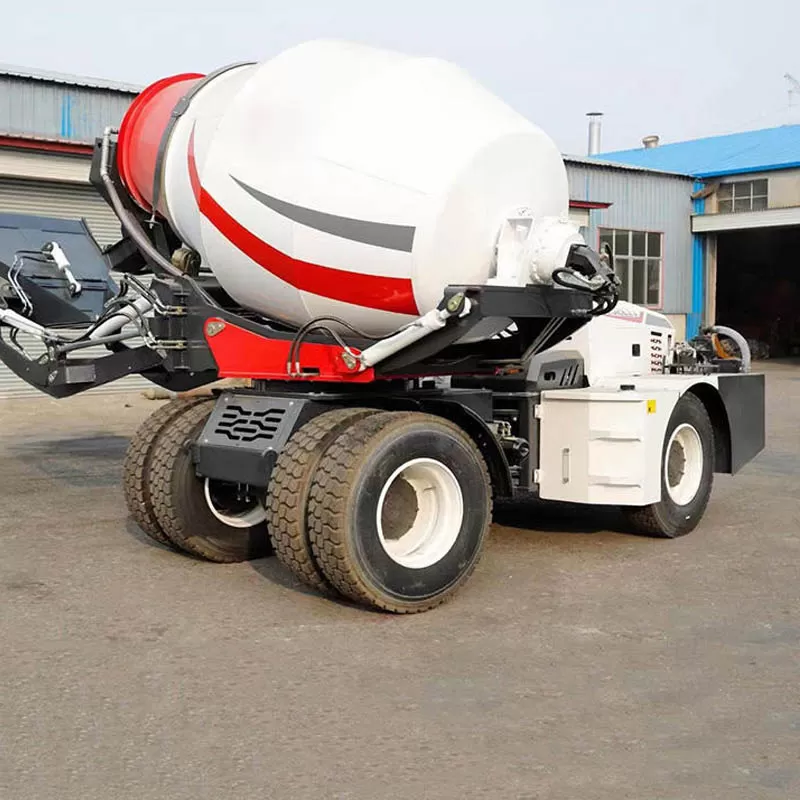
The mixing drum is the core component of a self-loading concrete mixer truck, and its performance directly affects construction efficiency and concrete quality. As a maintenance engineer, I firmly believe that daily cleaning, regular inspections, and scientific maintenance are the three pillars for ensuring the long-term stable operation of the mixing drum.
Through standardized maintenance, not only can the equipment's service life be significantly extended, but also the failure rate can be reduced, and the quality of concrete construction can be improved, providing stable and reliable technical support for the project site.

