
Bulldozer blades (also known as blades) are the core components that directly contact soil and rocks. They bear a large amount of pressure and friction load during bulldozing operations, so their wear directly affects the bulldozer's operating efficiency and safety. This article will detail the methods for assessing bulldozer blade wear and the replacement procedures to help maintenance personnel effectively extend the equipment's service life during routine maintenance.
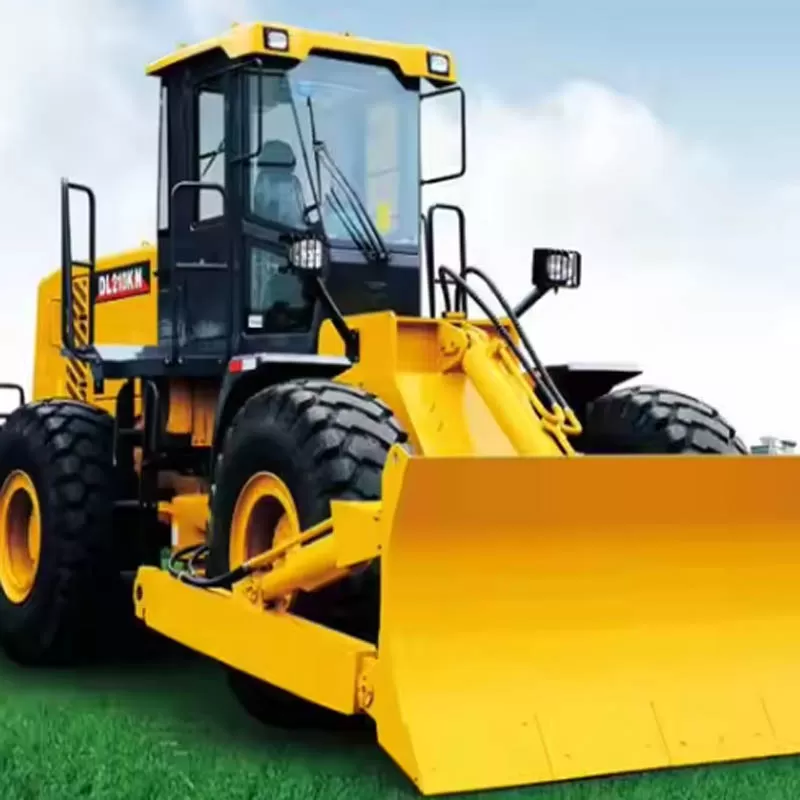
Assessing blade wear is crucial for the normal operation of a bulldozer. Timely detection and assessment of blade wear helps avoid malfunctions or accidents caused by blade failure. Bulldozer blade wear assessment can be conducted from the following aspects:
1.1 Visual Inspection
The most direct assessment method is visual inspection of the blades. By examining the surface wear of the blades, a preliminary judgment can be made as to whether severe wear or deformation has occurred. Common wear characteristics include:
Is there obvious wear or nicks on the blade edges?
Is there dents or uneven wear on the blade surface?
Is the blade angle changed, resulting in unsatisfactory bulldozing performance?
1.2 Measuring Blade Thickness
Regularly measuring blade thickness is an effective way to assess blade wear. Use calipers or other precision tools to measure the thickness at key locations on the blade and compare it to the standard thickness of a new blade. If the blade thickness has decreased to a certain extent, it indicates that the blade is severely worn and needs to be replaced.
1.3 Performance Testing
The performance of the blade reflects its degree of wear. For example, if a bulldozer is found to be pushing soil unevenly or requires more force to complete the task, it may be due to excessive blade wear, affecting work efficiency.
Based on the above, the following table can be used as a reference for measuring blade wear:
|
Evaluation Dimensions |
Inspection methods |
Judgment criteria |
|
Visual inspection |
Wearing safety goggles, observe the blade and surface up close. |
• The cutting edge is noticeably dull,
curled, or serrated. |
|
Thickness measurement |
Using vernier calipers, take measurements at three points each at the middle and both ends of the blade. |
• Remaining thickness is less than70%
of the original thickness(i.e., wear exceeds 30%) |
|
Performance Feedback |
Record operational data: bulldozing resistance, fuel consumption, and operation time. |
• Fuel consumption increases by more
than 15% under the same working conditions. |
|
Structural inspection |
Inspect the tool holder, connecting bolts, and pins. |
• Deformation of the tool holder and
cracking of the weld |
Key Note: In high-abrasive conditions such as rock, frozen soil, and gravelly soil, blade life is reduced by more than 50%. It is recommended to conduct a mandatory assessment every 200–300 working hours.
When the assessment results indicate that the blade is severely worn and can no longer be used, it must be replaced promptly. The following are the basic steps for changing bulldozer blades:
2.1 Shutdown Preparation
First, before changing the blades, ensure the bulldozer is completely stopped and the engine is off. For safety, disconnect the battery or take other safety precautions to prevent accidents during operation.
2.2 Lifting the Bulldozer Front End
Use a hydraulic jack, a dedicated support frame, or the bulldozer's built-in lifting device to lift the front end of the bulldozer, lifting the blades off the ground and fully supporting both ends of the boom, ensuring the blades are suspended and unloaded. This step ensures a safer working environment when changing blades.
Never rely solely on the hydraulic system for support!
2.3 Removing the Old Blade
Locate the bolts or fasteners connecting the blades to the bulldozer, according to the bulldozer's design. Use appropriate tools (such as wrenches or power tools) to loosen the fastening bolts and remove the blades from the bulldozer. Use a socket wrench to loosen the fastening bolts one by one in a diagonal sequence (usually 8–12 bolts). Note that blades are usually heavy and require multiple people to work together during disassembly. Do not handle by hand; use specialized lifting tools or a trolley to prevent the blade from falling and causing injury.
2.4 Cleaning the Installation Area
After removing the old blade, inspect the installation location and remove dirt, rust, or other impurities from the surface. Check if the bolt holes are stretched or the blade holder surface is warped. Use a wire brush or other tools to clean the fixing bolts and connectors to ensure the new blade can be installed stably. If the blade holder is found to be deformed, it must be repaired or replaced; otherwise, the new blade will not be able to bear the load properly.
2.5 Installing the New Blade
Align the new blade with the installation location, ensuring it matches the fixing holes and connectors. Verify that the new blade model is consistent with the original manufacturer. Using the bolts and tools specified by the manufacturer, secure the new blade in place, ensuring the cutting edge faces forward and is aligned with the bulldozing direction (incorrect installation will cause reverse cutting and accelerate wear). During installation, ensure the bolts are tightened properly to prevent the blade from loosening. Gently place the blade onto the blade holder, aligning it with the pin hole, ensuring there is no obstruction.
2.6 Inspection and Adjustment
After installing the new blades, check that they are symmetrical and balanced. Use a torque wrench to tighten them in three diagonal steps, ensuring good fit with other components at the front of the bulldozer. Standard torque value: 350–400 N·m (refer to industry-standard values; specific values are subject to the equipment manual). Then, start the bulldozer for a trial run, observing the blades' performance. Check that the blades move synchronously with the boom, without abnormal noise or shaking, ensuring the replaced blades are operating normally.
2.7 Cleaning Up the Work Site
After replacement, clean up all tools and old parts. Ensure no items are left at the work site to avoid potential safety hazards during subsequent use.

To extend the life of the blades, bulldozer maintenance personnel should pay attention to the following points in daily work:
Avoid excessive friction: During bulldozing, avoid prolonged friction between the bulldozer and hard objects to reduce the wear rate of the blades.
Regular Inspection: Regularly inspect the wear of the bulldozer blades, especially in high-intensity working environments, where the frequency of inspection should be increased.
Lubrication and Maintenance: Maintain good lubrication of the bulldozer blades and their connecting parts to reduce friction damage to the blades.
|
Incorrect operation |
as a result of |
Correct approach |
|
Unsupported push arm can be disassembled directly. |
When the hydraulic system fails, the blade falls, causing equipment damage or personal injury. |
Sleepers or support frames must be used. |
|
Tighten the bolt with a regular wrench |
Uneven torque can cause blade deformation or bolt breakage. |
A torque wrench must be used, and the operation must be performed according to the standard value. |
|
Ignore tool holder inspection |
The new blade remains loose after installation, accelerating wear on the tool holder. |
The condition of the tool holder must be checked every time it is replaced. |
|
Blade installed backwards |
Reverse cutting reduces lifespan by more than 70%. |
Before installation, confirm that the blade edge is facing the same direction as the bulldozing direction. |
|
No testing after replacement |
No loose bolts or interference were found; a sudden malfunction occurred during operation. |
No-load functional testing must be performed. |
Assessing and replacing bulldozer blade wear is a crucial step in ensuring the efficient and safe operation of bulldozers. As a maintenance engineer, mastering the correct assessment methods and replacement procedures can not only improve equipment operating efficiency but also effectively reduce failure rates, ensuring the long-term stable operation of the bulldozer. It is hoped that this article will provide some reference and assistance for the daily maintenance of bulldozers.

