
Road rollers are indispensable heavy equipment in road construction, and their vibration devices play a crucial role in the compaction process. Proper operation of the vibration device not only improves compaction efficiency but also extends the service life of the road roller. As a road roller maintenance engineer, this article details how to ensure the efficient and stable operation of the vibration device after daily operations, focusing on maintenance, lubrication, and care.
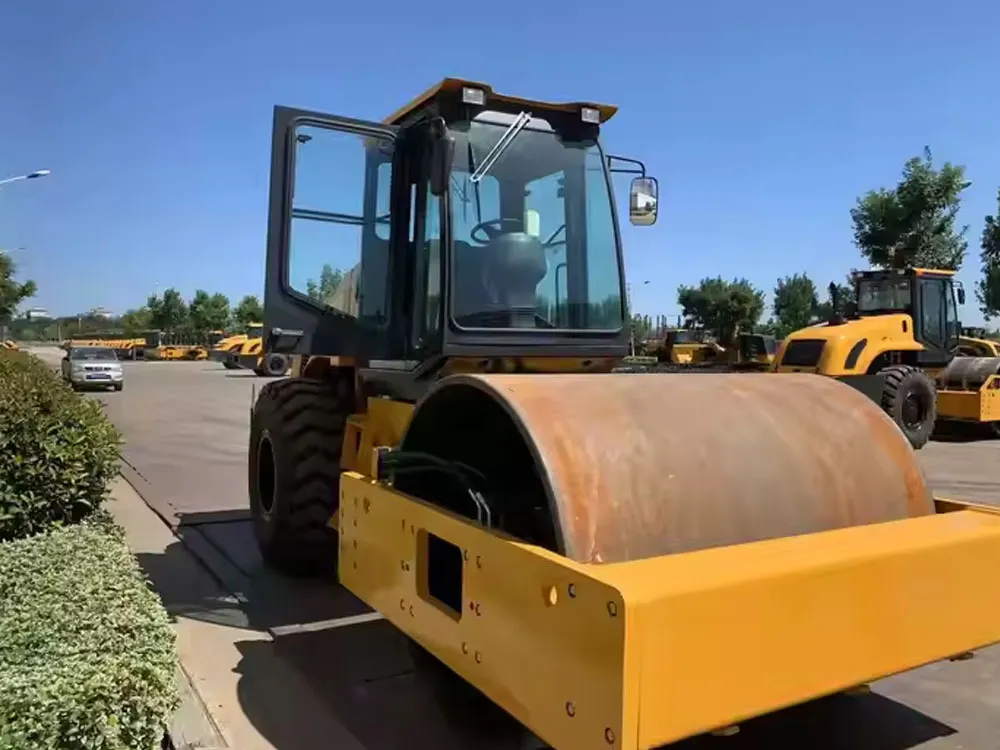
The vibration device is one of the core components of a road roller, typically consisting of a vibratory motor, eccentric block, coupling, and vibratory shaft. Its working principle involves the rotation of the vibratory motor driving the movement of the eccentric block, generating vibration force to enhance the compaction effect. Vibration devices may vary slightly between different road roller models, but the basic principles and structures are similar.
2.1 Safety and Environmental Confirmation Before Maintenance
Shutdown and Cooling: After operation, immediately stop the machine and turn off the engine, waiting for the vibratory drum temperature to drop below 60℃ to avoid burns from high temperatures or splashing lubricating oil.
Power Deactivation: Remove the ignition switch and disconnect the negative terminal of the battery to prevent accidental activation of the hydraulic system due to accidental starting.
Operating Environment: Perform maintenance in a dry, well-ventilated, and dust-free area. In high-humidity areas, operate indoors or under a rain shelter to prevent rainwater from seeping into lubrication points.
2.2 Cleaning of the Vibration System
After prolonged operation, dirt, dust, and oil often accumulate around the vibration unit of the road roller. Engineers need to clean the vibration unit regularly, especially the eccentric blocks and vibration shaft. Appropriate tools should be used for cleaning to avoid scratching component surfaces or damaging seals.
Steel Wheel Surface: Use a wire brush to remove adhering asphalt and dirt. Do not use a high-pressure water gun to directly wash the inside of the vibration wheel to prevent moisture from entering the bearing seals.
Damping System: Clean oil and stone chips from the surface of the dampers. Check the rubber damping blocks for aging and cracking; replace them immediately if cracks are found.
Oil Line Interfaces: Wipe hydraulic pipe joints and solenoid valve interfaces to ensure there are no oil stains or leaks, preventing contamination from spreading to the lubrication system.
2.3 Check Vibration Motor Fasteners
After each operation, check the vibration motor's fixing bolts, connectors, etc., for looseness. Loose fasteners may cause unstable vibration or equipment damage; tighten them promptly.
2.4 Check Vibration Unit Protective Cover
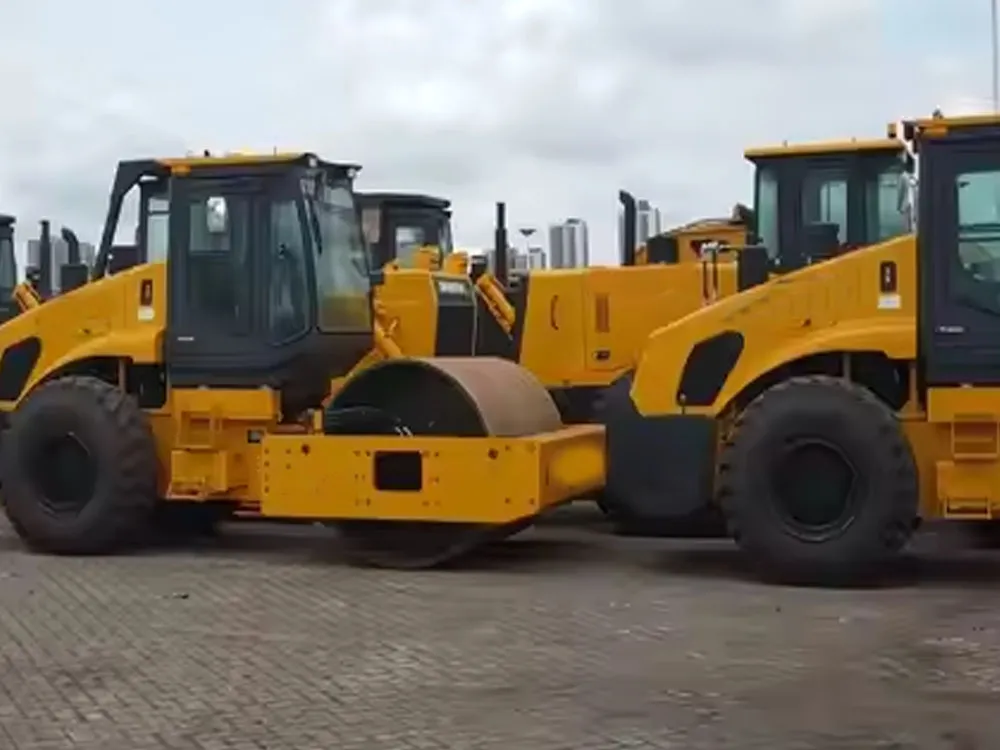
The vibration unit's protective cover is an important component protecting internal components from external debris. After each operation, check the cover for integrity, ensuring there is no damage or looseness.3. Lubrication and Maintenance
3.1 Lubricant Selection and Replacement
Components of the vibration unit (such as eccentric bearings and couplings) require regular lubrication to reduce wear and friction. It is recommended to use high-performance lubricants that meet the equipment requirements and change the lubricant regularly according to the manufacturer's recommendations. Typically, change the lubricant every 500 hours of operation or every six months.
3.2 Inspection of Lubrication Points
The lubrication points of the vibration device include the eccentric block bearing and the vibration motor bearing. The condition and level of the lubricating oil must be checked regularly. If the lubricating oil is cloudy or discolored, it indicates a potential problem with the lubrication system and should be replaced immediately.
3.3 Use of Grease
In addition to lubricating oil, some components of the vibration device also require grease. The grease level should be checked regularly to ensure that all lubrication points are adequately lubricated.
|
Lubrication parts |
Lubricant type |
Lubrication cycle |
Operating method |
|
Travel bearing |
Calcium-based grease (ZG-3) |
Every 20 days or a cumulative total of 50 hours of work |
Use a grease gun to add grease through the grease cup until new grease overflows from the edge of the sealing ring. Wipe away any excess grease. |
|
Vibration shaft bearing |
High-temperature anti-wear lithium-based grease (NLGI Grade 2) |
Every 100 hours |
Remove the protective cover, inject grease into both sides of the bearing housing using a grease gun, and rotate the vibrating shaft synchronously to distribute the grease evenly. |
|
Gearbox |
CD grade No. 30 diesel engine oil |
Every 1000 hours |
Drain oil → Clean → Add oil (until the oil level overflows from the filler neck). |
Oil Requirements:
Mixing lubricating oils of different brands or viscosity grades is strictly prohibited. The grease must be high-temperature resistant and water-resistant. In mountainous areas, it is recommended to use a complex aluminum-based grease to enhance moisture resistance.
4.1 Park the road roller on level ground;
4.2 Rotate the vibratory roller so that the filler neck is directly above the roller;
4.3 Remove the drain plug and observe the oil flow:
Normal: The oil flows continuously in a thin stream, without bubbles or emulsification;
Abnormal: The oil is cloudy, milky white (water ingress), or contains metal shavings (bearing wear) → Replace immediately and investigate the source of the fault.
4.4 After adding new oil, reinstall the drain plug, tightening it to a torque of 30 N·m to prevent loosening and leakage.
5.1 Daily Inspection
Before each operation, check the vibration of the vibration device to ensure it is normal, avoiding abnormal noise, excessive vibration amplitude, and other problems. At the same time, check the oil level and lubrication status to ensure smooth operation of all components.
5.2 Weekly Inspection
A more detailed inspection of the vibration unit should be conducted weekly, paying particular attention to the wear of the vibration motor and eccentric blocks, as well as whether the protective cover and fasteners are loose. A thorough cleaning of the vibration unit can be scheduled weekly.
5.3 Monthly Inspection
A comprehensive maintenance inspection should be conducted monthly, focusing on checking all components of the vibration unit for wear, cracks, or other damage. Based on the inspection results, damaged parts should be replaced promptly to prevent minor faults from causing larger problems.
6.1 Uneven Vibration
If the vibration unit exhibits uneven vibration, it may be due to a loose or damaged eccentric block, or insufficient lubrication. First, check the condition of the lubricating oil to ensure adequate lubrication; second, check for loose or damaged eccentric blocks and adjust or replace them as needed.
6.2 Abnormal Noise
If the vibration unit produces abnormal noise during operation, it may be due to bearing wear, insufficient lubrication, or the ingress of external debris. Check the condition of the lubricating oil and grease, replace them if necessary, and clean out any external debris.
6.3 Vibration Device Overheating
Overheating of the vibration device may be caused by prolonged high-load operation, insufficient lubricating oil, or cooling system malfunction. Check the cooling system, lubricating oil level, and equipment load, and adjust operating conditions promptly to avoid overheating.
|
Sound characteristics |
Possible reasons |
Handling measures |
|
A sharp "squeak" sound |
Bearing lack of oil or dried-out grease |
Stop the machine immediately, add lubricating grease, and run it for 5 minutes to observe if the problem persists. |
|
Periodic "clicking" sound |
Loose or worn eccentric block bolts |
Inspect and tighten the eccentric block fixing bolts to the standard torque (80 N·m), and replace worn parts. |
|
Low-frequency rumbling sound |
Bearing raceway spalling or roller breakage |
Disassemble the vibratory shaft and replace the entire bearing assembly; do not replace only a single roller. |
|
Irregular "rustling" sounds |
Hydraulic motor internal wear or impurity intrusion |
Replace the hydraulic oil filter element, clean the system, and circulate and purify using a 5μm precision filter. |
Proper maintenance and upkeep of the road roller are crucial for ensuring efficient operation and extending the service life of the vibration device. Regular inspection, cleaning, lubrication, and timely troubleshooting can effectively reduce equipment failure rates, improve operational efficiency, and ensure the road roller returns to optimal working condition after each operation.

