/static/upfiles/thumb/686cc3ca71449.webp

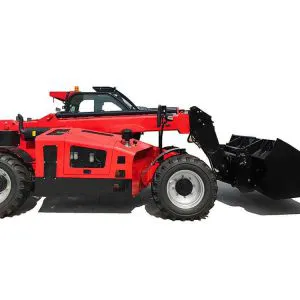
Safety Precautions for Telescopic Loaders in High-Altitude Operations

Telescopic loaders, as a type of high-efficiency construction machinery, play an increasingly important role in construction, logistics, and disaster relief due to their superior lifting height and flexible working radius. They are widely used in high-altitude operation scenarios such as construction, mining, and ports. Thanks to their unique telescopic boom design, telescopic loaders can provide a greater working range and efficiency in high-altitude environments. However, improper operation during high-altitude operations can lead to serious safety accidents. Therefore, understanding and adhering to safety precautions for high-altitude operations is crucial to ensuring the safety of equipment, personnel, and the working environment.

2025-11-11

/static/upfiles/thumb/68819f4239691.webp

How to Prevent Bucket Deformation in Backhoe Loader Bulldozing Operations

Backhoe loaders (also known as backhoe excavators or bulldozers) combine loading and bulldozing/excavation functions, making them a common type of construction machinery used on construction sites for earthmoving, excavation, and bulldozing tasks. In bulldozing operations, the bucket, as one of the most important components of the backhoe loader, undergoes a fundamental change in its force distribution—from tensile force primarily for excavation to pressure and torque primarily for pushing. Its performance directly impacts work efficiency and equipment lifespan. However, the bucket is prone to deformation during operation due to various reasons, which not only affects work efficiency but can also lead to equipment damage, production stoppages, and unnecessary repair and maintenance costs.

2025-11-10

/static/upfiles/thumb/6864a12b21877.webp

Precautions for Loader Operation in Muddy and Snowy Conditions

In industrial and mining environments, loaders (whether wheeled or tracked) often face complex and harsh ground conditions. Muddy/soft soil and snow/ice conditions are particularly challenging, each presenting its own unique characteristics in terms of slippage/sinking risks, equipment wear, and operational strategies. These harsh environments not only test the mechanical performance of the equipment but also place extremely high demands on operational procedures. This article systematically analyzes the different precautions for wheeled/tracked loaders operating in muddy and snowy environments from four dimensions: ground conditions, equipment adaptability, operating procedures, maintenance, and safety management, highlighting the similarities and differences between the two. It aims to provide a reference for equipment selection, operator training, and on-site management.

2025-11-07

/static/upfiles/thumb/6874aac4624cf.webp

Safety Precautions for Using Mini Dump Trucks in Narrow Construction Sites

Mini dump trucks (mini tipper) are suitable for narrow construction sites, early-stage earthwork for multi-story buildings, and small-scale landscaping and municipal projects due to their small size, high maneuverability, and moderate load capacity. In modern urban construction, the demand for material transportation in basement construction, old city renovation, and confined spaces is increasing. However, due to their high center of gravity, narrow track gauge, and limited visibility, they also pose unique accident risks in narrow and complex construction site environments (rollover, collision, crushing, and exhaust fumes causing suffocation). Mini dump trucks, with their compact size (typically around 2 meters in height), agile maneuverability (turning radius as low as 4.8 meters), and load capacity comparable to larger vehicles, have become crucial equipment in these specific scenarios.

2025-11-06

/static/upfiles/thumb/6879c20342eaa.webp

Comparison of Wheeled Dump Trucks and Tracked Tippers in Short-Distance Transportation in Mining Areas

In mining operations, especially in open-pit mines, small mines, or within mining areas, the efficiency and reliability of dump trucks for short-distance material transportation (e.g., ore, waste rock, soil, tailings) directly impact overall operating costs and production efficiency. The selection of engineering equipment directly affects production efficiency, cost, equipment lifespan, and safety.

2025-11-05

/static/upfiles/thumb/6879fe540b0e3.webp

Precautions for Operating Dump Trucks in High/Cold Climates

Dump trucks, as important transportation equipment in engineering machinery, are widely used in construction, mining, ports, and some factories. However, the operating environment of dump trucks under different climatic conditions has varying impacts on their performance and safety. In extreme high or cold weather, drivers and maintenance personnel need to pay special attention to the operation and maintenance of dump trucks to ensure that the equipment operates efficiently and safely.

2025-11-04

/static/upfiles/thumb/686f276f4f37f.webp

Proper Lubrication and Maintenance of Excavator Attachments

Excavators, as highly efficient engineering machinery, are widely used in construction, mining, road construction, and other fields due to their powerful working capabilities. To ensure the stable operation of excavators in various complex environments, the lubrication and maintenance of attachments are particularly important. This article will focus on commonly used excavator attachments—such as hydraulic breakers and buckets—and discuss how to properly lubricate and maintain these attachments to extend their service life and improve work efficiency.

2025-11-03

/static/upfiles/thumb/686e1152ccedb.webp

Routine Inspection Items for Large Excavators After Long-Term Operations

Large excavators operate in industrial and mining environments, such as mines, open-pit quarries, and infrastructure earthmoving, often running continuously for hours or even tens of hours. Under prolonged operation, fatigue accumulates in various systems, wear accelerates, and potential hazards arise. To ensure equipment reliability, safety, and economic lifespan, a systematic routine inspection immediately after operation is crucial. This article analyzes key inspection items for large excavators after long-term operation from a professional perspective and provides practical operational suggestions for on-site maintenance management and work teams.

2025-10-31

/static/upfiles/thumb/68551a533702f.webp

Precautions for Tracked Excavators Operating on Wet and Slippery Ground

Tracked excavators, with their large ground contact area and traction, have a significant advantage in operating on complex terrain. However, even these tracked "steel behemoths" face serious challenges when dealing with mud, water, snow, or slippery, soft soil. In engineering environments such as mining, infrastructure, and industrial projects, tracked excavators (crawler excavators, track-type excavators) offer a clear advantage over wheeled equipment on soft, slippery ground.

2025-10-30

/static/upfiles/thumb/686b68ed1a7f0.webp

Wheeled Excavator Operating Precautions in Different Operating Conditions

With their unparalleled road maneuverability, rapid relocation capabilities, and relatively low ground damage, wheeled excavators have become a mobile workhorse in numerous fields, including earthmoving, municipal construction, agricultural and forestry reconstruction, and disaster relief. In mines, construction sites, roads, and municipal construction, wheeled excavators have become a common operating equipment due to their maneuverability and adaptability.

2025-10-29

Get Free Quote

More Contact Details

Jessie Chen

0086-13738639686

Email:sales@cqwendy.com

Contact me whatapp

Yubei District, Chongqing, China.