
Heavy-duty towing tasks pose rigorous challenges to all system components of a tractor truck: high torque output, increased thermal load, frequent braking system operation, greater load on tires and suspension systems, and accumulated wear on the towing connection points. The core of professional maintenance is to eliminate potential problems, restore performance, and extend vehicle life through systematic inspection and targeted maintenance after each heavy-duty towing task.
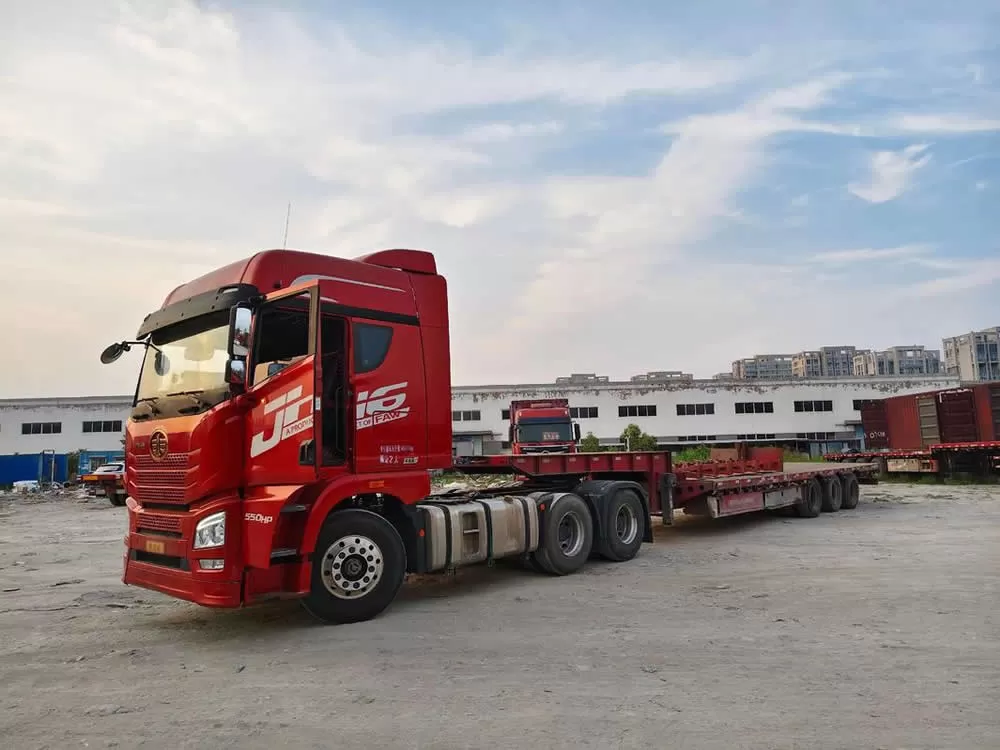
Heavy-duty towing (especially long-distance and high-weight tasks) not only tests the power output capabilities of the engine and transmission system but also increases wear and fatigue on the braking system, tires, suspension, and towing devices. Lack of timely inspection or improper maintenance can lead to premature failures and even safety hazards. Heavy-duty towing significantly increases the load on all systems of the tractor truck, leading to concentrated abnormal wear and fatigue damage, mainly in the following five core areas:
Braking System: Under prolonged heavy load, the brake shoe friction pads and brake drums experience severe temperature increases, easily leading to thermal degradation and drum deformation; the air system generates condensation due to frequent braking, and if not drained promptly, can cause pipe freezing and brake failure in winter.
Suspension System: Leaf springs develop fatigue cracks due to continuous high loads, and the loosening rate of U-bolts increases; shock absorber damping performance deteriorates, leading to increased impact force transmission between the frame and the trailer, causing stress concentration in the frame welds.
Frame and Fifth Wheel: The saddle lock hook, wedge, and tie rod mechanism are subjected to repeated impact loads, easily leading to pin wear and spring fatigue; the frame longitudinal beams and the saddle connection area are prone to weld cracking due to stress concentration.
Transmission System: The universal joint cross shaft of the driveshaft is prone to needle bearing wear and abnormal noise due to increased torque fluctuations when lubrication is insufficient; the differential gear oil temperature rises rapidly, accelerating oil oxidation and gear surface pitting. Tires and Wheel Bearings: When tire pressure is not adjusted according to the load, excessive deformation of the tire sidewall leads to heat buildup and tire blowout; wheel bearings, due to increased axial load and loss of lubricant, are prone to seizing, causing the wheel hub to overheat.
Immediately after completing a heavy-duty towing task, a comprehensive post-trip inspection is crucial. Daily inspection items include:
2.1 Engine and Lubrication System
Check engine oil level and quality: High-load operation increases engine oil temperature and shear stress, accelerating oil degradation. It is recommended to change the engine oil and filter promptly.
Coolant level and system condition: Check for leaks in the radiator and cooling lines, and the performance of the water pump.
Check for wear and looseness of belts and hoses.
2.2 Braking System
Under heavy-duty conditions, the braking system is subjected to greater heat load and friction:
Check the wear of brake pads/drums (or discs) to ensure they are within safe limits.
Adjust or check brake clearance and brake fluid (air system inspection, leak check).
Check for aging of brake system hoses and connectors.
2.3 Tires and Suspension System
Tire pressure and wear: When tires bear heavy loads, changes in tire pressure directly affect tread wear, heat accumulation, and handling stability.
Check the rims, valve stems, and bolt tightness.
Check suspension components (leaf springs, shock absorbers, bushings) for cracks and looseness.
2.4 Towing Connection Devices and Structural Components
Pay close attention to the wear, lubrication status, and structural deformation of the main towing connection parts such as the "fifth wheel" or kingpin, sliding plate, and locking mechanism. Excessive wear requires timely replacement or repair.
Check the tightness of articulated connection bolts and the reliability of the locking mechanism.
2.5 Hydraulic and Transmission System
Check the oil level and leakage of the gearbox and driveshaft to ensure that the transmission system does not experience abnormal wear under high load.
Check the differential fluid and front and rear axle fluids. 2.6 Electrical and Electronic Systems
Check battery status, cable connections, and electronic control module error codes.
Check the working status of signal lights, running lights, brake lights, etc.
In addition to daily checks, more in-depth periodic maintenance should be performed based on the intensity of heavy-duty operations:
3.1 Lubrication and Replacement Items
Lubricate all moving joints (bearings, ball joints, steering knuckles, etc.) to reduce wear under high loads.
Regularly replace engine oil, transmission oil, brake fluid, differential oil, and hydraulic fluid.
Clean or replace air filters, fuel filters, dust filters, etc.
3.2 In-Depth Brake System Maintenance
Perform brake system performance tests, including air pressure stability, brake response, and auxiliary braking function checks.
Check for aging of the spring brake chamber diaphragm.
3.3 In-Depth Inspection of the Towing Device
The fifth wheel and kingpin connection structure are critical for heavy-duty towing:
If the contact surface is not smooth, has cracks, or is severely worn, the parts should be replaced promptly.
Adjust the clearance between the locking hook and the kingpin to ensure proper operating clearance.
According to mainstream manufacturer maintenance manuals (such as Cummins, ZF) and industry general standards, the following seven core maintenance operations must be performed after heavy-duty towing:
|
Maintenance items |
Operation content |
Periodic requirements |
Key points |
|
Air brake system drainage |
Drain the condensate from the gas tank, quick-release valve, and relay valve. |
Before setting off each day |
This operation must be performed after the engine is turned off to prevent air pressure leakage; in winter, an antifreeze draining agent must be used. |
|
Fifth wheel saddle lubrication |
Clean the contact surfaces of the lock hook, wedge, and pull rod, and apply high-temperature lithium-based grease. |
Every 5000 kilometers |
Regular grease is strictly prohibited; after lubrication, manually operate the device three times to ensure even grease distribution. |
|
Lubrication of drive shaft universal joint |
Remove the grease fitting and inject extreme pressure grease until new grease overflows. |
Every 5000 kilometers |
Use a grease gun with a pressure gauge to avoid overfilling and damaging the seal. |
|
Tire pressure adjustment |
Calibrate according to the "full load tire pressure" value indicated on the vehicle door nameplate. |
Before each reload |
Unloaded tire pressure (750 kPa) ≠ Heavy load tire pressure (900–1000 kPa); an error of ±5% carries a risk of tire blowout. |
|
Wheel hub bearing inspection |
Disassemble and inspect the bearing, replace the grease, and measure the axial clearance. |
Every 20,000 kilometers |
Bearings with clearances exceeding 0.15mm must be replaced; use high-temperature bearing grease (NLGI grade 2). |
|
Engine oil change |
Change CK-4 grade fully synthetic engine oil and three filters. |
Every 4000 kilometers under heavy load conditions |
The cycle time is shortened by 40% compared to the conventional cycle; the oil viscosity must be matched to the ambient temperature ( use 5W-40 below -10℃ ). |
|
Four-wheel alignment inspection |
Test toe-in, camber, and caster angle |
Every 20,000 kilometers or after a collision |
Any deformation of the suspension system must be inspected to prevent abnormal tire wear (uneven wear, sawtooth pattern). |
At a professional level, maintenance after heavy-duty towing is not only about repair and inspection, but also a predictive maintenance mechanism:
4.1 Temperature and Vibration Analysis
High torque and prolonged towing can cause the engine and transmission system temperature to rise and components to vibrate frequently. Infrared thermography and vibration analysis equipment can be used to detect overheating points or loosening faults in advance.
4.2 Brake Fade Analysis
The braking system may experience fade after long downhill stretches or frequent braking. Brake performance should be retested, and braking parameters adjusted based on wear.
4.3 Data-Driven Maintenance (if an on-board diagnostic system is available)
Read system logs and error codes from the ECM (Engine Control Module), ABS, and ESP systems to predict potential faults in advance. This helps improve overall vehicle reliability under heavy-duty conditions.
Professional maintenance requires technical support, and the driver's operating habits also directly affect the maintenance effectiveness of the tractor:
Drivers are required to complete a pre-inspection report after each operation, recording any abnormalities and malfunctions.
Drivers should be educated on maintaining appropriate towing speeds, reasonable gear shifting points, and controlling braking thermal load to reduce component fatigue.
After heavy-duty towing, the maintenance of a tractor is no longer within the scope of "routine maintenance," but should be considered as high-stress system health management. Therefore, maintenance of tractors after heavy-duty towing requires a comprehensive approach, covering the engine, transmission, brakes, suspension, towing device, and electrical system. Daily inspections are fundamental, while periodic in-depth maintenance and predictive maintenance are key to improving vehicle reliability and extending its service life. By strictly implementing the above inspection and maintenance strategies, not only can vehicle safety be improved, but repair costs and unplanned downtime losses can also be reduced.

