
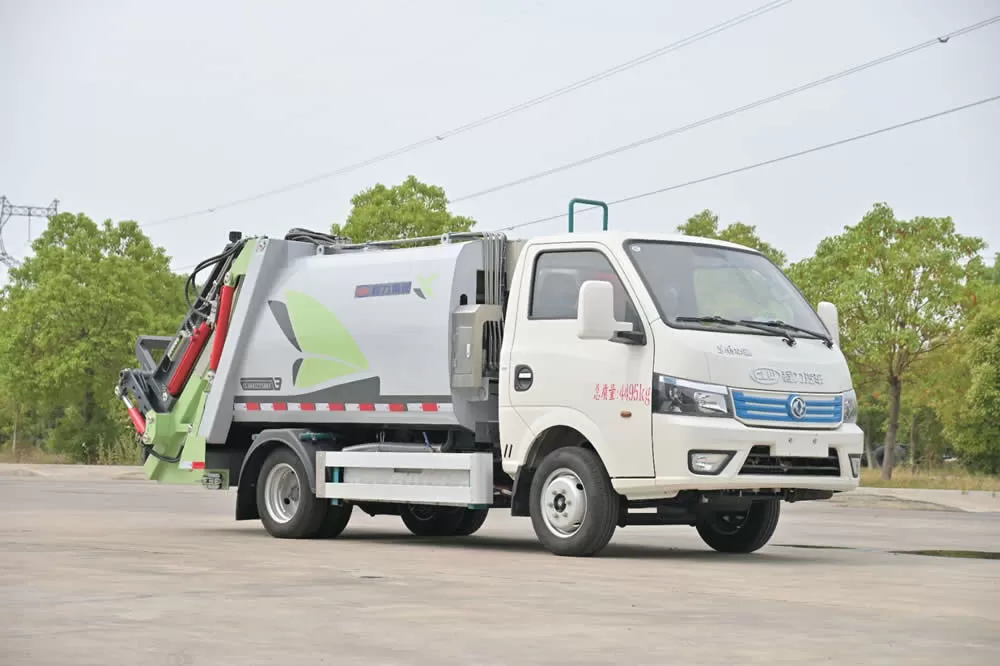
Sanitation vehicles, as essential tools for urban environmental cleaning, operate year-round in harsh working environments, especially in areas with heavy dust, pollution, and humidity. Therefore, timely and effective maintenance and repair are crucial for extending the service life of sanitation vehicles, improving work efficiency, and ensuring operational safety. This article, from the perspective of a sanitation vehicle maintenance engineer, will detail the maintenance and repair precautions for sanitation vehicles after prolonged operation, helping to improve their operational efficiency and safety.
1.1 Engine Inspection
The engine is the core power system of the sanitation vehicle. Daily inspections should include:
Engine oil check: Regularly change the engine oil and maintain the oil level within the appropriate range to avoid engine wear due to insufficient lubrication.
Air filter cleaning and replacement: The air filter should be checked regularly, especially in dusty environments, and replaced promptly according to usage.
Cooling system check: Check the coolant level and concentration, ensuring that the cooling system is not blocked to prevent engine overheating.
1.2 Battery Inspection
Sanitation vehicles are frequently started and stopped, making them prone to battery power shortage or uneven charging problems:
Battery power detection: Regularly check the battery voltage to ensure good battery performance and avoid starting difficulties.
Battery connection check: Check if the battery terminals are loose or corroded and clean them promptly.
1.3 Lubrication System Maintenance
The lubrication system directly affects the vehicle's operational stability:
Bearing and transmission system lubrication: Check all parts that require lubrication and add lubricating oil promptly to reduce friction loss.
Hydraulic oil check: For sanitation vehicles equipped with hydraulic systems, the hydraulic oil level and quality should be checked regularly to ensure smooth operation of the hydraulic system.
2.1 Chassis Cleaning and Inspection
During operation, sanitation vehicles easily accumulate mud, sand, garbage, and chemical substances. Therefore, cleaning and inspecting the chassis is crucial:
Chassis cleaning: Use a high-pressure water gun to clean the chassis and important components to remove attached substances and prevent excessive dust accumulation from affecting vehicle performance. Rust Prevention: Especially in humid environments, the chassis and frame components should be regularly inspected for rust, and anti-rust oil should be applied if necessary.
2.2 Brake System Inspection
The brake system of sanitation vehicles directly affects driving safety:
Brake Pad and Brake Disc Inspection: Regularly check the wear of the brake pads and ensure that the brake disc surface is not severely worn to prevent brake failure.
Brake Fluid Inspection: Regularly check the brake fluid level and quality, and replace the brake fluid if necessary.
Sanitation vehicles are usually equipped with various special equipment, such as garbage bins, sweeping brushes, and compression systems, which are prone to malfunctions under long-term operation, thus requiring special maintenance.
3.1 Garbage Bin and Collection System
Garbage Bin Cleaning: After prolonged use, garbage bins are prone to garbage accumulation and odors. Regularly clean and disinfect the garbage bins.
Compression System Inspection: Check whether the garbage compression equipment is operating normally to avoid low garbage collection efficiency due to equipment failure.
3.2 Sweeping Device Inspection
The sweeping device is an important working part of the sanitation vehicle and needs to be inspected regularly:
Sweeping Brush Replacement and Cleaning: The sweeping brush is the most easily worn part during the sweeping process of the sanitation vehicle. Regularly check the brush bristles and replace damaged sweeping brushes promptly.
Vacuum System Inspection: Check whether the suction port and pipes are blocked to ensure that the vacuuming effect is not affected.
3.3 Hydraulic System Maintenance
The hydraulic system is widely used in sanitation vehicles and requires重点 maintenance:
Hydraulic Oil Inspection and Replacement: The quality of hydraulic oil directly affects the working efficiency of the hydraulic system. Regularly check the oil level and quality.
Hydraulic Pipeline Inspection: Check the hydraulic pipelines for oil leaks and promptly repair or replace aging components.
Tires and suspension systems are the foundation for ensuring the stable operation of sanitation vehicles:
Tire Pressure and Wear Inspection: Regularly check tire pressure to avoid affecting driving safety due to low pressure or excessive wear.
Suspension System Inspection: Check the springs, shock absorbers, and other components of the suspension system to ensure smooth driving.
|
system |
Maintenance items |
cycle |
Technical Requirements |
|
Hydraulic system |
Hydraulic oil change |
Every 500 hours or 6 months |
UseISO VG 46 anti-wear hydraulic oil ; mixing different brands of oil is strictly prohibited;a cooler must be installed if the oil temperature remains above 80°C . |
|
Filter replacement |
Every 250 hours |
Replace the return oil filter and suction oil filter;do not simply clean and reuse them . |
|
|
Seal inspection |
Every 100 hours |
The compression unit's sealing ring is made offluororubber (FKM), which is resistant to leachate corrosion and should be replaced when it ages and hardens. |
|
|
Trash can body |
Inspection of anti-corrosion coating |
per month |
Check for peeling of the epoxy zinc-rich primer and polyurethane topcoat. Ifthe corroded area exceeds 5cm², repainting is necessary. |
|
Leachate Residue Cleanup |
daily |
The leachate contains Cl⁻,SO₄²⁻, andorganic acids, with a pH of 2–13, andits corrosion rate is 8 times that of ordinary wastewater. |
|
|
Electrical system |
Control cabinet protection |
weekly |
Check if the IP65 protection rating sealing ring is aged,and replace the internal silica gel desiccant every 3 months. |
|
Wire harness inspection |
per month |
Check the wiring harness for damage caused by debris or wear,and wrap exposed terminals with heat shrink tubing. |
|
|
Braking system |
Brake pad replacement |
Every 15,000 kilometers or 6 months |
For mountainous urban areas, it is recommended to replace the tiresevery 10,000 kilometers, or when the wear reaches 3mm. |
|
Brake fluid change |
Every 2 years or 40,000 kilometers |
In humid areas, it is recommendedto replace it every 1.5 years; it will become ineffective if the moisture content is greater than 3%. |
|
Consumables |
Recommended Model/Material |
Replacement Standard |
illustrate |
|
Hydraulic oil |
Mobil DTE 24 / Shell Tellus S2 M 46 |
500 hours or 6 months |
Viscosity index > 100, demulsibility > 30 min |
|
Air filter |
Mann C2110 / Mahle M3100 |
10,000km or 3 months |
Dust zone shortened to 2 months |
|
Diesel filter element |
Filter King F1000 |
15,000km |
A water separator needs to be installed in humid environments. |
|
Seals |
Fluororubber (FKM) O-rings |
Hardening, cracking, and volume expansion >5% occur. |
Resistant to leachate corrosion, service life ≥ 2 years |
|
Battery |
Super-efficient maintenance-free lead-acid battery (12V 180Ah) |
2 years or capacity <80% |
Check the voltage monthly and charge immediately if the battery is low. |
Case 1: Hydraulic Oil Temperature Out of Control Leading to System Failure
Phenomenon: The vehicle suddenly stopped during operation, and the instrument panel displayed "hydraulic overheating";
Cause: Radiator blocked by cottonwood fluff + use of inferior hydraulic oil (viscosity mismatch);
Solution: Clean the radiator, replace with ISO VG 46 oil, and install an oil temperature alarm;
Prevention: Check the radiator's permeability after each day's operation, and establish a traceability ledger for oil product procurement.
Case 2: Corrosion and Perforation at the Bottom of the Waste Bin
Phenomenon: After the vehicle returned to the depot, black liquid leakage was found on the ground;
Cause: Local detachment of the epoxy zinc-rich coating, leachate penetration along the weld seams, and electrochemical corrosion for 11 months;
Solution: Laser rust removal → sandblasting → spraying with epoxy zinc-rich + polyurethane double-layer anti-corrosion coating (thickness ≥ 200μm);
Prevention: Use an infrared thermal imager monthly to scan for abnormal temperature areas in the bin to detect corrosion hotspots in advance.
Case 3: Electrical Control Cabinet Short Circuit
Phenomenon: The compression device could not start, and the control panel was completely black;
Cause: Water vapor penetrated the IP65 protection layer after heavy rain, causing oxidation and short circuit of the connector;
Solution: Replace the control module, add moisture-proof sealing rings + silica gel desiccant;
Prevention: Apply conformal coating to all wiring harness connectors, and establish a monthly humidity record table.
The long-term stable operation of sanitation vehicles depends on meticulous maintenance and upkeep. Regular maintenance not only extends the service life of the vehicles but also effectively prevents sudden failures and improves operational efficiency. Therefore, sanitation vehicle maintenance engineers need to constantly monitor the vehicle's condition, conduct timely inspections and maintenance, and ensure that every sanitation vehicle performs excellently in its busy work, contributing to the cleanliness of the city.

