
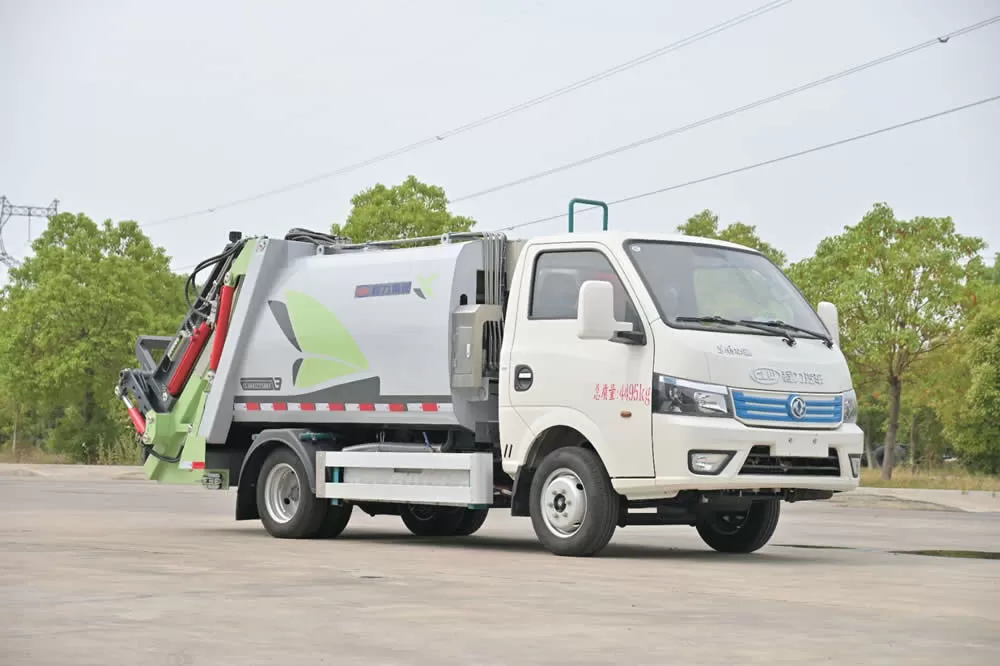
Sanitation vehicles, as the "cleaners" of the urban public environment, undertake important tasks such as sweeping and waste transportation. To ensure their efficiency and safety, pre- and post-operation inspections are crucial. Facing a high-intensity, high-load working environment, the reliability of the vehicle directly affects operational safety and efficiency. As a sanitation vehicle maintenance engineer, we need to understand the inspection requirements for each stage to ensure the normal operation of sanitation vehicles and extend their service life. The following are the inspection items required before and after operation.
|
Inspection Category |
project |
Operating standards and precautions |
|
Vehicle exterior |
Car body cleaning |
Check the car body for obvious stains, oil stains, etc. Keeping the car body clean helps prevent the accumulation of external pollutants. |
|
Rearview mirror and field of vision |
Make sure your rearview mirrors are clean and adjusted to the best angle to avoid blind spots. |
|
|
Power and Hydraulic Systems |
Engine oil level |
Use the dipstick to check the oil level. The oil level should be between the "MIN" and "MAX" marks. If it is below the lower limit, add the same type of oil. Do not mix different types of oil. |
|
Battery check |
Check the battery level to ensure it is fully charged and properly connected, to avoid affecting operations due to insufficient power. |
|
|
Coolant level |
Check the expansion tank level to ensure it is at the "FULL" mark. During hot seasons, use a special antifreeze and antiboiling solution. |
|
|
Hydraulic oil level |
Hydraulic systems of compressor trucks, hooklift trucks, etc., require checking the oil tank level while the engine is off. Insufficient oil can easily cause the pump to run dry and burn out. |
|
|
Fuel and brake fluid |
Confirm that the fuel tank has enough fuel to meet the day's work requirements; the brake fluid level is not lower than the "MIN" line on the reservoir, and there is no emulsification or turbidity. |
|
|
Chassis and driving system |
Tire condition |
Check the tire pressure (standard value can be found on the nameplate, usually 0.7–0.8 MPa), and visually inspect the tire tread for cracks, bulges, or embedded foreign objects; the wear limit mark should not be lower than 1.6 mm. |
|
Braking system |
Press the brake pedal to confirm there is no softness or abnormal noise; check the brake drum/disc for signs of overheating, and pay special attention to the risk of air lock in hot weather. |
|
|
Transmission and power take-off |
Before engaging the power take-off (PTO) of a compression-type vehicle, ensure that the air pressure is ≥0.7MPa. After depressing the clutch, wait 3–5 seconds before engaging the gear.It is strictly forbidden to engage the PTO directly under load. |
|
|
Electrical and lighting systems |
Battery status |
Check that the battery terminals are free from corrosion and looseness, and that the voltage is not lower than 12.4V; the electrolyte level should be 10–15mm above the plates (for non-maintenance-free batteries). |
|
Lines and Insulation |
Visually inspect the high-voltage wiring harness and sensor lines for wear, exposure, and grounding; oil pipes and gas pipes must not come into contact with sharp-angled parts, and rubber sleeves should be installed if necessary. |
|
|
Light signals |
Comprehensive testing: headlights, turn signals, side marker lights, warning lights, reversing lights, and brake lights, ensuring normal brightness, no flickering, and no unilateral failure. |
|
|
Operating device and sealing performance |
Sealed trash cans |
Check that the sealing strips of the box and lid are free from aging or breakage, and that there are no obvious gaps after closing to prevent leakage and odor from escaping during transportation. |
|
Cleaning system |
Check whether the sweeping brushes, vacuuming devices, and spraying systems are working properly, as the performance of the sweeping system directly affects the work results. |
|
|
Waste compression system |
Check the oil pressure and operating status of the garbage compression system to ensure it can compress garbage normally. |
|
|
hydraulic lines |
Start the hydraulic system and observe the oil pipes, joints, and cylinders for any oil leaks or drips. Pay special attention to the connection between the compression cylinder and the push plate cylinder. |
|
|
Spray/vacuum system |
For water trucks, check if the nozzles are clogged or if the angle is off; for vacuum trucks, check if the vacuum pump seals and suction pipe connections are tight and leak-free. |
Special note: After engaging the power take-off (PTO) on a compressed garbage truck, it must idle for 3-5 minutes to allow the system pressure to stabilize and the oil temperature to rise before starting operation, to avoid hydraulic shock damage to the pump body.
|
Inspection Category |
project |
Operating standards and precautions |
|
Garbage residue cleanup |
inner wall of the trash can |
It is essential to thoroughly remove any remaining debris from the inner walls, push plates, and bottom plate of the container, paying particular attention to corners, drainage holes, and sealing grooves to prevent decay, bacterial growth, and corrosion of the container. |
|
suction pipe and tank |
After operation, the suction pipe and inner wall of the tank must be rinsed with clean water to prevent the sewage from drying and clogging. It is strictly forbidden to directly discharge sewage into the city's pipe network. |
|
|
System depressurization and shutdown |
Hydraulic system pressure relief |
After the operation is completed, first turn off the power take-off, and then operate the control valve todepressurize the entire systemto prevent residual pressure from causing the cylinder to move unexpectedly or the pipeline to burst. Check the hydraulic oil level to prevent the hydraulic system from reducing its working efficiency due to insufficient oil. |
|
Engine oil and coolant |
Check the oil and coolant levels to ensure that insufficient fluid will not affect engine operation. |
|
|
Engine off |
Emergency stops are strictly prohibited. The engine should be allowed to idle for 1–3 minutes to allow the turbocharger and hydraulic system to cool down before turning off the ignition switch. |
|
|
fuel and battery |
Check the fuel and battery levels, and refuel or charge if necessary to ensure the vehicle has sufficient power for the next operation. |
|
|
Main power switch |
After confirming that all electrical equipment is turned off, disconnectthe main power switch(not just turn off the engine with the key) to prevent electrical leakage and battery drain. |
|
|
Equipment cleaning and status recording |
Body and chassis |
Clean the exterior surface, chassis, and wheel hubs of the vehicle to remove mud, grease, and other contaminants, making it easier to spot potential problems such as cracks, rust, and loose bolts. |
|
Fault Log |
Fill out the "Vehicle Operation Log" daily to record information such as abnormal noises, locations of unusual noises, instrument alarms, and work interruptions, as a basis for maintenance decisions. |
|
|
Wear of critical components |
Inspect the wear of vulnerable parts such as brushes, suction cups, scrapers, and compression blades, record the remaining thickness, and formulate a replacement plan in advance. |
|
|
Operating system function check |
Cleaning system |
Check the wear and tear on components such as the sweeping brush and vacuuming device, promptly remove any blockages, and inspect for any damage. |
|
Waste compression system |
Check the compression system for abnormal noise or jamming to prevent malfunctions during the compression process. |
Special warning: Leaving the vehicle without releasing the pressure after operation is one of the main causes of sudden hydraulic system leaks; directly shutting off the power without idling will significantly shorten the life of the turbocharger.
|
Model |
Pre-operation special project |
Post-work special project |
|
Compactor sanitation vehicle |
The air pressure must meet the standard before the power take-off (PTO) is engaged; check whether the limit switch of the compression mechanism is sensitive. |
Clean debris from the gap between the push plate and the housing; check the piston rod of the compression cylinder for scratches or bending. |
|
sprinkler |
Check the water pump belt tension; operation is strictly prohibited above 1500 rpm; confirm the water tank cover is properly sealed. |
Drain the water tank of residual water (to prevent freezing in winter); clean the nozzle filter to prevent algae blockage. |
|
Sewage suction truck |
Check the vacuum pump oil level and quality, and confirm that the vacuum gauge reading is normal. |
Clean the vacuum lines and check the tank's negative pressure seal to prevent insufficient suction power in the next operation. |
Pre- and post-operation inspections of sanitation vehicles not only ensure the smooth operation but also effectively prevent failures and accidents, extending the vehicle's service life.
Improper operation: Approximately 68% of sudden failures are due to not performing the "idle shutdown" or "system pressure release" procedures, which are due to human operational negligence.
Missing records: Over 40% of repair shops report that vehicles sent for repair lack operation logs, making fault tracing difficult.
Component misuse: Some units, in order to save costs, extend the service life of sweeping brushes and suction cups, causing secondary damage and ultimately increasing repair costs.
Therefore, sanitation vehicle maintenance engineers must pay close attention to every inspection task, perform regular maintenance, and conduct meticulous inspections and maintenance to ensure that sanitation vehicles are always in optimal working condition. Through these inspections and maintenance work, sanitation vehicles can make a more stable and efficient contribution to urban environmental cleanliness.

