
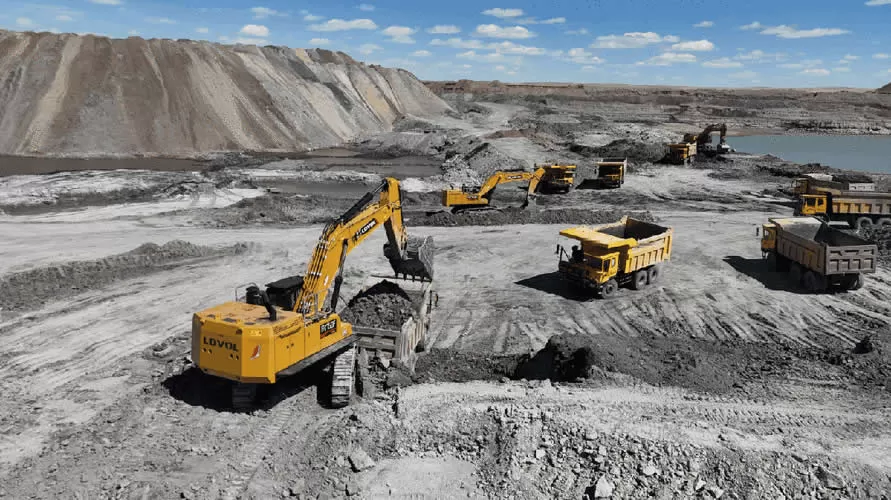
Heavy-duty vehicles (such as mining dump trucks, engineering transport vehicles, and large excavators) operate for extended periods in harsh environments such as mining areas, deserts, and mountainous regions. They frequently face high-intensity working conditions and extreme natural environments, encountering complex erosion from high concentrations of dust, high-temperature sandstorms, mud and salt spray, and strong vibrations. These environments pose serious challenges to the dust and corrosion protection capabilities of these vehicles. This article will analyze and introduce, from the perspective of professional maintenance engineers, how to ensure the normal operation of heavy-duty vehicles in these harsh environments through scientific design and effective maintenance.

Mining Environment: Mining areas are typically dusty, especially in open-pit mining operations. Fine mineral dust can quickly enter various vehicle components, increasing wear and accelerating the corrosion process. High temperatures and humidity also often threaten electrical and hydraulic systems.
Desert Environment: Sandstorms are frequent, and sand and dust can quickly penetrate various vehicle components, affecting engine performance, braking systems, and sealing systems. At the same time, extreme high temperatures can lead to premature degradation of oils and lubricants.
Mountainous Environment: Uneven road conditions in mountainous areas cause significant impact on the chassis and transmission systems of heavy-duty vehicles, while mud, water, and humidity accelerate metal corrosion.
Dust Intrusion: Leads to clogging of the air filtration system, increased engine wear, and a 3-5% decrease in power (PM10 penetration rate increases by 8 times);
Chemical Corrosion: Acidic dust in mining areas and the spontaneous combustion of ferrous sulfide trigger polysulfuric acid corrosion, causing brittle fracture of pipe bundles;
Mechanical Wear: Sand particles impact the cylinder wall at a speed of 12-15 m/s, increasing the cylinder liner wear rate by 5 times;
Electrical Failure: Mud penetration into connectors causes short circuits, and salt spray corrosion leads to cable seal failure.
2.1 Dust Protection System: Two-Stage Dry Air Filtration Structure
First Stage: Reverse Cyclone Pre-filter
Utilizes centrifugal force to separate large dust particles exceeding 10μm, with a separation efficiency of 93%, and the dust is collected in a dust collection tray.
Second Stage: Multi-layer Composite Fiber Paper Filter Element
Filtration efficiency ≥99.5%, intercepts PM2.5 fine dust, and the filter element has ≥12 folded layers.
Safety Redundancy: An additional safety filter element is added as the last barrier to prevent dust from entering the engine if the main filter element is damaged.
2.2 Corrosion Protection: Composite Sealing and Material Upgrades
Shaft End Seal: Uses a double-lip fluororubber skeleton oil seal (hardness 70–80 Shore A), with a PTFE wear-resistant layer coated on the lip, resistant to temperatures up to 230℃, and 3 times improved wear resistance.
Extreme Scenarios: When the dust concentration exceeds 100mg/m³, a magnetic fluid seal (such as Ferrotec MFS) is used to achieve zero contact and IP68 protection, with a lifespan more than 5 times that of traditional oil seals.
Housing Seal: Combines a metal spiral wound gasket + anaerobic sealant (such as Loctite 587), resistant to pressure up to 10MPa, temperature range of -50 to 200℃, and resistant to vibration loosening.
2.3 Corrosion Mechanism and Countermeasures
Ferrous Sulfide Spontaneous Combustion: In high-temperature and humid environments, FeS oxidation releases heat, generating polythionic acid, leading to stress corrosion cracking.
Countermeasures: Regularly clean deposits, and use an epoxy primer + acrylic topcoat system (adhesion level 1) to form a physical + chemical double barrier.
3.1 Air Filtration System Optimization
A two-stage desert air filter is standard, with a "cyclone pre-filter + paper fine filter" combination, suitable for sandy environments where PM10 accounts for over 70%.
Air Intake Dust Cover: Uses a cold-rolled steel plate + high-density mesh structure, with Velcro sealing edges to prevent sand and dust from entering through the housing gaps. Filter Element Replacement Cycle: In areas with frequent sandstorms, it is recommended to check every 50–100 hours. Replacement is required when the resistance increases by 1 kPa to avoid power loss and the risk of catalytic converter meltdown.
3.2 Temperature Resistance of Sealing Materials
Fluororubber (FKM): Continuous operating temperature limit of 230℃, short-term resistance to 300℃, excellent ozone aging resistance, and a natural storage life of over 10 years.
Perfluoroelastomer (FFKM): Used in extreme high-temperature areas, continuous operating temperature can reach 330℃, resistant to over 1600 chemical solvents.
Polyurethane (PU): Used for dynamic sealing, superior wear resistance compared to nitrile rubber, suitable for shaft journal roughness Ra≤0.8μm.
4.1 Chassis Anti-corrosion Process
|
Process type |
Materials/Process |
Corrosion resistance |
Applicable Scenarios |
|
Thermal spraying of zinc- aluminum |
Zinc-aluminum alloy coating (thickness 80–120 μm) |
Salt spray test exceeded 1000 hours, no rust, sacrificial anode protection. |
Commercial vehicle chassis and frame |
|
Chassis armor |
Nanopolymer (3mm elastic layer) |
Stone impact resistance 1000MPa, temperature resistance -40℃to 120℃ |
Off-road vehicles, vehicles that frequently cross water |
|
Galvanized steel sheet |
Hot-dip galvanizing (80–120μm) |
Long-lasting corrosion resistance, recyclable, and in line with green manufacturing. |
Original factory manufacturing stage |
4.2 Electrical System IP67 Protection Design
Connector Protection: IP67 waterproof connectors are used, meeting the requirement of no harmful water ingress after immersion in 1 meter of water for 30 minutes.
Sealing Structure:
O-ring or silicone sealing gasket, width ≥1mm;
Housing material selected is polycarbonate (PC) or ABS, thickness ≥2mm;
Circuit board coated with three-proof paint (moisture-proof, mildew-proof, salt spray-proof).
Cable Gland:
Fluororubber (FKM): Resistant to seawater and salt spray, preferred material;
Hydrogenated Nitrile Butadiene Rubber (HNBR): Oil-resistant, wide temperature range, suitable for dynamic sealing;
Polytetrafluoroethylene (PTFE): Used for strong corrosive media, low friction, temperature resistance from -200℃ to 260℃.
4.3 Water Pressure and Structural Strength Verification
Static water pressure at 1 meter depth: P=ρgh=1000×9.8×1=9800Pa≈10kPa
The housing design must withstand this pressure without deformation.
5.1 Key International Standard Parameters
|
Standard Number |
Test Project |
Test conditions |
Judgment basis |
|
ISO 16750-3 |
Dust and vibration durability |
Frequency 5–2000Hz, acceleration 0.1–50m/s², duration 8–96h |
The electronic system is functioning normally and there are no structural failures. |
|
SAE J2334 |
Circulating salt spray corrosion |
Neutral salt spray + constant humidity and heat cycle |
The coating is free from blistering, peeling, and rust, simulating real-world climate conditions. |
|
ISO 9227 |
neutral salt spray test |
35°C, 5% NaCl, pH 6.5–7.2 |
240 hours without white rust and 480 hours without red rustare common standards for heavy vehicles. |
5.2 Comparison of Actual Lifespan of New Anti-Corrosion Materials
Nanoceramic coating: Applied to piston rings, after 200,000 km of durability testing, the wear of the ring groove was only 1/5 of that of traditional materials.
Fluororubber sealing ring: After continuous exposure to a salt spray environment for 480 hours, it still maintained elasticity and sealing performance, without cracking or hardening.
Thermal sprayed zinc-aluminum coating: No corrosion after 5 years in open-air conditions, and still maintains over 80% protective coverage after 10 years.
|
Inspection items |
Inspection cycle |
Key points of operation |
Tools/Standards |
|
Air filter |
Every 50–100 hours |
Check the filter element pressure differential, clean the dust collection tray, and replace the main filter element. |
Differential pressure gauge, conforming to ISO 16750-3 |
|
Shaft end seal |
Every 200 hours |
Check for oil seal leaks and measure shaft runout; it should not exceed 0.05 mm/m. |
Laser alignment tool, torque wrench |
|
Chassis coating |
Every 6 months |
Inspect for scratches and peeling, and apply armor coating locally. |
Spray gun, thickness gauge |
|
Electrical connectors |
Every 100 hours |
Disassemble and inspect the IP67 interface, clean off any oxides, and replace the sealing ring. |
Multimeter, sealing ring tester |
|
Cable sealing ring |
each year |
Check if the fluororubber has hardened or cracked, and replace any worn parts. |
Tensile testing equipment, salt spray chamber verification |
When heavy-duty vehicles operate in harsh environments, they must rely on a scientific and reasonable dustproof and anti-corrosion solution to ensure their long-term stable operation. Through measures such as sealing technology, special coatings, corrosion-resistant materials, and regular maintenance, the service life of the vehicles can be effectively extended, and their adaptability and operating efficiency in extreme environments can be improved. Every vehicle maintenance engineer should develop appropriate protection strategies based on different environmental characteristics to provide strong support for ensuring the normal operation of the equipment.

