
In construction engineering, excavators serve as the core machinery for earthworks, site preparation, and foundation construction. The selection of an excavator's tonnage directly determines construction efficiency, operational costs, site safety, and overall site compatibility. Improper tonnage selection can lead to various issues: using a small excavator for heavy-duty tasks results in low efficiency and accelerated equipment wear due to overloading, while deploying an oversized excavator for precision work leads to resource waste and operational constraints caused by limited site space.
To assist construction firms and equipment managers in making precise selections, this article analyzes the full spectrum of operational scenarios encountered on construction sites. Based on standard industry tonnage classification criteria, it systematically breaks down the performance characteristics, suitable applications, operational advantages, and limitations of excavators across different tonnage classes. Furthermore, it compiles a standardized reference chart for tonnage selection, offering a professional and practical technical guide for choosing the appropriate excavator for any type of construction site.
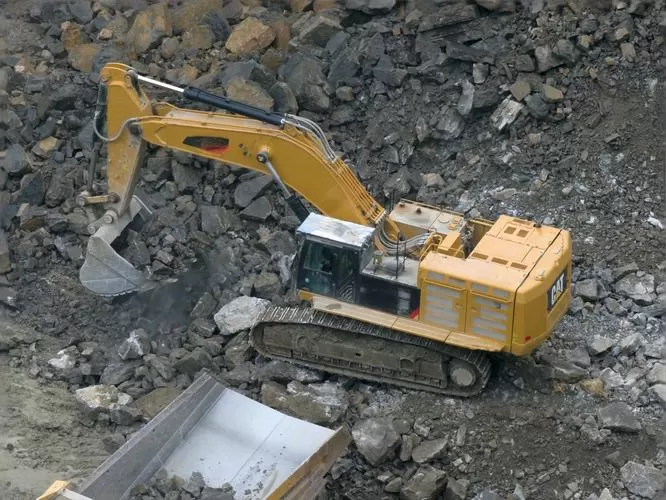
Drawing upon domestic construction industry practices and general classification standards for construction machinery, excavators can be categorized into five major classes based on their total machine tonnage: Micro, Small, Small-to-Medium, Medium, and Large. Models within these different categories exhibit significant variations in body dimensions, digging force, bucket capacity, and operating radius. Precise classification serves as the fundamental basis for matching the machine to specific working conditions; the specific classification standards are as follows:
Micro Excavators: 1–6 tons. Characterized by a compact body, exceptional agility, and ease of transport between sites, these machines are ideally suited for precision work in confined spaces. They feature low fuel consumption and low maintenance costs, though their digging force is limited, rendering them unsuitable for heavy-duty earthmoving operations.
Small Excavators: 6–15 tons. These models strike a balance between agility and operational power, featuring a moderate bucket capacity. They are well-suited for small-to-medium scale, light-duty construction tasks and serve as the primary workhorses for village and town construction projects as well as small-scale infrastructure support works.
Small-to-Medium Excavators: 15–20 tons. Offering balanced performance, these machines demonstrate significantly improved digging depth and loading efficiency. They are suitable for the majority of standard construction scenarios and offer outstanding value for money.
Medium Excavators: 20–30 tons. These constitute the standard workhorse models found on most construction sites. Boasting powerful performance and high operational efficiency, they are capable of handling medium-to-heavy earthmoving tasks and foundation pit excavation, offering the widest range of application versatility.
Large Excavators: 30 tons and above. These are specialized heavy-duty models featuring large bucket capacities and immense digging force. They are dedicated to large-scale earthmoving projects, deep foundation pit excavation, work involving hard soil, and heavy-duty rock breaking operations.
Construction environments are complex and diverse; therefore, excavator selection cannot rely solely on tonnage. Instead, a comprehensive assessment based on four core dimensions of the construction site is required to ensure that the chosen machine is precise, efficient, cost-effective, and safe.
2.1 Operational Space Conditions
The openness or spaciousness of the construction site is the primary criterion for machine selection. For scenarios involving interior renovations, basement construction, work within narrow gaps between buildings, or construction on narrow urban streets, it is imperative to select micro or small-tonnage excavators to avoid issues where the machine body cannot access the site or where operational movement is restricted. Conversely, for open-field construction sites, foundation pits for large building complexes, or large-area site leveling projects, medium or large-tonnage excavators can be selected to leverage their advantages in high-efficiency operation.
2.2 Construction Conditions and Work Intensity
Light-duty precision tasks (trenching, leveling, landscaping, minor demolition) are best suited for small-tonnage machine models. For standard earthworks—such as excavation, backfilling, and roadbed preparation—the 20-ton class serves as the primary workhorse. For heavy-duty, high-intensity operations—including deep foundation pit excavation, mass earth hauling, hard soil breaking, and site stripping—large-tonnage models exceeding 30 tons should be selected to ensure both operational efficiency and equipment stability.
2.3 Earthwork Volume and Schedule Requirements
For projects involving small earthwork volumes and extended timelines, small-tonnage equipment can be selected to minimize construction costs. Conversely, for projects with large earthwork volumes, tight deadlines, or accelerated schedules, medium-to-large excavators featuring high-capacity buckets and high efficiency should be deployed to reduce the total number of machines required and shorten the overall construction cycle.
2.4 Transportation and Site Load-Bearing Conditions
For short-distance transfers within urban areas—particularly in scenarios involving road width or height restrictions—priority should be given to models under 20 tons that allow for convenient and easy relocation. For construction sites with soft ground and limited load-bearing capacity, models with moderate tonnage and lower ground pressure should be selected to prevent heavy equipment from sinking or causing ground subsidence.
3.1 1–6 Ton Micro Excavators (Specialized for Precision Work in Confined Spaces)
Excavators in this tonnage class feature compact bodies, zero-tail swing capabilities, and agile maneuverability, allowing them to access confined areas that are inaccessible to standard excavators. Characterized by low fuel consumption and minimal environmental disturbance, they are ideally suited for precision-oriented and fragmented construction tasks within building projects. Their primary applications include: interior demolition and renovation of buildings, earth removal within basements, excavation of drainage ditches around building perimeters, landscaping and shaping within residential complexes, trenching for utility line pre-installation, renovation work in older residential neighborhoods, and earthwork organization in narrow alleyways.
Limitations: These machines possess limited digging force and small bucket capacities; they are unable to handle hard soil or rocks, are unsuitable for large-scale earth excavation operations, and serve primarily as auxiliary construction equipment.
3.2 6–15 Ton Small Excavators (Light-Duty General Auxiliary Operations)
Small excavators serve as the core machinery for small-scale construction projects, balancing both operational flexibility and capability. They do not require large heavy-haul trailers for site transfers, allow for convenient short-distance relocation, and feature low maintenance and operating costs. Primary applications include: foundation excavation for self-built homes in rural and suburban areas; site leveling for small workshops; construction of ancillary facilities surrounding buildings; excavation and backfilling of shallow trenches; removal of small-scale construction debris; light-duty municipal infrastructure work; and civil engineering modifications for landscaping and gardens.
Limitations: Insufficient efficiency for heavy-load operations; prone to overloading during deep foundation pits or the excavation of thick soil layers; and unsuitable for high-intensity, continuous construction tasks.
3.3 15–20 Ton Small-to-Medium Excavators (High Value-for-Money Transitional Models)
Excavators in this tonnage range represent the "king of value" for small-to-medium-sized construction projects. Compared to models under 15 tons, they offer significantly improved digging depth, bucket capacity, and power output, while still retaining a degree of operational flexibility. They are well-suited for the majority of standard construction scenarios. Primary uses include: foundation earthworks for multi-story residential buildings; overall site leveling for small-to-medium construction sites; excavation of shallow foundation pits; short-distance earthmoving; loading and unloading of sand and gravel; and preparation of roadbed cushion layers.
3.4 20–30 Ton Medium Excavators (The Core General-Purpose Workhorse for Construction Sites)
The 20–30 ton class is currently the standard equipment for urban construction, residential building projects, and municipal infrastructure works. These machines feature balanced power, stable operational efficiency, and a low failure rate; they are capable of handling over 80% of all construction scenarios, demonstrating exceptional versatility. Within this range, the 20–22 ton models are the most mainstream variants, typically featuring a bucket capacity of 1.0–1.2 m³ and offering the broadest range of applicability.
Core Application Scenarios: Shallow-to-medium depth foundation pit excavation for high-rise residential and commercial buildings; large-area site leveling; large-scale earth backfilling and off-site hauling; clearing of earthwork between building foundation piles; roadbed earth and rock construction; and the excavation and breaking of medium-hardness soil and rock formations.
3.5 Large Excavators (Over 30 Tons) — Specialized for Heavy-Duty, High-Intensity Operations
Large-tonnage excavators feature powerful engines, massive bucket capacities, and immense digging force. They are dedicated to heavy-duty tasks in major construction projects, offering an operational efficiency that is 1.5 to 2 times that of medium-sized excavators. These machines are ideally suited for construction sites involving vast areas, massive earthmoving volumes, and high-hardness ground conditions. Their primary applications include: bulk excavation of deep foundation pits for super-high-rise buildings; mass earthmoving and site clearance for large-scale building complexes; breaking and excavating thick layers of hard soil and weathered rock; comprehensive site stripping for large-area projects; and large-scale earth and rock filling for roadbed construction.
Limitations: Due to their massive size, these machines are cumbersome to relocate between sites; they incur high fuel consumption and maintenance costs; they are unable to operate in confined spaces; and they lack the agility required for precision work. Consequently, they are suitable *only* for heavy-duty construction tasks on large, open-plan work sites.
Based on the operational condition analysis presented above—and by integrating tonnage classifications, key technical parameters, suitable scenarios, operational advantages, and applicable project types—we have compiled a standardized selection guide. This resource enables construction personnel to quickly and accurately identify the most appropriate excavator model for their specific needs.
|
Tonnage Classification |
Common models |
Standard bucket capacity (m³) |
Maximum excavation depth (m) |
Core adaptation to construction site scenarios |
Advantages of the job |
Applicable project scale |
|
1-6 tons (miniature) |
Type 15, 20, 60 |
0.12-0.35 |
2.0-3.5 |
Interior demolition, basement clearing, building drainage ditch excavation, pipeline pre-laying, community landscaping, narrow alleyway construction, and renovation of old buildings. |
Compact design, zero tail rotation, easy entry, low fuel consumption, precise installation, and minimal disturbance to residents. |
Minor renovations and small-scale ancillary projects |
|
6-15 tons (small) |
Type 75, 80, 120, 135 |
0.35-0.8 |
3.5-5.5 |
Village and town housing foundation construction, small factory leveling, shallow trench backfilling, construction waste removal, small-scale landscaping and civil engineering, and light municipal infrastructure construction. |
Flexible and portable, easy to relocate, cost-effective, low maintenance cost, and suitable for light working conditions. |
Small-scale civil buildings and minor civil engineering projects |
|
15-20 tons (small to medium-sized) |
Type 150, 160, 180 |
0.8-1.0 |
5.5-6.2 |
Multi-story residential building foundation excavation, small and medium-sized construction site leveling, shallow foundation pit construction, short-distance earthwork transportation, sand and gravel loading and unloading, and roadbed preparation. |
Balanced performance, combining flexibility and efficiency, moderate fuel consumption, suitable for general light and heavy-duty transitional operating conditions. |
Small and medium-sized building construction and small factory projects |
|
20-30 tons (medium-sized mainstay) |
Type 200, 220, 240, 270 |
1.0-1.5 |
6.2-8.5 |
Excavation of foundation pits for high-rise buildings, leveling of large-area sites, large-scale backfilling and transportation of earthwork, soil removal between pile foundations, excavation of medium-hard soil, and earthwork construction of roadbeds. |
Powerful engine, stable operating efficiency, versatile, low failure rate, and adaptable to most construction conditions. |
Urban mainstream housing construction, municipal construction, and medium-sized infrastructure projects |
|
30 tons or more (large heavy-duty) |
Type 360, 400, 450 |
1.5-2.2 |
8.5-12.0 |
Excavation of deep foundation pits for super high-rise buildings, overall earthwork removal for large building complexes, crushing of hard soil/weathered rock, clearing of large-area sites, and filling of heavy-duty roadbeds. |
Large bucket capacity, strong digging force, high heavy-load efficiency, fast construction schedule, and suitable for high-intensity continuous operation. |
Large building clusters, super high-rise projects, large-scale infrastructure projects |
5.1 Allow for a "Selection Margin" to Prevent Equipment Overload
When selecting equipment in practice, if the prevailing operational conditions fall right at the critical threshold for a specific tonnage class, it is highly recommended to "size up"—that is, to select a model from the next higher tonnage category. For instance, if the workload reaches the saturation point for a 15-ton class machine, prioritize selecting an 18-to-20-ton model instead. This strategy prevents the equipment from operating under constant full-load or overload conditions over extended periods, thereby minimizing mechanical wear, extending the machine's service life, and simultaneously ensuring consistent construction efficiency.
5.2 Combine Multiple Tonnage Classes to Maximize Overall Efficiency
Large-scale, comprehensive construction sites often present scenarios where multiple operational conditions coexist. In such cases, an "integrated fleet" strategy—combining large and small excavators—is highly effective. Large-tonnage excavators can be assigned the primary responsibilities: bulk earthmoving and large-area site leveling. Meanwhile, smaller-tonnage excavators can handle precision tasks in corners and confined spaces, as well as trenching operations. By establishing this division of labor and fostering collaborative teamwork, construction teams can effectively balance both operational efficiency and the quality of the finished work.
5.3 Adjustments Based on Soil Conditions and Construction Difficulty
For ordinary, loose soil conditions, equipment selection can be based on standard operating parameters. However, if the job site presents complex soil conditions—such as hard soil, gravel, or weathered rock—it is necessary to step up to the next higher tonnage class. By leveraging the superior breaking and digging forces of larger machine models, the equipment can be effectively matched to these complex conditions, thereby preventing smaller models from being unable to operate or suffering from frequent stalling.
5.4 Balancing Costs and Project Timelines
For short-term projects with small work volumes, priority should be given to renting small-tonnage equipment to minimize fuel consumption and rental costs. Conversely, for long-term projects, those involving large work volumes, or projects with tight deadlines, priority should be given to medium-to-large tonnage equipment; their high efficiency helps shorten project durations and reduces overall construction costs.
The core logic behind selecting excavator tonnage for construction sites lies in matching the equipment to the specific scenario, selecting based on actual needs, and balancing the trade-offs between efficiency and cost. Micro-excavators specialize in confined spaces and precision tasks; small excavators are suited for light-duty, sporadic projects; medium-sized excavators (20–30 tons) serve as the versatile workhorses for general applications; and large excavators (over 30 tons) are reserved exclusively for heavy-duty, large-scale construction operations.
By utilizing the tonnage reference chart provided in this article—and by taking into account specific project site conditions, work volumes, soil characteristics, and schedule requirements—construction firms can make precise equipment selections. This approach effectively eliminates the efficiency bottlenecks associated with using small machines for heavy-duty tasks, while also preventing the resource waste that occurs when using large machines for minor tasks. Ultimately, this strategy maximizes equipment performance and facilitates the efficient, safe, and cost-effective advancement of construction projects.

