
In the routine maintenance of excavators, the health of the hydraulic system directly determines the overall operating efficiency and service life of the machine. As the "blood" of the system, the condition of the hydraulic oil is often overlooked, yet it remains one of the critical factors contributing to equipment failure. Drawing upon practical field maintenance experience, this article systematically outlines the recommended replacement intervals, operational procedures, and key precautions regarding hydraulic oil, serving as a reference for industry peers.
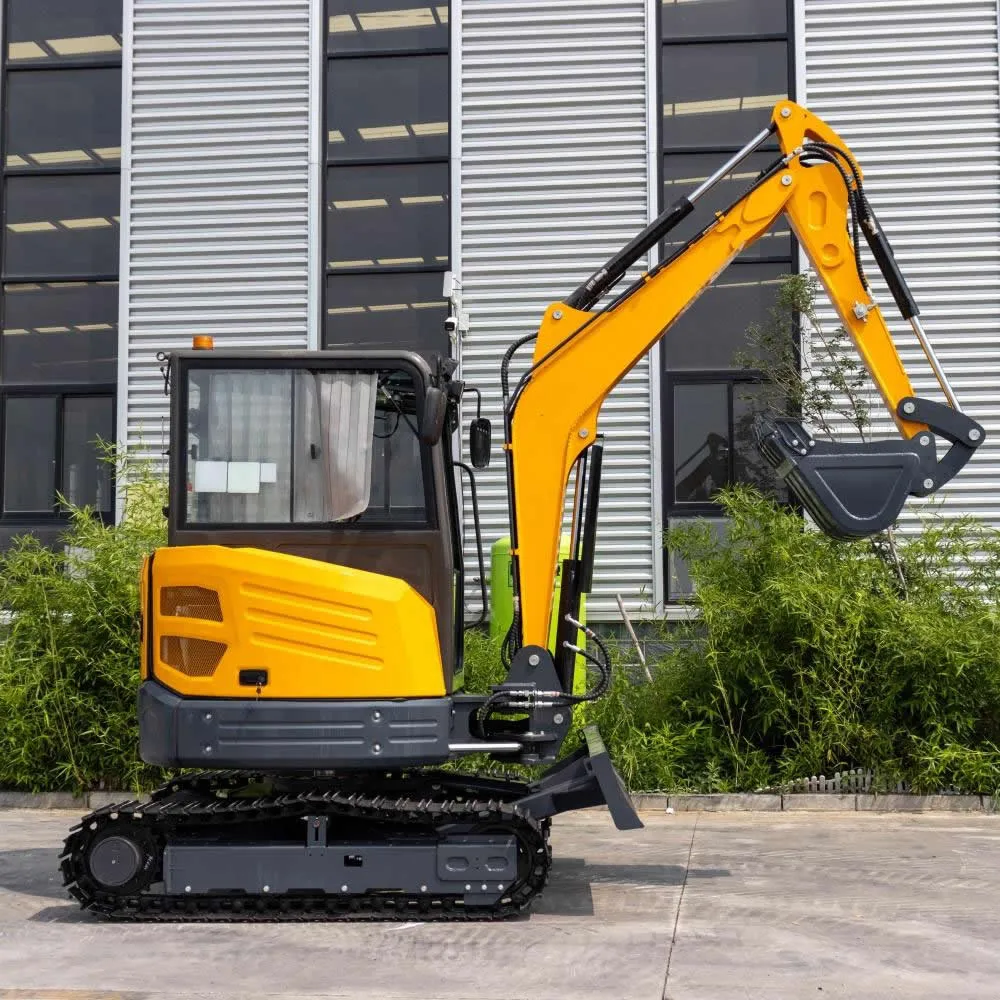
In actual maintenance practice, the root cause of many equipment malfunctions can be traced back to the hydraulic oil. Hydraulic oil serves not merely as a lubricating medium; it also fulfills the following critical functions:
Power Transmission: Converting engine power into mechanical motion within the actuators.
Lubrication and Cooling: Minimizing wear and tear on pumps, valves, and hydraulic cylinders.
Sealing and Corrosion Protection: Safeguarding the internal metal surfaces of the system.
Cleaning Action: Flushing away wear particles and contaminants.
Should the hydraulic oil degrade, it will directly result in diminished system efficiency—or even lead to major mechanical failure. 2. Methods for Determining Hydraulic Oil Replacement Intervals
2.1 Standard Replacement Intervals (Empirical Benchmarks)
Based on general industry experience and equipment manufacturer recommendations:
First Service for New Machines: 200–500 hours (Replacement is mandatory during the break-in period).
Standard Replacement Intervals:
Standard Hydraulic Oil: 2,000–4,000 hours.
Synthetic or Premium-Grade Oils: Can be extended to over 4,000 hours.
Extreme Operating Conditions: 500–1,000 hours, or even shorter.
In certain high-end equipment (e.g., systems utilizing fluid monitoring systems), intervals may be extended to as long as 6,000 hours; however, regular fluid analysis is mandatory.
2.2 Key Factors Influencing Replacement Intervals
In actual maintenance practice, I typically do not rely solely on accumulated operating hours; instead, I make judgments by combining this data with the following conditions:
(1) Operating Environment
High Dust Levels (Mining, Earthmoving): Shorten the replacement interval.
High Temperature / High Humidity: Fluid is prone to oxidation or emulsification.
Coastal or Salt-Mist Environments: Accelerated corrosion.
(2) Operational Intensity
Prolonged Heavy-Load Operation: Elevated oil temperatures and accelerated aging.
High-Frequency Actuation: Severe oil shearing.
(3) Fluid Quality and Filtration System
High-Quality Oil + Effective Filtration: Allows for extended intervals.
Substandard or Clogged Filter Elements: Replacement must be performed ahead of schedule.
2.3 Typical Indicators Requiring Premature Replacement
When determining on-site whether to change the oil, I prioritize the "condition of the oil" over the "elapsed time":
The fluid appears blackened, cloudy, or emulsified.
The presence of bubbles or foam.
Sluggish or weak hydraulic system response.
Abnormal noises within the hydraulic system.
Abnormal temperature spikes.
These are critical indicators of hydraulic oil degradation or failure.
2.4 Based on Operating Environment
|
Judgment Dimensions |
Standard value |
Engineer's suggestion |
|
Basic cycle |
2000–3000 working hours |
For clean environments and intermittent operations, the upper limit can be used; for continuous heavy-load operations, the lower limit can be used. |
|
First maintenance period |
500 hours |
Replacement is necessary during the first maintenance after a new machine or major overhaul, as the metal shavings contamination rate can be as high as 80% during the break-in period. |
|
Operating condition correction |
Heavy load/high dust/high temperature |
Replacement is mandatory every 1000–1500 hours; halving the frequency for sandy areas, mines, and tunnel operations. |
|
Exception Trigger |
Oil discoloration, emulsification, off-odor, temperature >70℃ |
Replace immediately, no waiting period required; for every 9°C increase in oil temperature, the lifespan is halved. |
From a maintenance engineering perspective, adhering to proper procedures is even more critical than the decision of *whether* to replace the oil. Improper procedures can even lead to secondary contamination of the system.
3.1 Pre-Replacement Preparations
Shut down the equipment and release system pressure.
Prepare hydraulic oil of the appropriate grade (e.g., ISO VG46/68).
Prepare clean containers, filter elements, and seals.
Clean the oil filler port and the surrounding area.
👉 Key Point: Prevent dust from entering the system (contamination is more dangerous than the old oil itself).
3.2 Oil Drainage Procedure
3.2.1 Start the equipment and operate it until the oil temperature reaches approximately 40°C (to facilitate drainage).
3.2.2 After shutting down the equipment, open the oil tank's drain port.
3.2.3 Simultaneously open the return port or the breather vent to accelerate the drainage process.
3.2.4 Completely drain all fluid from the system (including the oil tank, pipelines, and hydraulic cylinders).
👉 Practical Tip: If necessary, cycle the hydraulic cylinders repeatedly to expel any residual oil.
3.3 Cleaning and Filter Replacement
Clean the oil tank (Key Focus: Sediment at the bottom).
Replace the following components:
|
Filter type |
Replacement cycle |
Installation Points |
|
Oil suction filter element |
Every 500 hours |
Lubricate the O-rings with oil before installation to prevent the pump from sucking in air. |
|
oil return filter element |
Every 1000 hours |
Release the oil tank pressure before disassembly to prevent splashing. |
|
pilot filter element |
Every 500 hours |
The location is hidden and easily overlooked; it must be checked. |
👉 Failure to replace the filter element renders the oil change futile (a common mistake observed in the field).
3.4 Filling with New Oil
Slowly pour the new oil through the filler port using a device equipped with a filtration mechanism; maintain the oil level slightly above the midpoint of the oil sight gauge (to allow space for thermal expansion).
Strictly Prohibited: Filling the tank with the filler port left uncovered! Use a sealed oil container to prevent the ingress of dust and moisture.
3.5 Air Bleeding and Re-inspection
Bleeding Air from Hydraulic Circuits (Boom, Arm, and Swing)
Start the engine and let it idle for 3 minutes. Slowly actuate each control lever through its full stroke 3–5 times (raising/lowering the boom, extending/retracting the arm, curling/dumping the bucket, and swinging left/right).
Observe the fluid level in the hydraulic tank: If persistent bubbling occurs, repeat the operation until no further bubbles are generated.
Check the oil level and top it up as necessary.
Check for any signs of leakage.
3.6 Final Inspection
Shut down the machine and let it sit for 5 minutes, then re-check the oil level.
Verify that all connections, filter elements, and drain plugs are free of leaks.
Run the machine under no-load conditions for 10 minutes, listening for any abnormal noises from the hydraulic pump (cavitation typically manifests as a high-pitched "clicking" or "rattling" sound).
During routine inspections, I typically instruct operators to adhere to the following points:
4.1 Daily Checks
Is the oil level normal?
Is the oil color abnormal?
Is there any foaming?
4.2 Periodic Testing (Recommended)
Perform hydraulic oil analysis (checking for contamination and moisture content) every 500 operating hours.
Use the analysis results to determine whether an early oil change is required.
4.3 Contamination Prevention Measures
Hydraulic oil must be filtered during refueling.
Oil drums/containers must be stored in a sealed condition.
Avoid mixing different grades or types of hydraulic oil.
❌ Common Mistakes
Replacing only the oil while neglecting to replace the filter element.
Using hydraulic oil that does not meet the required specifications/standards.
Refueling in an unclean environment.
Operating the machine immediately without first bleeding the air from the system.
⚠️ Key Precautions
Do not arbitrarily mix hydraulic oils from different brands.
For equipment operating at high temperatures, select a hydraulic oil with a higher viscosity rating.
During winter operations, pay close attention to the oil's low-temperature flow characteristics.
Strictly prohibit water ingress into the hydraulic oil (this will cause severe damage to the system).
Contamination Control
|
Control measures |
Implementation Guidelines |
|
Oil source |
We only purchaseoriginal manufacturer-designated brandsand refuse to purchase substandard or counterfeit oils; new oilis sampled and tested upon arrival(particle count). |
|
Refueling methods |
Do not pour directly from plastic containers! You must usea dedicated refueling device with a filter. |
|
Fuel tank breather |
the air filterevery 500 hours to prevent dust from entering the fuel tank with the airflow. |
|
Oil temperature management |
Normal operating oil temperature:35–55℃; if it exceeds 70℃, immediately stop the machine and check the radiator and cooling fan. |
|
Regular testing |
Samples should be taken and tested every 600–1000 hours, with a target cleanliness levelof ISO 4406 18/16/13or better. |
Common Operational Errors
|
Incorrect operation |
as a result of |
Correct approach |
|
Mixing different brands of hydraulic oil |
The chemical reaction produces a gel that clogs the valve core, causing the system to malfunction. |
Mixing is strictly prohibited , even ifthey have the same serial number. |
|
Only change the fuel tank oil, do not drain the fuel lines. |
If new oil is contaminated with more than 30% old oil, the system's lifespan will be shortened by 50%. |
All oil in the pump, motor, and cylinder must be drained. |
|
Filter not replaced |
Filter cartridge clogged, bypass valve open, contaminants flow directly into system |
Always change the filter when changing the oil; replace all three filters (oil, air, and fuel) simultaneously. |
|
Using a diesel cleaning system |
Residual diesel fuel can damage oil additives, leading to lubrication failure. |
Flushing with only the same brand of hydraulic oil is permitted. |
|
Fueling up too much |
When the oil temperature rises, it expands and overflows, polluting the environment and causing cavitation. |
Fill the oil levelto slightly above the center line of the fuel gauge, leaving 10% for expansion. |
|
Ignore exhaust |
Cavitation of the main pump caused metal flaking, rendering the pump body unusable. |
The lever must be operated at its full strokeuntil no air bubbles are visible. |
Based on years of maintenance experience, the core principle of hydraulic oil management is not merely "changing the oil on schedule," but rather:
"Condition-Based Maintenance + Adjustment Based on Operating Conditions + Operation According to Standards"
I recommend adhering to the following three points:
(1). Use operating hours as a baseline, but rely on hydraulic oil analysis results as the definitive basis for decision-making.
(2). Prioritize the maintenance of the filtration system (this is even more critical than the oil change itself).
(3). Establish a standardized oil-change procedure to prevent human-induced contamination.
Approximately 70% of hydraulic system failures are attributed to contamination or fluid-related issues. While hydraulic fluid management may appear simple, it constitutes a critical factor in determining the service life of equipment. Only by standardizing replacement intervals and strictly adhering to operational procedures can we truly achieve the equipment management objectives of "fewer failures, extended service life, and high efficiency."

