
Tracked excavators, with their large ground contact area and traction, have a significant advantage in operating on complex terrain. However, even these tracked "steel behemoths" face serious challenges when dealing with mud, water, snow, or slippery, soft soil. In engineering environments such as mining, infrastructure, and industrial projects, tracked excavators (crawler excavators, track-type excavators) offer a clear advantage over wheeled equipment on soft, slippery ground.
However, "slippery" environments (such as after rain, mud, waterlogging, and soft clay layers) also bring many potential risks: equipment slippage, sinking, rollover, track derailment, chassis damage, etc., which not only threaten work efficiency but also directly affect the safety of personnel and equipment. This article, from a professional perspective, systematically elaborates on the key precautions required when operating on wet and slippery ground, combining the structural characteristics of tracked excavators, changes in ground conditions, and on-site operating procedures, aiming to provide a reference for equipment use, operation management, and fleet maintenance.
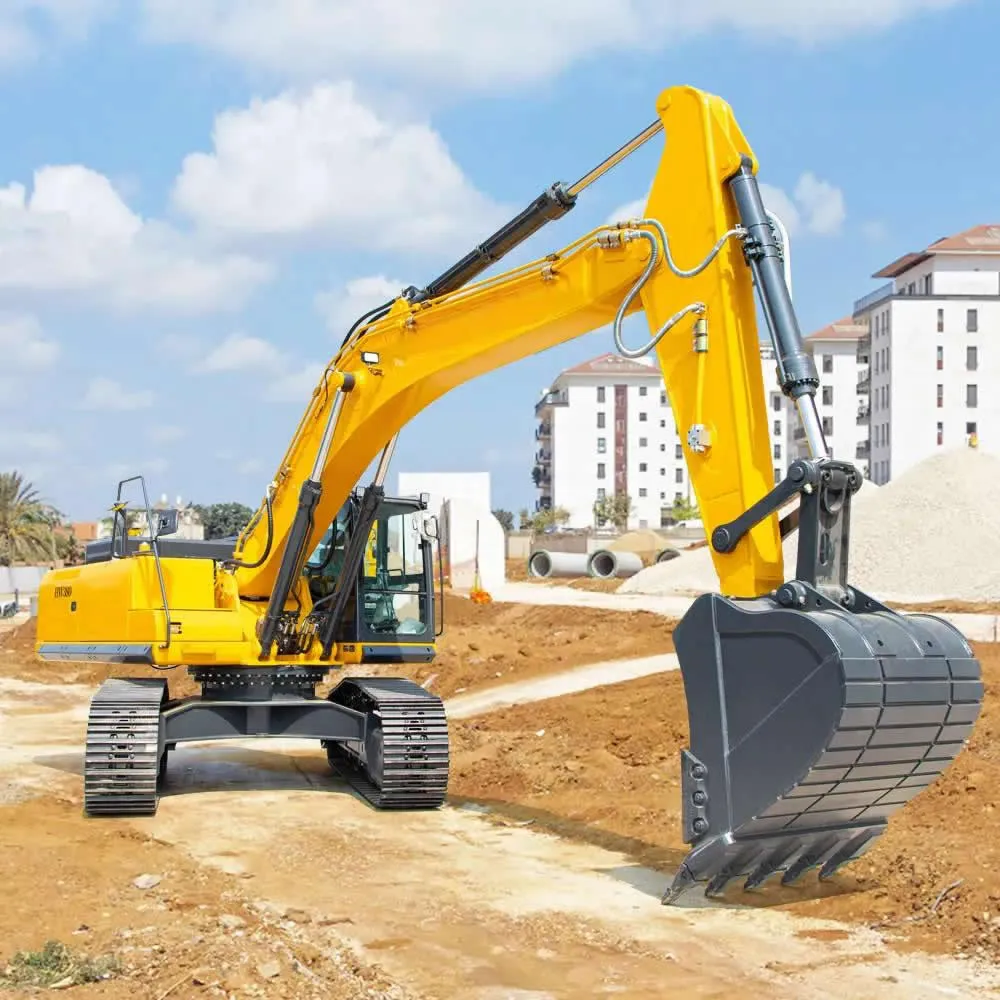
Safe and efficient operation on slippery surfaces hinges on a thorough understanding of the structural characteristics of tracked excavators and their ground interaction mechanisms.
1.1 The Adaptability of Tracked Systems to Slippery Surfaces
Tracked excavators, through their "tracks + chassis" walking mechanism, achieve a large ground contact area and low unit ground pressure, giving them an advantage over wheeled equipment on soft, slippery surfaces. Related research indicates that:
Tracked equipment can "distribute its weight," making it less prone to getting stuck in mud and wet ground compared to wheeled equipment.
The structure of the track system (such as chains, track shoes, guide rollers, carrier rollers, tensioning mechanisms, etc.) determines its anti-slip, load-bearing, and stability performance.
When operating in wet or swampy areas, specialized track shoes or "swamp tracks" further reduce ground pressure and increase buoyancy.
Therefore, while tracked machines have advantages in slippery ground environments, this does not mean complacency. Preparation must be made in terms of structure, track configuration, and ground conditions.
1.2 Ground Conditions Determine Operational Risks
Slippery ground presents the following typical risks:
Reduced foundation bearing capacity: Saturated water, soft clay, silt, and areas with standing water can easily cause equipment to sink and tracks to become stuck.
Reduced ground friction coefficient: The grip between the tracks and the ground weakens, leading to slippage and difficulty in directional control.
Uneven ground with significant differences in hardness: This can cause unilateral sinking, tilting, and track derailment.
Poor visibility and complex operating environment: Slippery ground is often accompanied by rain, fog, and standing water, making it difficult for operators to make judgments.
In summary, operating tracked excavators on slippery ground requires systematic management in terms of equipment compatibility, operating skills, ground pretreatment, and maintenance.
To reduce risks and ensure operational stability, thorough preparation should be carried out before formal operation.
2.1 Ground Assessment and Pre-treatment
Site Condition Survey: Assess soil type (e.g., clay, sand, silt), moisture content, water accumulation, thickness of weak layers, ground slope, drainage conditions, etc. If the ground is significantly water-saturated or muddy and submerged, consider postponing operations or using specialized floating equipment.
Establish a Stabilizing Platform: On slippery ground, pre-lay steel plates, wooden planks, gravel, or sand cushions, or drain and compact the ground first to improve its bearing capacity.
Select Appropriate Machinery and Accessories: If the working ground is extremely soft or the water is shallow, consider machinery equipped with low-ground pressure tracks, wide-track shoes, swamp tracks, or floating chassis.
Work Environment Safety Inspection: Check for water accumulation areas, landslide risks, proper drainage in the surrounding area, and obstacles or deep mud pits in the work area. For operations in rainy weather, assess whether visibility and wind and rain intensity will affect operations.
2.2 Equipment Inspection and Setup
Track and Chassis Condition: Inspect track plates (shoe plates) for severe wear, chains and tensioning mechanisms for looseness, and idler rollers and guide rollers for mud buildup or damage. Mud accumulation on the chassis in muddy conditions will affect movement and stability.
Track Shoe Type Selection: On slippery mud, use wide track shoes or shoe plates with reinforced ribs to improve traction and prevent slippage. For soft soil surfaces, consider "flat-plate" track shoes to increase the contact area.
Tension Adjustment: Appropriately reducing track tension helps distribute machine weight, reduce localized pressure, and prevent sinking. This is especially important on slippery surfaces.
Hydraulic and Electrical System Inspection: When operating on slippery or rainy conditions, equipment sealing, electrical connections, and waterproofing measures are particularly important. Check hydraulic oil, seals, and cable joints for moisture or damage.
Operator Safety and Training: Given the specific risks of slippery surfaces, operators should receive risk identification and emergency procedure training, be equipped with anti-slip clothing and safety gear, and be familiar with evacuation routes.
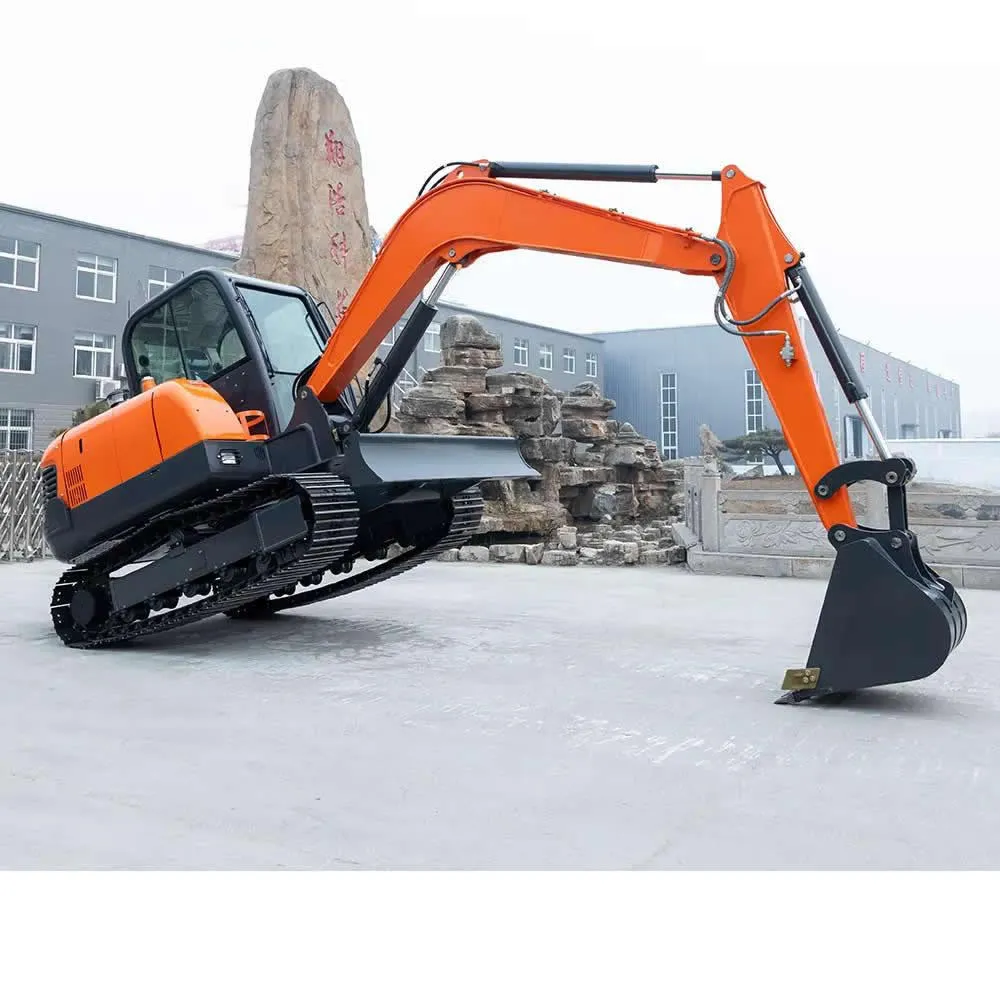
During equipment startup, movement, excavation, and operation, the following precautions should be strictly observed to improve safety and efficiency.
3.1 Start-up and Movement Phase
Start slowly and accelerate gradually, avoiding sudden acceleration or sharp turns to prevent track slippage or sinking.
On steep slopes or surfaces with alternating gravel and wet/slippery surfaces, it is recommended to move vertically (longitudinally) along the slope rather than laterally to reduce the risk of tipping.
Upon entering the site, use the tracks to "test" the ground first, detecting deep sinkholes, voids, or poorly supported areas. If severe sinkholes are found, the path should be rearranged or paved.
Avoid traveling straight or turning in areas with standing water or deep mud. If crossing is unavoidable, a stable foundation should be laid or steel plates/trailers should be used.
3.2 Excavation/Operation Phase
Adjust Excavation Rhythm: On wet, slippery ground, excavation movements should be slowed down and the amplitude moderate. Avoid rapid extension and retraction, and sudden swinging of the boom to prevent machine instability or track slippage.
When the bucket teeth enter the mud, loosen the soil thoroughly. Avoid directly "plunging" into soft mud, as this may cause ground subsidence, equipment sinking, or tracks getting stuck in the mud.
Control Boom-Bucket Load Changes: When operating in wet areas, do not overfill the bucket. Avoid a fully loaded bucket or boom extended to its maximum length, which can cause rear center of gravity shift, track detachment, or rollover.
Maintain a Reasonable Retreat/Unloading Path: Avoid repeated continuous movement in the excavation area to prevent ground fatigue. When descending or retreating, ensure the machine does not face away from soft surfaces or deep sinkholes.
Special Attention on Slopes: When operating on slopes, the machine should travel in the uphill/downhill direction, avoiding lateral movement. Ideally, the track width should face downhill when traveling.
3.3 Safety and Emergency Response
If the machine tracks are found to be severely sunken, slipping, or tilting at an abnormal angle, operation should be stopped immediately, and the equipment should be moved to a more stable surface.
If the machine is locked in mud or stuck, avoid continuing to force it. Use scaffolding, steel plates, or wooden blocks for support; if necessary, use a winch or other auxiliary equipment to gently pull it out.
During rainy weather, if heavy rain, flooding, drastic reduction in visibility, or increased muddiness occurs, operation should be immediately suspended until conditions improve.
After operating on wet and slippery ground, cleaning and maintenance of the equipment are crucial to ensure equipment lifespan and safety for subsequent operations.
Clean the chassis and tracks: Quickly remove mud and sand from the tracks, track pads, rollers, and chains to prevent mud accumulation that could cause rolling parts to jam or accelerate wear.
Check track tension and positioning components: After working on wet ground, check the track tension, chain tightness, and for any abnormalities in the rollers and guide rails. If any abnormalities are found, adjustments or repairs should be made promptly.
Lubrication and Corrosion Prevention: Wet mud and high-humidity environments accelerate corrosion and wear of metal components. Chains, rollers, and tensioning mechanisms should be lubricated to prevent rust early.
Hydraulic and Electrical Inspections: Check hydraulic lines for mud, water droplets, or signs of leakage. Check electrical connections for moisture and ensure proper sealing. This is especially important after rain.
Work Records and Ledgers: Establish a logbook for operations on slippery surfaces, recording working conditions, equipment status, track wear, and chassis condition to predict future maintenance cycles.
For some of our clients in Africa, the Middle East, and Pakistan, special working conditions may exist, such as seasonal rainy seasons, floods, and muddy areas. The following are supplementary recommendations:
In tropical or semi-arid regions during the rainy season, the ground may suddenly change from hard to soft. Pay special attention to the initial "false hardness" of the ground after rain: it may appear hard, but its load-bearing capacity decreases rapidly, posing a high operational risk.
In these areas, drainage conditions are often poor. It is recommended to install temporary drainage ditches, slope drainage measures, and lay gravel or steel plate channels before operation to improve foundation bearing capacity.
Considering local equipment spare parts supply, soil type (e.g., clay, laterite, high-sand soil), maintenance service network, and operator skill level, configurations that are easy to maintain, highly reliable, and have highly durable track materials should be selected.
In these geographical areas, equipment transportation, crew accompaniment, and operator training may be limited. It is recommended to include ground risk identification clauses, procedures for suspending operations during the rainy season, and clauses for increasing track maintenance frequency in the work contract.
For extremely soft or near-water areas, consider using equipment with floating chassis or swamp track configurations, or pre-laying load-bearing base plates (e.g., steel plates) to ensure stability.
Slippery ground poses a severe test to the combined capabilities of tracked excavators and their operators. While tracked excavators offer advantages in operating on slippery surfaces, neglecting equipment preparation, ground assessment, operating procedures, and post-operation maintenance can easily lead to problems such as sinking, slipping, derailment, and accidents. The key points are:
Equipment configuration must be tailored to the characteristics of slippery ground (track shoes, tension, track width, undercarriage cleaning);
Ground pretreatment and assessment must be thorough (laying, drainage, soft soil identification);
Caution is required during operation (slow movements, avoidance of sharp turns, load control, path planning);
Post-operation maintenance cannot be neglected (mud removal, track inspection, lubrication, corrosion prevention, electrical checks);
In special regions (such as Africa, the Middle East, and countries in Africa and the Middle East), local geology, climate, logistics, and maintenance resources must be considered.
For operating on slippery ground, technology is fundamental, but awareness is crucial. Strictly adhering to the above precautions and consistently applying the four principles of "steady, slow, meticulous, and prepared" is the core of ensuring safe and efficient operation. Every successful operation on slippery ground begins with thorough preparation, meticulous operation, and constant vigilance. In complex working conditions, respect for risk and standardized operation provide far more solid protection than the steel body of the equipment. Only by internalizing safety awareness and putting it into practice can tracked excavators move steadily forward in slippery challenges and safeguard engineering construction.

