
As a core piece of transport equipment in earthworks, mining, urban construction, and infrastructure projects, a dump truck's load capacity directly determines operational efficiency, operating costs, vehicle service life, and driving safety. From an engineering design perspective, load capacity specifications are neither a case of "the bigger, the better" nor "the smaller, the safer"; rather, the operating environment must serve as the primary input, necessitating a systematic matching process that integrates multiple dimensions—including regulatory compliance, road surface conditions, powertrain capabilities, load distribution, and operational tempo. Drawing upon the practical logic of dump truck engineers, this article systematically elucidates how to achieve precise selection of load capacity specifications based on specific operating environments, thereby providing a technical foundation for engineering selection and vehicle configuration.
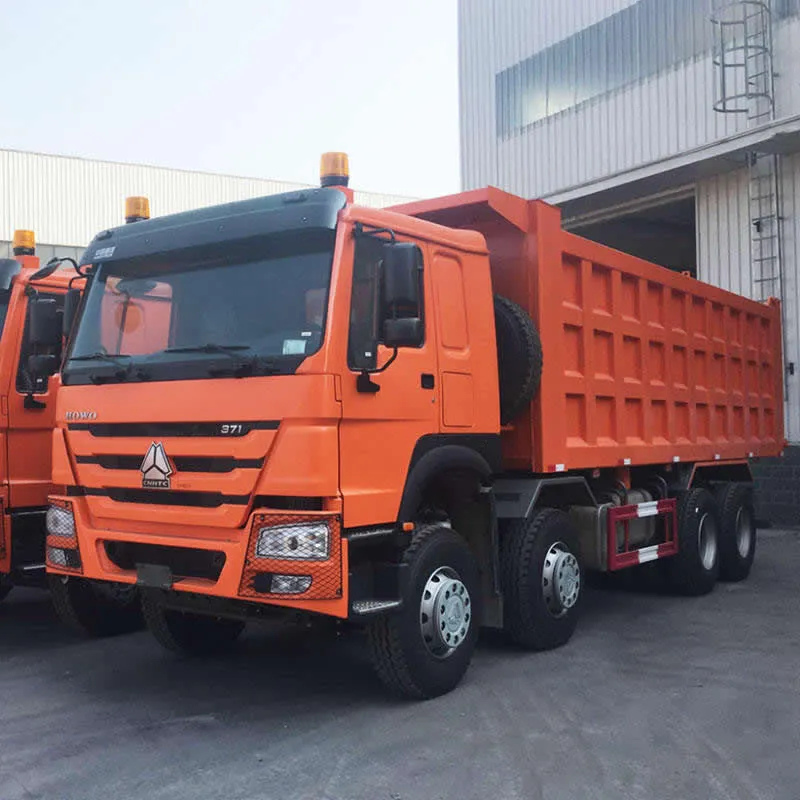
In engineering terminology, a dump truck's load capacity specification centers on its *rated payload*. This capacity is typically determined by the design and performance of key components—such as the chassis frame, suspension system, tires, and drive system—while simultaneously being constrained by interrelated parameters including gross vehicle weight, axle load, tire load, and frame load-bearing capacity. These parameters constitute the fundamental basis for vehicle selection:
Rated Payload: The maximum legally or by-design permissible load mass for the vehicle; this serves as the core metric for vehicle selection.
Gross Vehicle Weight (GVW): The sum of the vehicle's curb weight (unladen weight) and its rated payload; for on-road models, this figure is strictly bound by the limits stipulated in the GB 1589-2016 national standard.
Axle Load: The maximum permissible load on a single axle or an axle group; this parameter determines the vehicle's compatibility with specific road surfaces as well as the structural integrity of the chassis.
Off-Highway Mining Models: These vehicles are exempt from standard on-road traffic regulations; their load capacity (typically ranging from 30t to 200t) is selected based on specific mining road conditions, operational intensity, and the specifications of associated loading and unloading equipment.
Legal Gross Vehicle Weight Limits for On-Road Dump Trucks (GB 1589-2016): 18t for two-axle vehicles, 25t for three-axle vehicles, 31t for four-axle vehicles, and 49t for dump semi-trailers. These limits constitute the rigid "red lines" that must be strictly adhered to when selecting vehicles for urban or standard on-road operating environments.
The inherent diversity of engineering scenarios dictates the core constraints that govern the selection of appropriate load capacities. Based on road surface conditions, haul distance, gradient, regulatory requirements, and operational tempo, mainstream operating scenarios are categorized into five types:
Open-pit Mines / Large-scale Stockyards: Unpaved, high-load-bearing surfaces; steep gradients (10%–25%); continuous operations; exempt from standard highway regulations.
Urban Muck / Construction Waste Transport: Paved urban roads; short-haul, high-frequency trips; strict load and traffic restrictions; high environmental compliance requirements.
Highway Trunk-line Aggregate / Building Material Transport: Expressways / National Highways; long-distance hauls; steady-speed driving; priority placed on standard-load compliance.
Infrastructure Site Internal Transshipment: Simple, unpaved surfaces; short distances (1–3 km); frequent loading and unloading cycles; limited site load-bearing capacity.
Soft-ground / Muddy Terrain / Mountain Access Roads: Low-load-bearing surfaces; steep gradients (>25%); priority placed on off-road passability; high risk of vehicle entrapment.
When selecting vehicle specifications, engineers must focus on the following core dimensions to ensure a qualitative and quantitative match regarding load capacity:
3.1 Road Surface Load-bearing Capacity
Paved Highways / Urban Roads: Axle load ≤ 10 tons per axle; strictly adhere to statutory Gross Vehicle Weight (GVW) limits by selecting standard-load models.
Mines / Compacted Haul Roads: Capable of supporting heavy-duty or super-heavy-duty loads; axle loads are exempt from standard highway restrictions.
Soft-ground / Muddy Surfaces: Reduce load capacity to minimize ground contact pressure, thereby preventing site damage and vehicle entrapment.
3.2 Powertrain-to-Gradient Matching
Load capacity directly impacts climbing capability. The engineering verification formula is: *Full-load Tractive Force ≥ Total Vehicle Weight × (Gradient Resistance + Rolling Resistance)*. For every 5% increase in gradient, the load capacity must be reduced by 10%–15%, or a powertrain with higher torque output must be selected.
3.3 Operational Tempo and Haul Distance
Short-haul / High-frequency (< 5 km): Light-to-medium standard loads; prioritize turnaround efficiency to minimize wear and tear caused by frequent stop-and-go cycles associated with heavy loads.
Long-haul / Trunk-line (> 50 km): Standard loads are optimal; balances fuel efficiency with transport capacity.
Mines / Continuous Operations: Heavy-duty or super-heavy-duty loads; maximizes the transport volume per vehicle.
3.4 Regulations and Road Rights
For on-road (highway) and urban operating conditions, strict regulatory compliance is mandatory; designs that permit overloading must be strictly avoided. For off-road mining applications, vehicle selection must adhere to specific mine management regulations and standards.
3.5 Vehicle Structural Durability
Exceeding the designed load threshold can lead to frame fatigue and deformation, suspension failure, overloading of the lifting system, and tire blowouts. Vehicle selection requires verification of the following parameters: frame torsional strength, lifting cylinder thrust capacity, tire load index, and rear axle load rating.
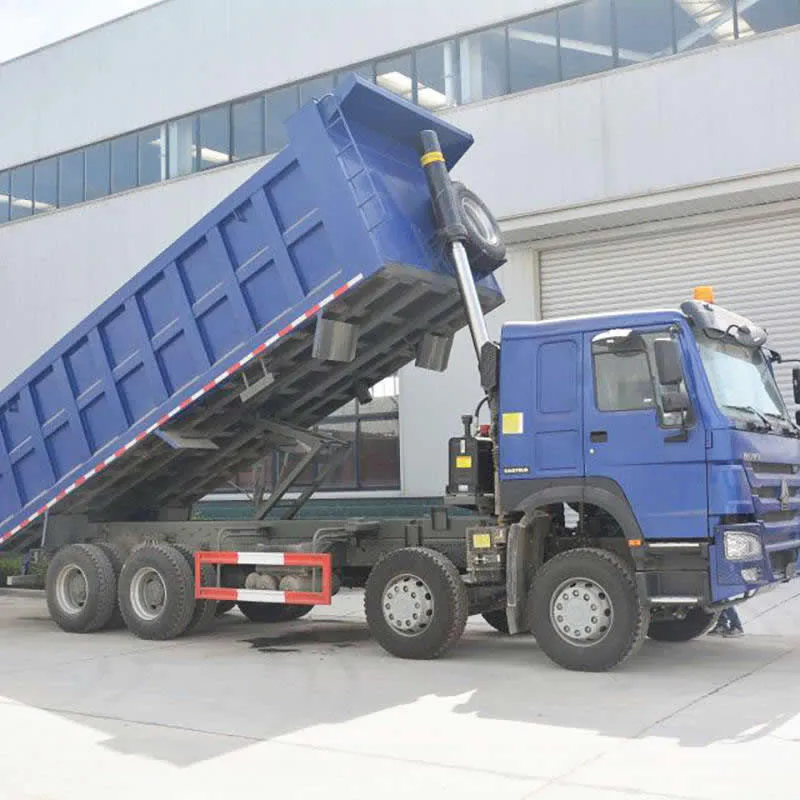
4.1 Open-Pit Mines / Large Stockyards (Off-Road Heavy-Duty Conditions)
Transportation requirements within mining areas typically demand higher load capacities and greater durability, particularly when hauling heavy materials such as ore and aggregates. Given the rugged terrain often encountered in mining operations, large-tonnage dump trucks (e.g., 30 tons or greater) are frequently required to meet transportation demands. Furthermore, slip-resistant, wear-resistant tires and a reinforced chassis system are essential components.
Key Constraints: High road-bearing capacity requirements, steep gradients, continuous operation cycles, and compatibility with loading/unloading equipment.
Load Specifications: Off-road mining dump trucks; typically in the 30t–100t class, though large-scale mines may opt for vehicles exceeding 100t.
Engineering Focus Points:
Match the vehicle's load capacity to the excavator's bucket capacity (aiming for 2–3 bucket loads to fill the truck, thereby optimizing loading/unloading efficiency);
Utilize hydro-pneumatic suspension systems and high-strength frames to withstand the impact forces associated with heavy-duty loads;
Prioritize a powertrain configuration centered on "low speed, high torque" to meet the demands of climbing long, steep gradients.
4.2 Urban Sludge / Construction Waste Transport (On-Road Standard-Load Conditions)
Landfill sites often feature soft ground surfaces that are prone to becoming muddy; consequently, vehicle selection should prioritize dump trucks with lighter load capacities and superior traction capabilities. Typically, 10–15 ton dump trucks are selected, featuring high tire load ratings and strong tractive force to ensure the vehicle can navigate the soft ground conditions within the landfill site without difficulty. Key Constraints: Statutory load limits, urban access regulations, frequent short-haul trips, environmentally sealed cargo;
Payload Specifications: 3-axle / 4-axle on-road dump trucks; rated payload capacity: 12t–18t (strictly standard-load operation);
Engineering Focus Points:
Lightweight design (high-strength steel frame, aluminum alloy cargo body) to maximize effective payload;
Powertrain optimized for low-speed, high-torque performance, suited for frequent start-and-stop cycles;
Strict adherence to GB 1589 regulatory limits; no design margin for overloading.
4.3 Trunk Road Transport of Sand, Gravel, and Building Materials (Long-Haul, Standard-Load Conditions)
If a dump truck is primarily intended for on-road transport in relatively flat terrain, a lighter-weight model can be selected to enhance fuel economy and transport efficiency. Typically, a small dump truck with a 5–10 ton capacity is sufficient to meet these requirements.
Key Constraints: Long-distance travel, regulatory compliance, fuel consumption, chassis durability;
Payload Specifications: 4-axle dump trucks / dump semi-trailers; rated payload capacity: 20t–40t;
Engineering Focus Points:
Designed for standard-load operation, with powertrain optimized for the most economical RPM range to minimize fuel consumption;
Selection of high-speed-rated tires with load indices that meet regulatory requirements;
Long wheelbase to enhance high-speed stability; cargo body volume optimized for bulk material transport.
4.4 On-Site Transshipment at Infrastructure Construction Sites (Off-Road/Non-Standard Site Conditions)
At construction sites, the operating environment is often complex; ground conditions may be uneven or even feature significant gradients. In such scenarios, it is recommended to select medium-to-large dump trucks that offer higher load-bearing capacity and superior stability. The wheels and suspension systems must be designed to provide excellent off-road passability and impact resistance.
Key Constraints: Site ground-bearing capacity, tight turning radius, rapid loading/unloading;
Payload Specifications: Light-duty / medium-duty dump trucks; rated payload capacity: 5t–12t;
Engineering Focus Points:
Payload kept within the site's ground-bearing limits to prevent damage to temporary access roads;
Short wheelbase and tight turning radius to enhance maneuverability within the site;
High-speed hydraulic lifting cylinders to minimize loading and unloading cycle times. 4.5 Soft, Muddy Ground / Mountainous Service Roads (Extreme Off-Road Conditions)
Core Constraints: Low ground pressure, steep slope negotiation, prevention of vehicle entrapment;
Payload Specifications: Light-duty 4WD dump trucks, rated payload 3t–8t;
Engineer's Key Considerations:
Reduce payload and increase ground contact area (via wide off-road tires) to minimize unit ground pressure;
Utilize 4WD + differential locks to enhance off-road passability;
Maintain a lower payload to ensure effective starting and climbing capabilities on steep slopes.
Once the engineer has completed the initial selection, a closed-loop verification process—outlined below—must be undertaken:
Condition Data Collection: Pavement type, gradient, transport distance, operational frequency, regulatory requirements, and parameters of loading/unloading equipment;
Constraint Boundary Definition: Clearly identify "hard" constraints (regulations, road conditions) and "soft" constraints (efficiency, cost);
Initial Payload Range Selection: Determine the appropriate payload range based on the classification of operating conditions;
Technical Verification: Axle load distribution, frame strength, lifting force, powertrain matching, and tire load capacity;
Optimization and Adjustment: Implement lightweighting measures, powertrain upgrades, or payload fine-tuning to strike a balance between performance and cost;
Trial Operation Validation: Conduct on-site testing to verify full-load passability, operational efficiency, and vehicle condition, thereby finalizing the specific payload specifications.
Selecting the appropriate payload specifications for a dump truck is a systems engineering task driven by specific operating conditions, rather than a mere choice of tonnage capacity. As dump truck engineers, we must strictly adhere to the principle of "prioritizing suitability": for on-road operations, regulatory compliance is paramount; for mining operations, efficiency is key; for intra-site operations, agility is essential; and for extreme off-road conditions, passability takes precedence. Only by deeply aligning the payload specifications with the specific operating environment can we ensure safe, efficient, and cost-effective vehicle operation throughout its entire lifecycle, thereby providing optimal transport solutions for engineering construction projects.

