
Wheeled dump trucks, as core equipment in engineering machinery transportation operations, operate in complex environments with significant load variations, placing extremely high demands on their tires and braking systems. These two systems not only affect vehicle work efficiency but also directly relate to driving safety and cost control. As maintenance engineers, it is essential to systematically master the daily inspection, maintenance procedures, and fault prevention measures for tires and braking systems to ensure stable and reliable vehicle operation.
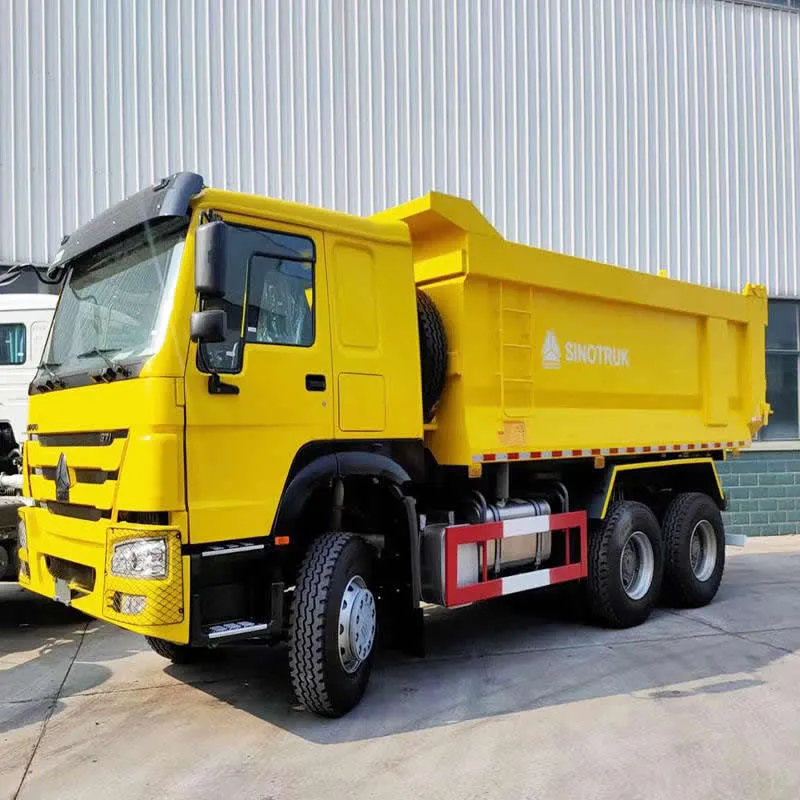
Tires are the only part of a wheeled dump truck that contacts the ground and are the most susceptible to damage. Engineering vehicles often operate on gravel, muddy, and uneven surfaces, resulting in complex stress conditions on the tires, requiring maintenance from multiple perspectives.
1.1 Tire Pressure Management
Correct tire pressure not only affects tire life but also directly relates to the vehicle's load capacity and safety. Insufficient or excessive pressure can lead to abnormal wear or even tire damage.
Regularly check the cold tire pressure of each tire using an accurate pressure gauge to ensure the pressure meets the standard values specified by the vehicle manufacturer. Low pressure can lead to tire overheating and structural fatigue; high pressure is prone to impact damage. Use a professional pressure gauge to check the cold tire pressure weekly; the standard value should strictly follow the vehicle's nameplate or manufacturer's manual (e.g., a general recommendation is 0.8–1.0 MPa). Excessive pressure leads to excessive wear in the center of the tread, while insufficient pressure causes sidewall overheating and increased rolling resistance, which can lead to a blowout in extreme cases. Never inflate tires based on visual inspection or experience.
Engineering work environments experience significant temperature fluctuations; tire pressure should be adjusted appropriately according to temperature changes, and checking is especially important in environments with large temperature differences.
1.2 Load and Wear Monitoring
Tire lifespan is largely affected by load and wear conditions.
Avoiding overloading is a fundamental principle of maintenance. Overloading not only accelerates tire wear but can also lead to serious failures such as blowouts.
Regularly check the tread depth and wear pattern. When the tread depth decreases or uneven wear occurs, the cause needs to be investigated (e.g., unbalanced load, axle alignment deviations, etc.).
Use a tread depth gauge to measure the tread grooves; replacement is necessary when the remaining depth is ≤1.6 mm. In mining areas, during the rainy season, and under other slippery working conditions, it is recommended to replace tires when the tread depth reaches ≥3mm to ensure drainage and traction performance. The use of tires worn down to the steel cord layer is prohibited.
1.3 Abnormal Conditions and Detailed Inspection
Cracks, bulges, cuts, and other damage to the tire sidewall require immediate attention; in severe cases, the vehicle should be stopped and the tire replaced.
Remove stones, metal fragments, and other foreign objects embedded in the tire tread. Timely cleaning can reduce mechanical damage to the tire structure.
1.4 Tire Maintenance Systematization
It is recommended to establish a tire maintenance log and develop a tire rotation plan based on mileage or working hours. Tire rotation helps to balance wear on all wheels, thus extending overall lifespan.
Wheel-type dump trucks have extremely high braking demands when fully loaded. The condition of the braking system directly determines driving safety and operational efficiency. Maintenance work must be standardized, paying attention to details and system integrity.
2.1 Understanding the Braking System Composition and Working Principle
Modern large dump trucks commonly use various braking devices, such as dry disc brakes, drum brakes, or wet brakes. Disc brake systems are large in size, and the braking force is generated by the pressure of the friction pads against the brake disc; therefore, structural inspection and friction state analysis are key aspects of maintenance.
Wheel-type dump trucks generally use pneumatic braking systems. The core components include: air reservoir, air compressor, brake valve, brake chamber, brake drum, friction pads, and adjusting arm. Both the front and rear wheels use drum brakes, and some high-end models are equipped with hydraulic retarders or exhaust brake assistance.
2.2 Regular Brake Inspection
Daily or before each shift, a brake effectiveness test should be performed. Check the service brake and parking brake effectiveness at low speed in an open area.
Listen for any abnormal noises during braking and check the brake pedal travel and return status.
For air-controlled braking systems, check the air pipe connections and brake air bags for leaks or damage.
2.3 Maintenance of Friction Parts and Hydraulic Components
Friction pads and brake discs (drums) must be replaced promptly when worn to their limit (usually according to the equipment maintenance manual) to ensure braking performance. Brake pads must be replaced when their thickness is less than 3mm. During regular inspections, the wear indicator groove or a thickness gauge should be used as the standard; do not judge solely based on braking distance. Uneven wear (such as unilateral wear) requires checking for brake chamber push rod sticking or return spring failure.
Brake Clearance Adjustment
Standard clearance: 0.5–0.8mm (between the brake pad and the brake drum).
Adjustment method:
Stop the vehicle and engage the parking brake;
Loosen the adjusting arm locking nut;
Rotate the adjusting arm clockwise with a 14mm wrench until the brake drum is slightly stuck;
Rotate in the opposite direction by 180° (about half a turn) to restore the clearance to the standard value;
Both left and right wheels must be adjusted simultaneously, with an error of ≤0.1mm, to prevent brake pull.
Automatic adjusting arms do not require manual intervention, but their function should be checked every 500 hours to ensure they are not stuck or malfunctioning.
The hydraulic braking system should be regularly checked for brake fluid level and aging. If necessary, replace the brake fluid and bleed the system to prevent brake failure.
This system does not use traditional hydraulic brake fluid, but it is important to note that air moisture content is a core hazard. If the brake pedal feels "soft," the response is delayed, or the air pressure gauge fluctuates abnormally, the desiccant status should be checked, and the air tank desiccant filter element should be replaced if necessary.
2.5 Comprehensive System Inspection
Verify that the brake booster, brake distribution device, and brake control valve are functioning correctly.
Conduct a detailed inspection for poor sealing and the entry of gas or liquid into the system.
|
Problem Type |
Phenomenon description |
root cause |
Engineer's Coping Strategies |
|
Brake heat fade |
Braking distance increases suddenly, pedal becomes soft, brake drum turns red. |
Continuous downhill driving and frequent braking caused temperatures to exceed 400°C. |
①Engage engine braking by shifting to a lower gear (3rd-4th) in advance;②Apply intermittent braking (press the brakes for 2 seconds, then release for 3 seconds);③Do not splash water on the tiresto cool them down; allow them to cool naturally for at least 1 hour;④For vehicles equipped with a water drip system, the rear wheel spray can be turned on to assist with cooling. |
|
Braking deviation |
The vehicle veers to one side when braking. |
Uneven brake clearance between left and right wheels, stuck air chamber push rod, and oil stains on friction plates. |
①Readjust the clearance on both sides;②Clean the friction plates of oil stains (using alcohol);③Replace the faulty air chamber. |
|
Abnormal tire wear |
The tire tread is serrated and worn on one side. |
Loose wheel hub bearings, misaligned toe-in, and prolonged overloading |
①Check wheel hub bearing clearance (≤0.1mm);②Perform four-wheel alignment;③Overloading is strictly prohibited (refer to the vehicle's rated load capacity). |
The tires and braking system of wheeled dump trucks are the lifeline of safe operation. Every tire pressure check, every clearance adjustment, and every drainage operation is a responsibility for life. Do not simplify procedures due to "tight deadlines." Standardized maintenance is the only way to reduce failure rates, extend vehicle life, and ensure personnel safety.
In summary, the maintenance of the tires and braking system of wheeled dump trucks is a key link in ensuring efficient and safe vehicle operation. As technical professionals, we must embrace standardized systems, meticulous inspections, and a knowledge-transfer work model. Through scientific maintenance procedures and meticulous execution, we ensure that wheeled dump trucks perform reliably and consistently under various operating conditions.
Clear maintenance records and systematic inspection procedures not only address current issues but also lay a solid foundation for long-term stable operation.

