/static/upfiles/thumb/694ca932baca0.webp

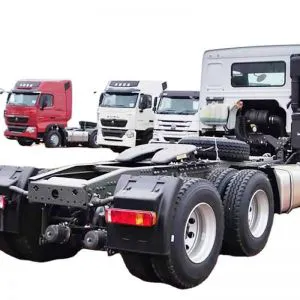
Maintenance and Repair Guide for Tractor Trucks After Heavy-Duty Towing

Heavy-duty towing tasks pose rigorous challenges to all system components of a tractor truck: high torque output, increased thermal load, frequent braking system operation, greater load on tires and suspension systems, and accumulated wear on the towing connection points. The core of professional maintenance is to eliminate potential problems, restore performance, and extend vehicle life through systematic inspection and targeted maintenance after each heavy-duty towing task.

2025-12-26

/static/upfiles/thumb/694ca932baca0.webp

Safety Technical Guidelines for Heavy-Duty Tractor-Trailer Operations

Tractor-trailer combinations are one of the most common heavy-duty equipment used in road transport. When the load is significant, the stability, braking performance, and handling of the entire tractor-trailer combination change significantly. To ensure the safety of heavy-duty towing and improve operational standards, this guide, based on the specifications of the Chinese Ministry of Transport, mainstream manufacturer technical manuals, and real-world accident cases, selects key operational points and describes the basic towing and coupling techniques for tractors and trailers. It is applicable to frontline tractor drivers and fleet managers.

2025-12-25

/static/upfiles/thumb/6904711d3b8de.webp

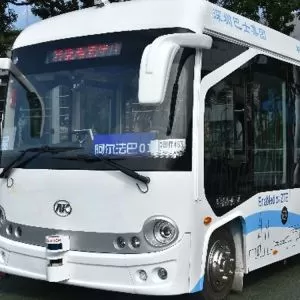
Maintenance and Care Manual for Passenger and Commercial Vehicles

Since passenger and commercial vehicles typically undertake long-distance transportation tasks and require efficient and safe operation, regular maintenance and care are particularly important. Maintenance and care should follow the principles of "prevention first, periodic maintenance, repair as needed, and full record keeping," with the road transport operator bearing the primary responsibility. The following are comprehensive inspection and maintenance steps that should be performed on passenger and commercial vehicles after use to help maintain optimal vehicle performance and reduce malfunctions.

2025-12-24

/static/upfiles/thumb/6904711d3b8de.webp

Guidelines for Safe Operation and Maintenance of Long-Distance Passenger and Commercial Vehicles

Long-distance passenger and commercial vehicle transportation safety is a systematic project, encompassing a closed-loop management system covering the entire chain, from vehicle technical standards and driver behavior control to dynamic monitoring and emergency response. Its core lies in effectively curbing high-risk factors such as fatigue driving, overloading, and vehicle malfunctions through a three-pronged mechanism of mandatory regulations, technological empowerment, and accountability. Based on extensive driving and maintenance experience, this guide introduces the safety precautions and operational procedures for long-distance passenger and commercial vehicle transportation, as well as temporary maintenance guidelines.

2025-12-23

/static/upfiles/thumb/6879df1c1fe00.webp

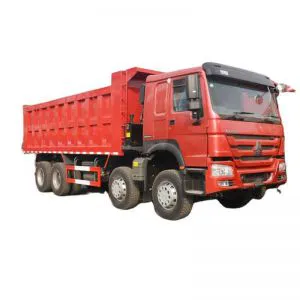
Heavy Industry Vehicle Equipment Selection and Efficiency Improvement: A Systematic Approach and Key Practices

In construction projects, mining, infrastructure construction, urban renewal, and other fields, heavy industry vehicles (such as excavators, loaders, cranes, truck-mounted cranes, bulldozers, and pavers) are the workhorses of construction sites. While the basic performance of these vehicles (power, structural rigidity, and travel performance) determines their fundamental capabilities, it is the equipment they carry or have installed (attachments, auxiliary systems, and intelligent systems) that truly determines their unit-time productivity, operating costs, and operational flexibility.

2025-10-17

/static/upfiles/thumb/6879eba5bd3f2.webp

Precautions for Cargo Vehicles and Towing Vehicles on Different Roads and Operating Conditions

In the commercial vehicle transportation sector, the terms "cargo vehicle" and "towing vehicle" are often used interchangeably in everyday language. However, from the perspective of construction vehicles or transportation engineering, their concepts, load characteristics, and driving risk control requirements are distinct:Cargo vehicle: refers to a freight vehicle with the inherent cargo-carrying capacity (whole vehicle type), not including those that are coupled or towed by other vehicles or trailers (such as ordinary trucks or construction trucks).Towing vehicle or towing combination: refers to tractor-trailers, semi-trailers, tractor-trailer trains, locomotive-drawn trains, etc., with a specific division of labor between cargo carrying and towing: the towing head is responsible for driving and steering, while the trailer bears the cargo load.

2025-10-16

/static/upfiles/thumb/68c2410bf398d.webp

Three Advantages and Economic Benefits of Cold Chain Vehicles for Fresh Produce Transportation

Cold chain vehicles are specialized vehicles designed to maintain a specific temperature during transportation and are widely used in the food, pharmaceutical, and other fields. Their core components include an insulated compartment, a refrigeration unit, and a temperature monitoring system. The proper use of cold chain vehicles can bring numerous advantages and economic benefits to commercial businesses. Let's explore the three core advantages and economic benefits of cold chain vehicles for fresh produce transportation.

2025-09-11

Get Free Quote

More Contact Details

Jessie Chen

0086-13738639686

Email:sales@cqwendy.com

Contact me whatapp

Yubei District, Chongqing, China.

contact us
contact us