/static/upfiles/thumb/69252507e295d.webp

Safety Operating Procedures and Maintenance of Remote-Controlled Forklifts

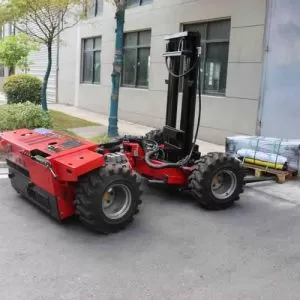
Remote-controlled forklifts are an important part of modern warehousing and logistics equipment, widely used due to their flexibility and high efficiency. However, ensuring their safety and long-term stable operation is crucial during use and maintenance. This article introduces the safety operating procedures and maintenance of remote-controlled forklifts.

2025-11-26

/static/upfiles/thumb/69252507e295d.webp

Remote Control Forklift Usage Guide and Precautions

Remote control forklifts are a highly efficient piece of equipment in modern logistics and warehousing operations, widely used in confined spaces, densely stacked goods, and high-frequency loading and unloading operations. Compared to traditional forklifts, remote control forklifts offer advantages such as convenient operation, high safety, and strong flexibility, especially in situations requiring precise positioning and space saving. This article analyzes the usage methods and operational precautions of remote control forklifts to help users better master their correct use.

2025-11-25

/static/upfiles/thumb/6923d8b9c4ce5.webp

Daily Inspection and Operational Precautions for Manual Hydraulic Pallet Trucks

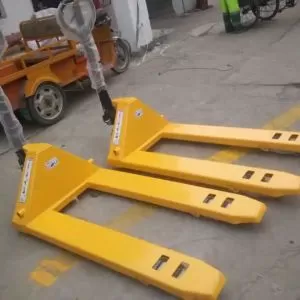
Manual hydraulic pallet trucks are widely used material handling tools in warehousing, logistics, and manufacturing. Their main function is to easily raise and lower pallets using a hydraulic system, helping operators move heavy objects in limited spaces. To ensure smooth, efficient, and safe operation of the pallet truck, operators need to conduct regular inspections and follow relevant operating procedures. This article analyzes the daily inspection items and operational precautions for manual hydraulic pallet trucks from the perspective of a professional operator.

2025-11-24

/static/upfiles/thumb/686b8797d7d67.webp

Comparison of Usage and Maintenance Costs of Diesel and Electric Forklifts

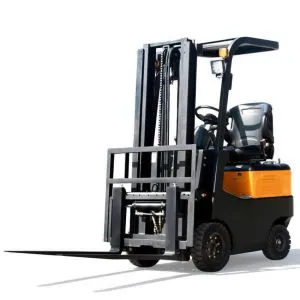
In the industrial logistics sector, forklifts are essential material handling tools, widely used in warehousing, loading and unloading, and transportation. Based on their power source, forklifts are mainly divided into two categories: diesel forklifts and electric forklifts. Although they are similar in function, there are significant differences in their operating and maintenance costs. This article will compare the differences in operating and maintenance costs between these two types of forklifts to help companies make reasonable purchasing and usage decisions.

2025-11-21

/static/upfiles/thumb/686cd4fcb540e.webp

Maintenance and Care of Electric Forklifts After Indoor and Outdoor Operations

Electric forklifts are widely used in warehousing, logistics, and light industry due to their advantages such as zero emissions, low noise, and flexible operation. However, different operating environments (such as indoor and outdoor) have different effects on forklifts: dust, humidity, temperature, and ground conditions can all accelerate component wear or damage. Therefore, post-operation maintenance is crucial, not only extending equipment lifespan but also ensuring safety and improving performance.

2025-11-20

/static/upfiles/thumb/686c8c8c444ab.webp

Maintenance and Care of Diesel Forklifts After Indoor and Outdoor Operations

Diesel forklifts, as common internal combustion material handling equipment, are core equipment in the industrial logistics field. Their performance stability directly affects operational efficiency and safety, and they possess advantages such as high load capacity and good adaptability to harsh environments. However, the workload and environmental pollution they endure in different operating scenarios (indoor and outdoor) vary greatly. The operating environments differ significantly between indoor and outdoor conditions. Outdoor operations face challenges such as dust, temperature and humidity fluctuations, and bumpy roads, while indoor operations require attention to space limitations and air quality impacts. Scientific maintenance not only extends equipment lifespan but also effectively prevents sudden failures and reduces overall operating costs. Post-operation maintenance is particularly crucial: it's an important window for removing accumulated dust, checking for leaks, replenishing lubrication, and preventing corrosion and fatigue damage. Proper maintenance can effectively extend component lifespan, improve operating efficiency and safety, and reduce downtime. The following is a detailed technical analysis of the key maintenance points for diesel forklifts after indoor and outdoor operations.

2025-11-19

/static/upfiles/thumb/686b8797d7d67.webp

Maintenance and Care Guide for Terrain Forklifts

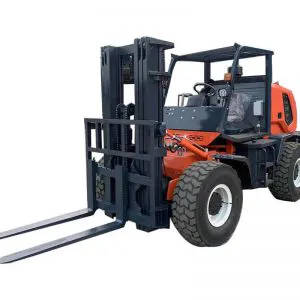
Terrain forklifts are engineering vehicles specifically designed for complex terrain environments. They feature high mobility, strong load-bearing capacity, and adaptability to harsh working conditions, and are commonly found in construction sites, mines, and other similar settings. Terrain forklifts frequently operate in complex terrains such as ports and docks. If critical components (such as tracks, hydraulic systems, and braking devices) are not maintained in a timely manner, it may lead to operational malfunctions or equipment tipping over, causing safety accidents. Therefore, the maintenance and care of terrain forklifts is crucial to ensure operational safety, extend the forklift's lifespan, improve work efficiency, and reduce forklift maintenance costs. This guide will provide a relevant introduction to the maintenance and care of terrain forklifts.

2025-11-18

/static/upfiles/thumb/685e4caa8f0da.webp

How do terrain-fed forklifts operate stably on uneven terrain?

Terrain forklifts, designed specifically for complex terrain, utilize advanced technology and operating strategies to ensure stability on uneven surfaces. They are widely used in construction sites, mining areas, forestry operations, and other unpaved ground environments. Their core advantages lie in their powerful power system and four-wheel drive structure. Equipped with a high-powered engine and fully hydraulic transmission, they maintain traction on steep slopes (e.g., 25°~30° climbing ability) and soft ground, preventing slippage or getting stuck. The tires feature deep treads and a wide design to enhance grip and anti-slip properties. For example, in mud or sand, a differential lock enables torque self-locking to prevent single-wheel slippage.

2025-11-17

/static/upfiles/thumb/685bb831b0bd0.webp

A Guide to Common Forklift Troubleshooting and Routine Maintenance

Forklifts are essential equipment in logistics, warehousing, and loading and unloading operations. As core equipment in modern logistics and production, their stable operation is directly related to operational efficiency and personnel safety. Their working environment often involves high loads, high frequency, and complex operations, so the risk of failure is not low.

2025-10-22

/static/upfiles/thumb/685b9bdc59c7b.webp

Precautions for Using Terrain Forklifts in Outdoor Work Environments

Terrain forklifts, designed for harsh terrain, are widely used in outdoor work environments such as mines, construction sites, and warehouses. Their enhanced off-road capabilities, higher ground clearance, rugged tires, and powerful powertrains make them indispensable material handling tools for these rugged environments.

2025-10-21

Get Free Quote

More Contact Details

Jessie Chen

0086-13738639686

Email:sales@cqwendy.com

Contact me whatapp

Yubei District, Chongqing, China.