
Diesel forklifts, as internal combustion engine-powered machines, play a crucial role in logistics, warehousing, and heavy-duty outdoor environments. Their heart – the diesel engine – is not only the power source but also the system most prone to failure due to improper maintenance. Therefore, establishing a scientific maintenance cycle and selecting appropriate lubricants are crucial for improving operational reliability, extending service life, and reducing maintenance costs.
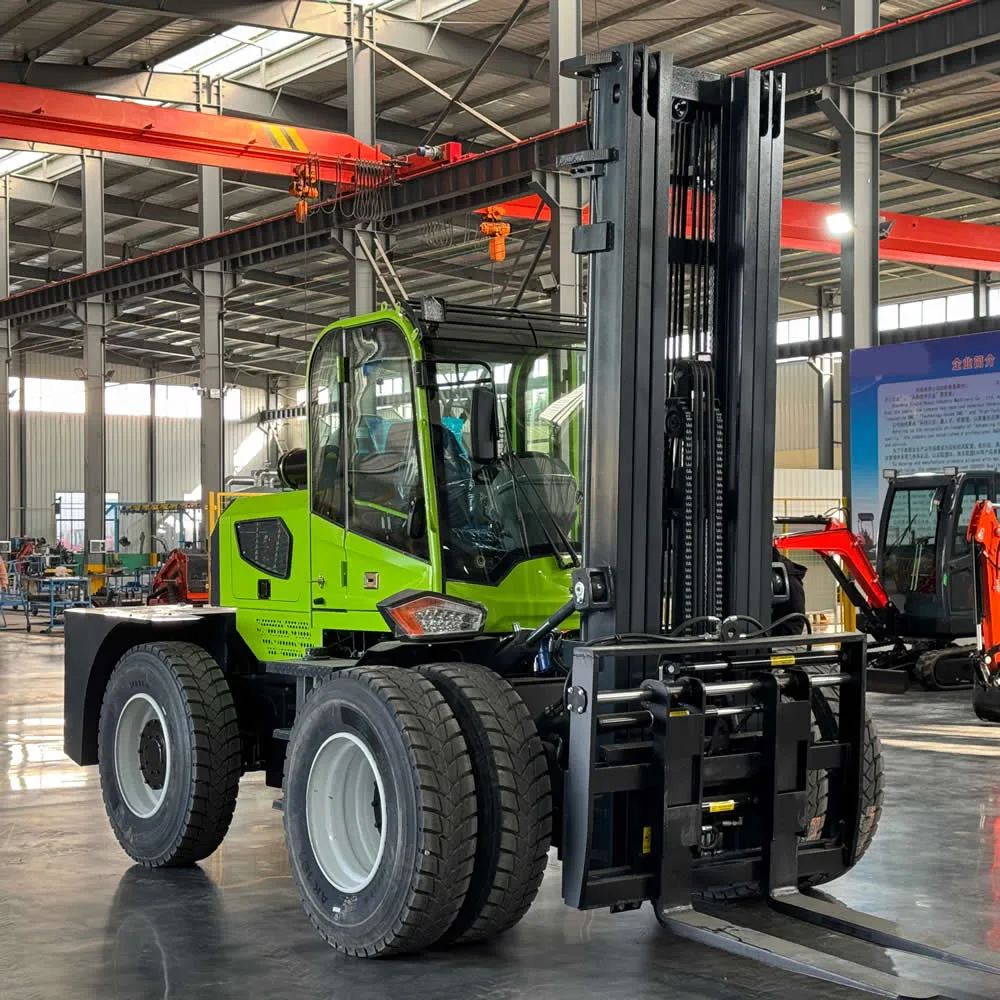
As field maintenance engineers, we often divide diesel forklift maintenance into three levels: daily checks, regular maintenance, and professional major maintenance. Using engine operating hours (Hour Meter) as the primary criterion, rather than simply using calendar time, is a widely adopted standard practice in the industry.
|
Maintenance level |
Total working hours |
Core maintenance items |
Key points of operation |
|
First maintenance |
50h |
Change engine oil, oil filter, fuel filter, and air filter. |
New machines have many impurities during the break-in period and must be completely replaced with genuine or equivalent oil. |
|
Level 2 maintenance |
250h |
Change the engine oil and the three filters (air filter, oil filter, and diesel filter). |
The standard maintenance interval is 250 hours; in Chongqing's high-temperature environment, it is recommended to shorten this to 200–220 hours. |
|
Level 3 maintenance |
500h |
Change the hydraulic oil (25L) and simultaneously replace the three filters. |
The hydraulic oil used must be ISO VG 46 grade anti-wear hydraulic oil; mixing different brands is strictly prohibited. |
|
Dabao |
1000h |
Change the front axle gear oil (2 cans), check valve clearance, clean the fuel system, and check the turbocharger. |
Valve clearance standard: 0.25mm for intake and 0.30mm for exhaust (taking Yuchai/Weichai as examples) |
The specific cycle should refer to the forklift manufacturer's maintenance manual, as manufacturers often provide more detailed hour intervals and project breakdowns. A common recommendation is to perform the first oil change during the break-in period, within the first 50–100 hours of operation.
The selection of diesel engine oil is not arbitrary, but should be based on two dimensions: viscosity grade and API service category. These indicators determine the oil's fluidity, high-temperature protection, and cleaning properties, which are directly related to engine life and fuel economy.
Viscosity represents the oil's flow characteristics at different temperatures. For example, "15W-40" and "10W-30," the numbers before and after "W" represent low-temperature starting performance and high-temperature high-shear protection capabilities, respectively. Generally, in areas with distinct seasons or cold working conditions, choosing a 5W or 10W series with better low-temperature fluidity is more beneficial for cold starts. In high-temperature, heavy-load scenarios, medium-to-high viscosity oils such as 15W-40 can better protect core components such as the crankshaft and bearings.
In terms of quality grade, the API C series (such as CI-4, CH-4, etc.) are high-performance engine oil standards designed for heavy-duty diesel engines, providing excellent wear resistance, cleaning, and oxidation stability, suitable for forklift diesel engines where durability is a priority.
2.1 Engine Oil
API Grade: Must meet CI-4 or CJ-4 standards; engine oils below CF-4 are prohibited.
SAE Viscosity:
15W-40: Preferred for areas with moderate to high humidity; stable oil film at high temperatures, strong shear resistance.
10W-40: Suitable for spring and autumn or temperate regions; smoother starting at low temperatures.
Recommended Brands: Shell Rimula R4 15W-40, Mobil Delvac 15W-40, Kunlun Tianwei CI-4 15W-40 (domestic certified).
Prohibitions: Strictly prohibited to use gasoline engine oil (such as SN, SP grades), as their ash content and anti-wear additive systems are incompatible, easily leading to injector clogging and cylinder scoring.
2.2 Diesel Fuel
Grade Requirements: Must use National VI (VI) standard diesel fuel, sulfur content ≤10ppm.
Low-Temperature Adaptability: For winter temperatures around 0℃, 0# diesel fuel can be used; -10# or lower grades are strictly prohibited to avoid wax precipitation and filter clogging.
Refueling Specifications: Use regular gas stations; the use of non-standard fuel, biodiesel (above B5), or uncertified modified systems is prohibited.
2.3 Hydraulic Oil and Gear Oil
|
project |
Specification |
Replacement cycle |
Remark |
|
hydraulic oil |
ISO VG 46 Anti-wear Hydraulic Oil |
500h |
Check the oil's transparency; replace it if it becomes cloudy. |
|
Front axle gear oil |
GL-5 80W-90 |
1000h |
Do not mix with hydraulic oil |
Field experience also suggests:
If the forklift is equipped with exhaust after-treatment equipment (such as DPF, etc.), low-ash formula diesel engine oil should be selected to help extend the life of the after-treatment system.
For high-temperature, long-term outdoor operating conditions, more stable 15W-40 fully synthetic or semi-synthetic oil can be prioritized.
For areas with large seasonal temperature differences or frequent cold starts outdoors, 10W-30 viscosity engine oil is particularly beneficial for cold start performance.
In terms of fuel selection, try to use high-cetane number clean diesel fuel that meets national standards, and avoid using fuel containing impurities, water, or contamination, as this will directly affect the life of the injectors and combustion chamber. If necessary, regular inspection and replacement of fuel filters and water separators should be carried out to ensure a clean and unobstructed fuel supply system.
|
Filter type |
Replacement cycle |
Cleaning/Inspection Frequency |
Maintenance Warning |
|
Air filter |
250–500h |
Clean the filter every 100–150 hours. |
In dusty environments, blowing alone is strictly prohibited; the paper filter element must be replaced. Wet filter elements require a special cleaning solution. |
|
Oil filter |
Change the oil at the same time as the engine oil (every 250 hours). |
No cleaning required, must be replaced. |
Pre-fill with engine oil before changing to avoid dry starting. |
|
Fuel filter |
250–500h |
Check the filter element color every 100 hours. |
Replace the filter cartridge as soon as it turns black; do not continue using it. Internal filter cartridges can be used up to 500 hours, while external cartridges must be replaced every 250 hours. |
|
Misconception |
as a result of |
Case source |
|
Adding only engine oil, without changing it. |
Sludge buildup, piston ring seizure, cylinder scoring |
A forklift at a logistics park ran for 800 hours without an oil change. Upon disassembly, scoring was found on the cylinder walls, and the repair cost exceeded 20,000 yuan. |
|
Accidentally added gasoline |
fuel injector blockage, knocking, piston meltdown |
Xi'an Case: A diesel forklift was mistakenly filled with 95# gasoline; the 4S dealership assessed that the engine needed to be replaced, costing 50,500 yuan. |
|
Use gasoline engine oil instead of diesel engine oil |
Excessive ash content, DPF blockage, and black smoke from exhaust. |
The factory used SN-grade engine oil, and after three months, the fuel injectors became clogged with carbon deposits, resulting in a 40% decrease in power. |
|
Apply grease to cylinder head gasket |
High-temperature carbonization, seal failure, and coolant seepage into the combustion chamber |
The repair shop applied grease to "enhance the seal," which caused the cylinder head to deform. Replacing the cylinder head and gaskets cost over 8,000 yuan. |
|
The filter was not pre-filled with oil. |
Dry grinding during startup caused the bearing to burn out. |
A novice mechanic changed the oil filter but didn't add lubricant. After starting the engine, unusual noises were heard 30 seconds later. Upon inspection, a broken connecting rod bearing was discovered. |
Diesel forklift engine maintenance is a systematic process that requires the integration of maintenance cycle management, oil selection judgment, and professional on-site inspection. Developing a reasonable maintenance schedule based on operating conditions and hours, scientifically selecting appropriate engine oil and fuel, and adjusting maintenance strategies based on the actual operating environment are core methods for ensuring the long-term stable operation of the engine. Through continuously accumulated maintenance records and on-site observations, maintenance engineers can shift from reactive maintenance to preventive maintenance, significantly improving equipment operating efficiency and cost-effectiveness.

