
Low-temperature environments during winter pose severe challenges to the starting and operation of construction vehicle engines. Focusing on common construction vehicles—such as excavators, loaders, and dump trucks—this article systematically outlines the technical essentials and operational protocols for starting engines in winter. Its aim is to assist operators and equipment managers in ensuring the normal operation of machinery and extending engine service life during the cold season.
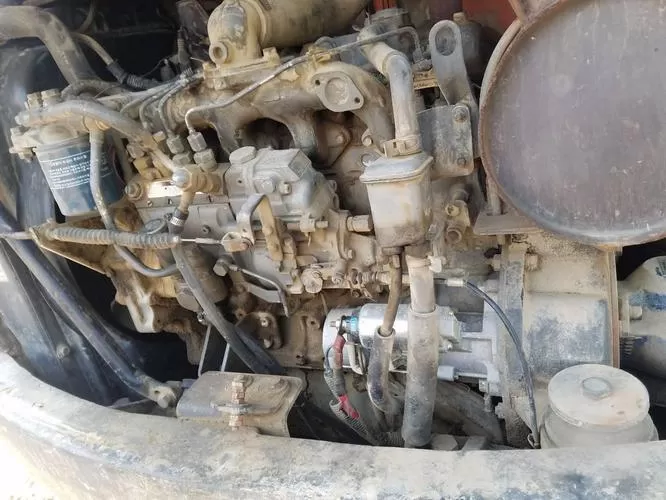
A drop in winter temperatures affects construction vehicle engines in several key ways:
1.1 Increased Starting Resistance
In low-temperature environments, engine oil viscosity increases significantly, and lubricant fluidity deteriorates, resulting in increased resistance to crankshaft rotation. Statistics indicate that when the temperature drops from 20°C to -10°C, engine starting resistance can increase by approximately 1.5 to 2 times.
1.2 Reduced Battery Performance
At low temperatures, the rate of chemical reactions within the battery slows down, leading to a marked decline in capacity. When the temperature drops below 0°C, battery capacity may decrease by 20% to 30%; at -20°C, capacity may drop by more than 40%.
1.3 Poor Fuel Atomization
At low temperatures, the viscosity of diesel fuel increases, resulting in poorer atomization and uneven mixing with air. This leads to incomplete combustion and makes starting the engine difficult.
1.4 Lowered Temperature at the End of Compression
Although cold air is denser, the temperature within the cylinder at the end of the compression stroke drops significantly, making it difficult to reach the auto-ignition temperature of diesel fuel (approximately 330–350°C).
2.1 Battery Inspection and Maintenance
Voltage Check:
Use a multimeter to check the battery voltage prior to starting.
Normal voltage should be above 12.4V (for 12V systems) or above 24.8V (for 24V systems).
If the voltage falls more than 20% below the standard value, the battery should be recharged or replaced before use.
Electrolyte Management:
Check the electrolyte level; it should be 10–15 mm above the top of the battery plates.
Check the electrolyte specific gravity; when fully charged, it should be between 1.26 and 1.28 (at 25°C).
Promptly replenish with distilled water; adding tap water or river water is strictly prohibited.
Terminal Maintenance:
Clean any oxidation from the battery terminals and apply petroleum jelly or a specialized protective grease.
Ensure that all connections are secure to prevent loose connections, which can lead to excessive voltage drop.
2.2 Cooling System Inspection
Antifreeze Check:
Before the onset of winter, the antifreeze must be replaced with a type that meets the requirements for the local minimum temperature.
The freezing point of the antifreeze should be at least 10°C lower than the lowest anticipated local ambient temperature.
Check the antifreeze level; it should be positioned between the "MIN" and "MAX" marks on the expansion tank.
Radiator Maintenance:
Clean any debris, dust, or insect residue from the radiator surface.
Inspect the cooling lines for any signs of leakage.
2.3 Fuel System Inspection
Fuel Grade Selection:
Select the appropriate diesel fuel grade based on the local minimum ambient temperature.
Generally, select a diesel fuel with a pour point (freezing point) that is 5–10°C lower than the ambient temperature.
For example: Grade 0 diesel is suitable for temperatures above 4°C; Grade -10 is suitable for temperatures above -5°C; and Grade -20 is suitable for temperatures above -14°C.
Fuel-Water Separator Drainage:
Regularly drain any accumulated water from the fuel-water separator.
This prevents the water from freezing and clogging the fuel lines.
Fuel Filter Inspection:
Inspect the fuel filter and replace it as necessary.
Ensure a smooth and uninterrupted fuel supply.
2.4 Lubrication System Inspection
Engine Oil Selection and Replacement:
In winter, use low-viscosity engine oil, such as 5W-40 or 10W-40.
The lower the number preceding the "W," the better the oil's low-temperature fluidity.
Check the engine oil level; it should be positioned between the upper and lower marks on the dipstick.
Preheating Device Inspection:
Check the operational status of the glow plugs (electric heating plugs).
The preheating indicator light should illuminate and extinguish normally.
Replace any damaged glow plugs as necessary.
3.1 Preheating Operation
Mandatory Preheating:
When the ambient temperature is below 5°C, preheating is mandatory before starting.
Turn on the ignition switch and wait for the preheating indicator light to extinguish (approximately 3–15 seconds).
Some newer equipment models are equipped with a coolant preheating function, which should be activated in advance.
Auxiliary Preheating Measures (for Severe Cold Regions):
Use external heating equipment to preheat the underside of the engine and the oil pan.
Flame preheaters or electric heating blankets may be used.
It is strictly forbidden to use an open flame to directly heat the oil pan.
3.2 Starting Operation Guidelines
Single-Attempt Starting Duration:
Each starting attempt should not exceed 20 seconds.
The interval between consecutive starting attempts should be no less than 2 minutes.
If three starting attempts fail, identify the underlying cause; avoid continuously forcing the start.
Post-Start Operation:
Once successfully started, allow the engine to run at idle speed.
It is strictly forbidden to immediately operate at high RPM or engage in load-bearing work.
3.3 Troubleshooting Starting Failures
Common Fault Diagnosis:
①. Starter motor does not turn: Check the battery charge level, starting circuit, and starter relay.
②. Starter motor turns, but the engine does not start: Check the fuel supply, preheating system, and compression pressure.
③. Engine stalls after starting: Check the fuel quality, air intake system, and idle speed settings.
4.1 Warm-up Duration Guidelines
Correlation between Ambient Temperature and Warm-up Duration:
|
Ambient temperature |
Recommended warm-up time |
Oil pressure requirements |
|
0℃~5℃ |
3-5 minutes |
≥0.1MPa |
|
-10℃~0℃ |
5-8 minutes |
≥0.15MPa |
|
-20℃~-10℃ |
8-12 minutes |
≥0.2MPa |
|
-20℃or below |
12-15 minutes |
≥0.2MPa |
4.2 Warm-up Procedure
Idle Operation Phase:
Maintain the engine at idle speed (700–900 rpm).
Monitor dashboard parameters: oil pressure, coolant temperature, voltage, and engine speed.
Check for any abnormal noises, vibrations, or unusual exhaust odors.
Gradual Warm-up Operation:
Once the coolant temperature exceeds 40°C, gradually increase the engine speed to a medium range (1200–1500 rpm).
Strictly prohibit high-load operations before the coolant temperature has risen sufficiently.
Operate the hydraulic system at low speed to ensure thorough circulation of the hydraulic fluid.
4.3 Indicators of Warm-up Completion
Target Criteria:
Coolant temperature reaches 60°C or higher.
Engine oil temperature reaches 40°C or higher.
Hydraulic oil temperature reaches 30°C or higher.
Engine runs smoothly with no abnormal noises.
Exhaust color is normal, with no excessive white or black smoke.
5.1 Key Points for Fuel Management
Preventing Fuel Waxing:
When operating in extremely cold regions, utilize a fuel heating device.
Regularly clean the fuel filter to prevent clogging caused by wax deposits.
Add a low-temperature flow improver (anti-wax additive) if necessary.
Fuel Storage Management:
Ensure proper thermal insulation for fuel storage tanks.
Prevent moisture from contaminating the fuel.
Regularly drain accumulated water from the bottom of the fuel storage tank.
5.2 Lubricant and Grease Management
Selection of Winter Lubricants and Greases:
|
Lubrication parts |
Summer oil |
Oil for winter |
|
Engine oil |
15W-40 |
5W-40 / 10W-40 |
|
hydraulic oil |
L-HM46 |
L-HM32 or special low-temperature hydraulic oil |
|
Gear oil |
GL-5 85W-90 |
GL-5 75W-90 |
|
grease |
No. 2 lithium-based grease |
No. 1 or No. 0 low temperature grease |
Important Notes:
Always replace the engine oil filter whenever changing the engine oil.
After changing the hydraulic fluid, ensure the system is thoroughly bled to remove air.
Apply grease to all lubrication points according to the prescribed maintenance schedule.
6.1 Severely Cold Regions (Below -25°C)
Additional Preparatory Measures:
Equip the engine with a coolant heater (block heater).
Utilize a battery insulation box or heating jacket.
Equip a flame preheating starting device.
Use low-pour-point diesel fuel (No. -35 or No. -50).
Operating Procedure:
①. Activate the heating device 2–4 hours in advance.
②. Verify that the coolant temperature has reached the required level for starting.
③. Start the engine following the standard procedure and allow it to warm up thoroughly.
6.2 High-Altitude and Cold Regions
Precautions:
In high-altitude regions, the air is thin, resulting in lower final compression pressure.
Appropriately extend the warm-up duration.
Check the operating status of the turbocharger.
Ensure the air filter is clean.
7.1 Routine Shutdown
Pre-shutdown Procedures:
After completing operations, run the engine at idle speed for 3–5 minutes to allow it to cool down gradually.
Wait until the coolant temperature drops below 80°C before shutting off the engine.
Avoid sudden shutdowns while the engine is hot, as this can cause thermal shock.
7.2 Long-Term Storage
Preparation for Storage:
Thoroughly clean the equipment, paying special attention to the engine compartment.
Drain the coolant completely or replace it with long-life antifreeze.
Remove the battery and store it in a warm, dry location; recharge it periodically.
Fill the fuel tank to capacity to prevent moisture condensation.
Periodically start and run the engine (once a week) for 15–20 minutes each time.
8.1 Difficulty Starting
Analysis of Fault Causes:
|
Fault phenomenon |
Possible reasons |
processing method |
|
The starter motor does not turn |
Battery depletion, loose wiring, faulty starter switch |
Charging, tightening wiring, and inspecting switches. |
|
Weak start |
Battery aging, starter motor failure |
Replace the battery and repair the motor. |
|
The engine starts normally but won't start. |
No fuel, preheating failure, insufficient compression |
Check the oil passages, preheating system, and valve clearance. |
|
After starting the car, it emitted white smoke and then stalled. |
Diesel fuel contains water, fuel supply is not smooth |
Drain water and clean oil passages |
8.2 Abnormalities After Starting
Excessive White Smoke:
Causes: Water contamination in fuel, low cylinder temperature, poor fuel atomization.
Remedy: Replace the fuel, allow the engine to warm up fully, check the fuel injectors.
Blue Smoke:
Causes: Burning engine oil, poor turbocharger sealing.
Remedy: Monitor oil consumption, inspect and repair the turbocharger.
Abnormal Noises:
Causes: Engine oil not reaching lubrication points, slipping drive belts, abnormal noise from the hydraulic pump.
Remedy: Check engine oil pressure, adjust belt tension, inspect the hydraulic system.
9.1 Enhanced Winter Maintenance Items
Daily Checks:
Battery voltage and electrolyte level.
Engine oil level.
Antifreeze/coolant level.
Fuel level and quality.
Weekly Checks:
Pre-heating system functional test.
Air filter cleanliness.
Drive belt tension.
Checks for fluid leaks at various components.
Monthly Maintenance:
In-depth battery inspection and charging.
Engine oil quality analysis.
Fuel filter inspection.
Cooling system cleaning and inspection.
9.2 Key Points for Seasonal Maintenance
Before Winter:
Switch to winter-grade engine oil.
Check and replace antifreeze/coolant.
Inspect the preheating system.
Clean the engine compartment.
After Winter (Entering Spring):
Check the engine oil for signs of emulsification.
Clean the fuel system.
Inspect all rubber components for signs of aging/deterioration.
Switch back to standard-grade lubricants.
10.1 Operational Safety
Before starting the engine, verify that no personnel are in the immediate vicinity; sound the horn to provide a warning.
Strictly prohibit the use of open flames to heat the oil pan or fuel tank.
Ensure adequate ventilation to prevent carbon monoxide poisoning.
Regularly inspect the exhaust system to prevent exhaust gas leaks.
10.2 Protective Measures
Operators must wear appropriate cold-weather protective gear.
Ensure fire-extinguishing equipment is readily available.
Be thoroughly familiar with emergency shutdown procedures.
Maintain comprehensive records of equipment operation.
Managing engine startup during the winter season is a critical aspect of heavy equipment maintenance. By implementing scientific preheating procedures, adhering to standardized startup protocols, selecting appropriate lubricants, and conducting systematic routine maintenance, it is possible to effectively prevent cold-weather starting difficulties, ensure efficient equipment operation, reduce repair costs, and extend the overall service life of the machinery.

