
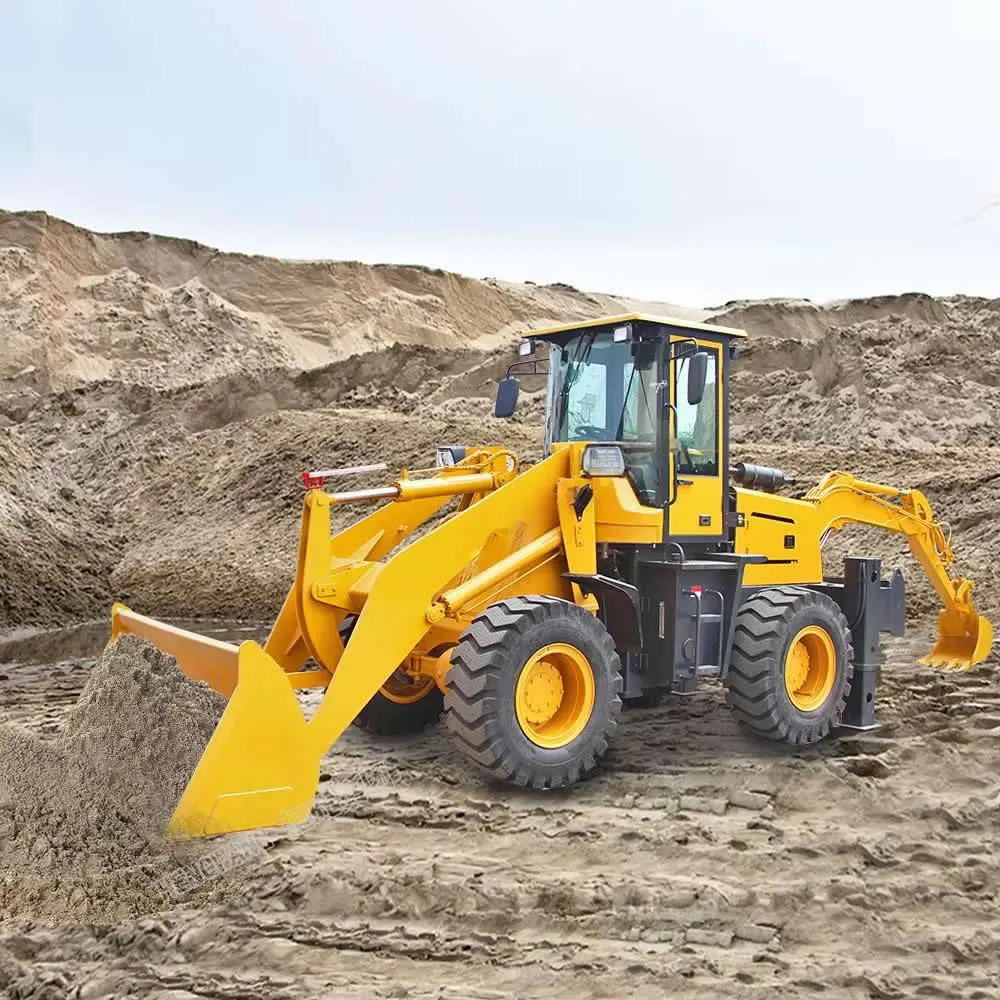
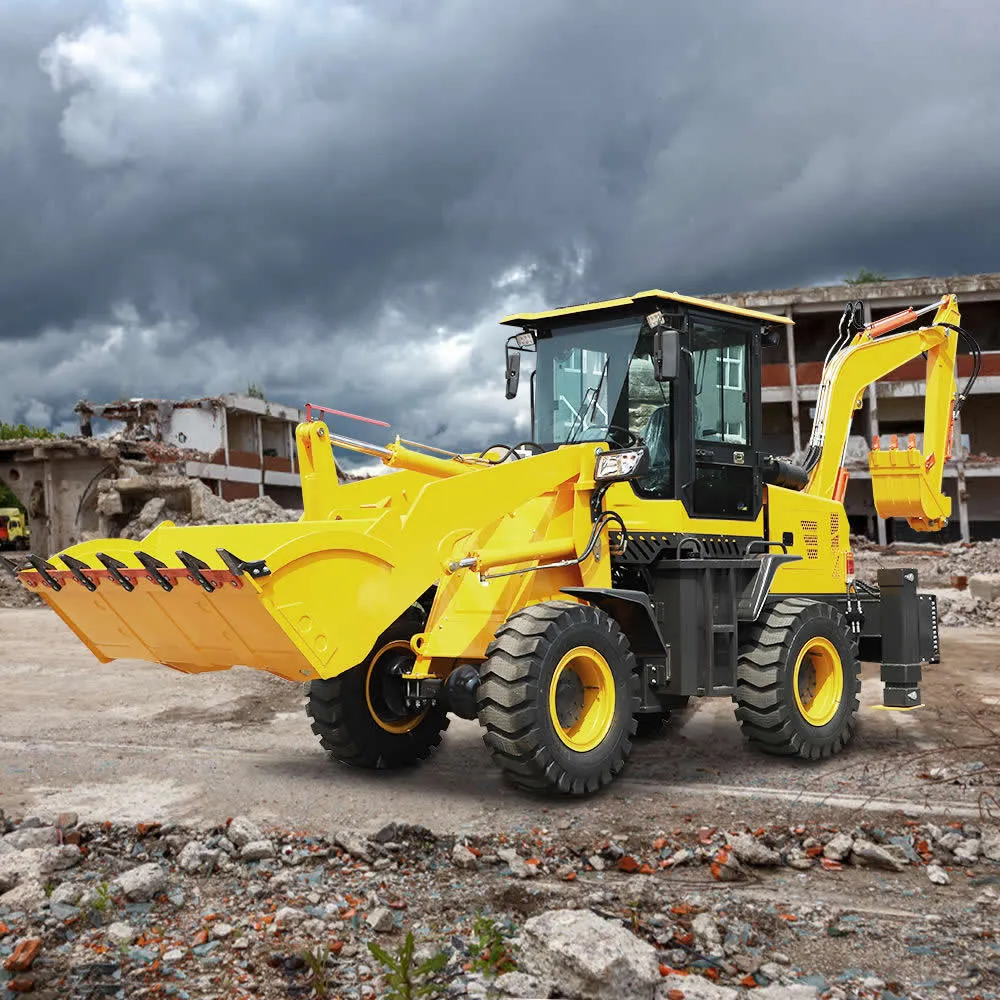
Wheel loaders are wheeled construction machines that efficiently load loose materials such as soil, sand, and stone using a hydraulic boom and bucket. Widely used in construction, mining, and logistics, they are characterized by powerful performance, flexible operation, and intensive maintenance requirements. Therefore, understanding the common faults that can occur during wheel loader operation and mastering on-site maintenance methods are crucial for ensuring normal operation and extending the service life of the equipment. This article will analyze common faults based on the working characteristics of wheel loaders, mainly including engine faults, hydraulic system faults, transmission system faults, and electrical system faults, and provide corresponding on-site maintenance solutions.
1.1 Common Fault Symptoms
Engine failure is one of the most common problems in wheel loaders. Engine problems may include difficulty starting, insufficient power, and overheating. Common causes include fuel system problems, clogged air filters, and cooling system malfunctions.
Difficulty starting or inability to start
Engine running unevenly or slow acceleration
Engine overheating or abnormally high temperature
1.2 Maintenance Steps
When encountering engine failure, first check the fuel system to ensure sufficient and uncontaminated fuel. If the fuel quality is poor, replace the fuel immediately. Also, check if the air filter is clogged and clean or replace the filter element regularly. If the engine overheats, check the coolant level and the working condition of the cooling system, ensuring the radiator is not blocked.
Check and replace fuel, clean the air filter
Check the cooling system and replenish coolant
Check the starting system and battery charge, charge or replace the battery if necessary
|
Fault symptoms |
root cause |
On-site handling steps |
|
The water temperature gauge is out of range and steam is escaping. |
Insufficient coolant, water pump failure, radiator blockage, thermostat stuck. |
①Immediately stop the machine; do not open the cover! Wait until the temperature drops below 60°C before operating again; ②Check the expansion tank level; if below the MIN line, add the same type of coolant; ③Check the radiator surface for dirt or catkins; clean with a high-pressure air gun; ④Touch the temperature difference between the upper and lower water pipes. If there is no temperature difference, the thermostat is not open and needs to be replaced. |
|
Frequent coolant consumption |
Leaks in water pipes, water tanks, and cylinder head gaskets |
①After shutdown, check all hose joints, the bottom of the water tank, and the cylinder head mating surfaces for any signs of leakage; ②If there is no external leakage, suspect a damaged cylinder head gasket. Check the exhaust pipe for white water vapor (coolant entering the combustion chamber); ③Temporary solution: Add sealant, but a major overhaul must be performed at the factory as soon as possible. |
Preventive Suggestions: Check the coolant concentration every 250 hours (freezing point ≤ -25°C), use special construction machinery coolant, and do not use tap water.
2.1 Common Fault Symptoms
The hydraulic system is one of the key components in wheel loader operation. Components such as the hydraulic pump, hydraulic oil lines, and valve assembly may experience leaks, insufficient pressure, or hydraulic oil contamination. Hydraulic system failures often lead to unresponsive operation or inability to complete the intended tasks. Excavation, lifting, and steering operations are sluggish or impossible to complete.
Hydraulic oil leakage or abnormal oil temperature.
Abnormal noise from the hydraulic pump or motor.
2.2 Maintenance Steps
When a hydraulic system malfunctions, first check the hydraulic oil level and quality, and add or replace the hydraulic oil if necessary. If the hydraulic oil is found to be contaminated or deteriorated, the hydraulic oil tank needs to be cleaned and new hydraulic oil replaced. For abnormal noise from the hydraulic pump and motor, check whether the oil circuit is unobstructed and whether the oil pressure is normal.
Check the hydraulic oil level and quality, and replace the oil promptly.
Check the hydraulic pipelines for leaks and repair the leaks.
Check the working condition of the hydraulic pump and motor, and clean and replace them if necessary.
|
Fault phenomenon |
Main causes |
On-site maintenance methods |
|
Slow or weak boom lifting |
Internal leakage in the multi-way valve, wear of the oil pump, and insufficient system pressure. |
①Use a hydraulic pressure tester to check the system pressure (normal value 16–20 MPa); ②If the pressure is too low, adjust the safety valve or replace the valve core; ③Check if the boom cylinder piston seal is worn, and disassemble and replace it if necessary. |
|
Automatic boom lowering |
Internal leakage in the hydraulic cylinder, excessive valve stem clearance in the multi-way valve |
①After stopping the machine, raise the boom to its highest position, turn off the engine, and observe the descent within 5 minutes; ②If the descent is greater than 20mm, the cylinder sealing assembly needs to be replaced; ③Check the wear of the multi-way valve stem; if it exceeds the limit, replace the entire valve. |
|
Hydraulic oil temperature too high (>80°C ) |
Insufficient oil level, clogged radiator, prolonged overload |
①Immediately stop the machine to allow it to cool down, and check the oil level to the center line of the oil window; ②Clean the dust and oil stains from the radiator surface; ③Check the cooling fan belt tension and motor operation. |
|
Abnormal noises and vibrations in the hydraulic system |
Air gets into the system, oil suction filter becomes clogged. |
①At idle speed, repeatedly operate the boom and bucket to their extreme positions 3-5 times to purge air; ②Replace the suction filter element, ensuring the filter screen is undamaged; ③Check the suction pipe joint for looseness and air leaks. |
On-site emergency techniques: If there is no hydraulic tester, the "stethoscope method" can be used – touch the hydraulic pipeline with a metal rod to identify the source of abnormal noise. If a "hissing" sound is heard at a certain point, it is a leak point, which can be temporarily sealed with quick-drying sealant, and then thoroughly repaired after the machine is shut down.
3.1 Common Fault Symptoms
The transmission system of the loader, including the gearbox, drive shaft, and other components, may experience wear or damage. Transmission system failures often lead to the vehicle being unable to move forward or backward normally, affecting work efficiency.
Transmission slipping or unable to shift gears
Vehicle unable to accelerate or decelerate normally
Unstable power output
3.2 Maintenance Steps
When encountering a transmission system failure, first check whether the gearbox oil is sufficient and whether the oil quality is acceptable. If the oil is deteriorated, replace the oil promptly. For drive shaft failures, check whether the bearings and connecting parts are worn or loose. If there is abnormal noise, it may be due to gear wear or loose transmission chain, and inspection and adjustment should be performed.
Check and replace the gearbox oil.
Check the wear of the drive shaft, bearings, and gears.
Adjust the transmission system to ensure its normal operation.
|
Fault type |
Key reason |
On-site maintenance operation |
|
Steering is heavy (even heavier when the engine is warm ). |
Hydraulic oil viscosity decreased, priority valve pressure was insufficient, and oil pump was worn. |
①Check the hydraulic fluid level; add fluid if insufficient. ②Turn the steering wheel fully to the left and right 10 times at idle speed to purge air from the system.③If the system is still heavy, check if the priority valve spring is broken (standard stiffness 78 N/mm); replace the spring or valve assembly if necessary. |
|
The steering wheel cannot be centered. |
The centering spring is broken and the linkage shaft is deformed. |
①Remove the steering wheel cover and check if the steering gear internal springs are broken; ②If broken, replace them immediately and do not continue working; ③Check if the steering gear paddle shifters have come loose, and replace the entire steering gear assembly if necessary. |
|
The steering feels endless ( effortless even at its limit ). |
Excessive clearance between rotor and stator, valve core wear |
①After stopping the machine, disassemble and inspect the internal oil distribution plate of the steering gear; ②If scratches or wear are found, the entire steering gear assembly must be replaced; it cannot be repaired. |
In the field without spare parts, the "two-person collaboration method" can be used – one person holds the steering wheel steady, and the other person gently taps the steering gear housing. If it instantly becomes easy to steer again, it indicates that the valve core is stuck. WD-40 lubricant can be sprayed and the operation repeated to alleviate the problem.
4.1 Common Fault Symptoms
Electrical system faults are also relatively common in loaders, especially in the battery, circuits, and sensors. Electrical system faults can lead to problems such as engine failure to start, lighting failure, and abnormal alarm systems.
Engine fails to start or starts with difficulty
Insufficient battery power or open circuit
Incorrect instrument panel display or warning lights illuminated
4.2 Maintenance Steps
When an electrical system fault occurs, first check the battery level and whether the circuit is functioning correctly. If the battery power is insufficient, charge or replace the battery promptly. If it is a circuit problem, check the circuit connections to ensure that the wiring is secure. If a sensor fault occurs, check the circuit connectors and the working status of the sensor.
Check the battery level and charge it promptly
Check circuit connectors to ensure good contact
Replace damaged sensors or electrical components
|
Fault phenomenon |
Cause Analysis |
Maintenance measures |
|
Unable to start, or starting weakly. |
Battery depletion, wiring corrosion, and worn starter motor carbon brushes |
①Use a multimeter to check the voltage (it should be ≥24V); ②Clean the oxide from the battery terminals and apply petroleum jelly to prevent rust; ③If the voltage is normal but the starting is slow, check the wear of the starter relay and carbon brushes. |
|
Weakness in walking or failure of a certain gear. |
Clutch friction plate sintering, oil circuit leakage, transmission pump failure |
①Check the transmission oil pressure for each gear (normal range 1.1–1.5 MPa); ②If only first gear lacks power, the clutch seal ring for that gear is damaged and needs to be disassembled, inspected, and replaced; ③Do not shift gears while the gear is faulty to avoid further damage. |
|
Overheating of the wheels and aging of the rubber. |
Brake drag, wheel hub bearing lack of lubrication |
①After stopping the machine, touch the wheel hub temperature. If it is >80°C, check the return of the brake caliper. ②Every 200 hours, apply grease to the wheel hub bearings using a grease gun. |
|
Maintenance Project |
Normal operating conditions |
Harsh working conditions (mines, dust, high temperatures) |
|
Engine oil and filter |
500 hours |
150–200 hours |
|
Hydraulic oil and filter element |
1000 hours |
500 hours |
|
Air filter |
250 hours or 3 months |
Check every 50 hours, replace every 100 hours. |
|
Coolant |
2000 hours or 2 years |
1000-hour inspection, 1500-hour replacement |
|
Steering fluid |
1000 hours |
500 hours |
|
Track /Tire Pressure |
Before daily homework |
Inspections per shift |
Note: All replacement parts must be original or certified matching parts. Inferior filter elements can cause particulate contamination in the system, leading to cascading failures.
Common faults in loaders during operation include engine faults, hydraulic system faults, transmission system faults, and electrical system faults. As a maintenance engineer, understanding the causes of these faults and on-site maintenance methods is crucial to ensuring the efficient operation of the loader. Regular inspection and maintenance of the equipment, and timely detection and handling of potential problems, can effectively reduce the failure rate and improve the working efficiency and service life of the loader.

