
A sugarcane loader is a wheeled agricultural machine equipped with a hydraulic claw arm that can grab, lift, and rotate harvested sugarcane onto transport vehicles, efficiently replacing manual labor and widely used in major sugarcane-producing areas. After daily operation, ensuring proper lubrication and maintenance of the drive system and chains is crucial for extending the equipment's lifespan. The following will detail how to effectively lubricate and maintain the drive system and chains of a sugarcane loader after daily operation.
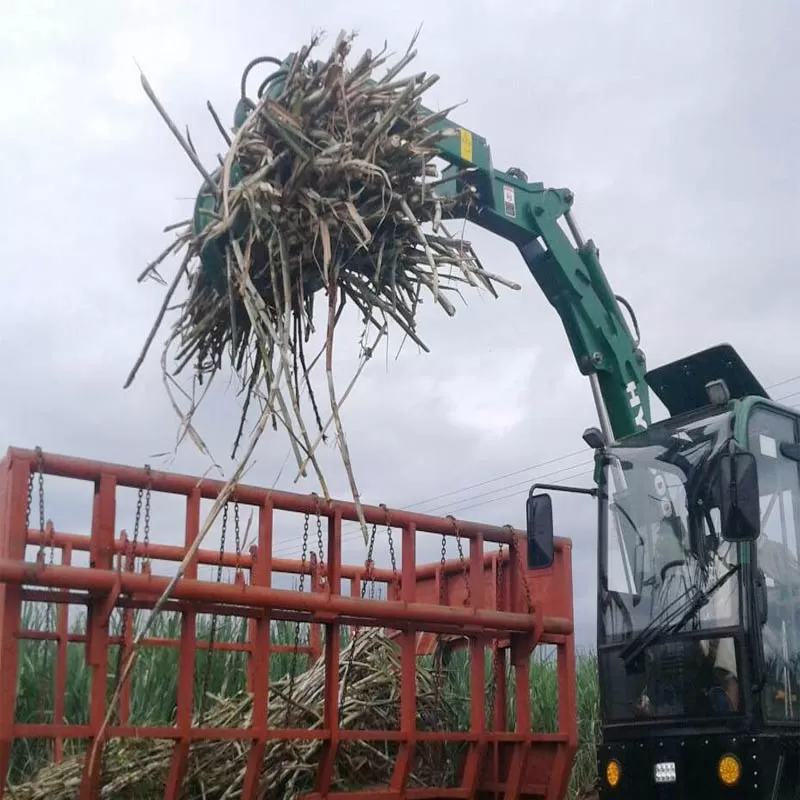
The drive system is one of the core components of the sugarcane loader, and its normal operation is crucial for the overall efficiency and stability of the vehicle. The operating environment is often high in humidity, dust, and heavy loads, making the chains and drive system prone to accumulating sugarcane residue, mud, and sugar residue. Maintaining the drive system after each operation is an important measure to prevent malfunctions and ensure the equipment's durability.
1.1 Checking Fluid Level and Quality
First, check if the fluid level in the drive system is within the normal range. For hydraulic drive systems, the quality and cleanliness of the fluid directly affect its performance. Use filtered, high-quality hydraulic oil and ensure the fluid is at the appropriate level. If the fluid is discolored, cloudy, or contains sediment, it needs to be replaced promptly.
1.2 Replacing Drive Oil Filter
The oil filter is an important component that protects the hydraulic system from contamination. During each routine maintenance, check the condition of the oil filter and replace it as needed. A dirty or damaged oil filter can lead to fluid contamination, affecting the efficiency and reliability of the drive system.
1.3 Cleaning Radiator and Cooling System
The drive system generates heat during operation, and the radiator and cooling system help maintain the drive system's normal temperature. During maintenance, regularly check the radiator for blockages and ensure proper airflow. If necessary, clean the radiator with compressed air or a soft brush to prevent overheating due to poor heat dissipation.
1.4 Key Points for Drive System Maintenance
Sugarcane loaders often use a hydraulic-mechanical composite drive system, where power is transmitted from the engine → hydraulic torque converter → gearbox → drive axle → wheels. The following aspects require special attention after operation:
|
Maintenance Project |
Operating Procedures |
Precautions |
|
Hydraulic oil check |
Check the fuel level in the tank. The fuel should be clear, without emulsification, and without a burnt smell. |
If the oil is dark brown or contains metal shavings, it must be replaced immediately and pump/valve wear should be checked. |
|
Cooling system |
Clean sugarcane leaves and dust from the radiator surface to ensure unobstructed airflow. |
In high-temperature environments, the coolant temperature should not exceed 95°C, otherwise it will easily lead to aging of the seals. |
|
Drive shaft and universal joint |
Wipe away the oil stains and check the cross shaft for looseness or abnormal noise. |
Extreme pressure lithium grease(such as NLGI 2) should be added every 300 hours. |
Note: Hydraulic system seals are a common point of failure. Do not replace specialized hydraulic oil with ordinary engine oil, otherwise it will lead to valve spool sticking and pressure fluctuations.

The chain is an important part of the sugarcane loader's transmission system. Maintaining good chain lubrication effectively reduces wear, extends chain life, and ensures work efficiency.
2.1 Checking Chain Tension
After each use, first check if the chain tension is appropriate. A chain that is too tight will increase the load, leading to uneven operation of the drive system, while a chain that is too loose may cause slippage or excessive wear. Adjust the chain tension as needed to ensure it is in the proper state.
2.2 Lubricating the Chain
Regular lubrication of the chain is an effective way to reduce friction and extend chain life. Select a suitable chain lubricant and ensure that the lubricant evenly covers all parts of the chain. During lubrication, avoid excessive application to prevent excess oil from contaminating other parts of the equipment.
2.3 Cleaning the Chain and Checking for Wear
During each maintenance, thoroughly clean the dirt and impurities from the chain. Use a special cleaning agent or diesel fuel to clean the chain, then wipe it clean with a clean cloth. In addition, check the degree of chain wear. If significant wear or damage is found, the chain should be replaced promptly.
2.4 Regularly Checking Chain Alignment and Parallelism
After prolonged use, the chain may become misaligned or non-parallel, which can lead to abnormal wear and reduced drive efficiency. Regularly check the chain alignment and parallelism, and adjust as needed to ensure smooth chain operation.
2.5 Chain Lubrication Procedure
|
project |
Recommended lubricant |
Lubrication method |
cycle |
|
Chain rollers and pins |
High-temperature anti-wear lithium-based grease(such as Kunlun LZ-3, Shell Alvania RL3) |
Inject grease through the lubrication nozzle using a grease gun until the old grease is squeezed out. |
Each assignment takes 2–3 hours. |
|
Sprocket tooth surface |
Synthetic high-temperature chain oils(such as Mobil SHC 634, temperature resistance ≥280℃) |
Spray evenly onto the meshing area |
After daily homework |
2.6 Recommended Guidelines for Chain or Sprocket Replacement
|
Damage type |
Judgment criteria |
Recommendations for handling |
|
Pin wear |
Wear amount ≥ 2.5mm |
Replace the entire chain, not just the pins. |
|
Link elongation |
Elongation > 3% (measured on 10 chain links, original length L, measured length L', ΔL/L > 0.03) |
Stop the machine immediately and replace the faulty chain to prevent chain breakage. |
|
Chain plate crack |
Cracks or deformation visible to the naked eye |
Welding repairs are prohibited; replacement is required. |
|
Sprocket tooth wear |
blunting of tooth cusps and tooth root concavity >1.5mm |
Gears and chains mustbe replaced in pairs; it is forbidden to use a new chain with an old gear. |
|
Maintenance level |
Homework duration |
Core content |
|
Shift maintenance |
Every 2–3 hours |
Clean and lubricate the chain, check the tension, and tighten the bolts. |
|
Level 1 maintenance |
Every 100 hours |
Replace the hydraulic oil filter, check the drive axle oil level, and correct the coaxiality of the drive shaft. |
|
Level 2 maintenance |
Every 300 hours |
Change engine oil and filter, thoroughly inspect chain wear, and lubricate all bearings. |
|
Annual overhaul |
Every 1500 hours or after the sugarcane season ends |
Disassemble and clean the chain, test the hardness of the sprocket teeth, replace all seals, and perform dynamic balancing. |
Reminder: After the sugarcane season, the chain should be removed, cleaned with diesel fuel, coated with anti-rust grease, and stored in a dry and ventilated place, avoiding exposure to direct sunlight or rain.
Lubrication and maintenance of the drive system and chains are crucial parts of the daily maintenance of sugarcane loaders. Only through meticulous maintenance can the equipment be kept in optimal working condition and malfunctions be prevented. Maintenance engineers need to regularly check the oil quality, clean the radiator, adjust the chain tension, lubricate the chains, and inspect their wear to ensure the stability and efficiency of the sugarcane loader during high-intensity operations.
Through the above daily maintenance and upkeep measures, the service life of the sugarcane loader can be effectively extended, and its efficient performance in various operations can be maintained.

