
Skid steer loaders are a "small but versatile" piece of construction equipment. They are compact, flexible to operate, and can be fitted with various attachments, making them widely used in earthmoving, landscaping, municipal engineering, and agriculture. Despite the variety of models, their basic structure and maintenance logic are similar. As a frontline maintenance engineer, I will combine years of field experience and industry inspection standards to provide a detailed explanation of the daily inspection and maintenance procedures for skid steer loaders after daily operation, helping to reduce malfunctions, extend lifespan, and improve safety.
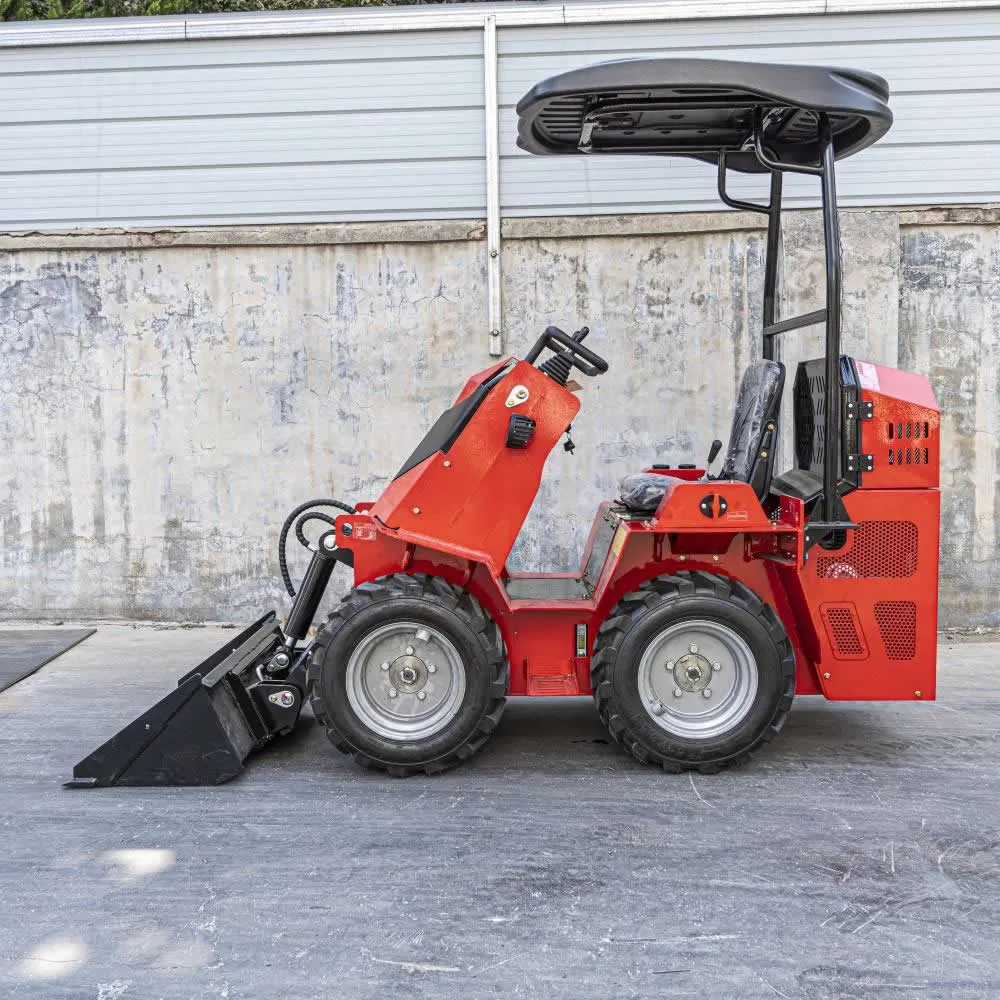
In the high-intensity operating environment of construction sites, skid steer loaders are frequently subjected to various "attacks" from dust, cement, soil, and gravel. These external factors accelerate component wear, cause poor lubrication, and even pose safety hazards. Therefore, daily inspection and maintenance are not only a basic requirement for safe production but also a crucial factor in extending equipment lifespan.
Daily inspections should be performed after the end of each day's work or before the start of the next day's work. The entire process can be broadly divided into four parts: visual inspection, fluid level and leak check, functional testing, and cleaning and lubrication.
2.1 Visual Inspection (Machine as a whole and key components)
After the end of the day's work, first perform a general visual inspection, like a "health check," checking each item from the outside in, and from top to bottom:
Check for any obvious deformation, cracks, or weld failures in the machine's structure;
Check the wear, cuts, and tire pressure of the tires or tracks (for tracked machines, check the track tension and any damage);
Check if the bucket and attachment connections are secure, without looseness or misalignment;
Check for any trapped stones or foreign objects around the chassis, steering wheel, and steering mechanism;
Check that the safety protection devices, glass, and mirrors around the cab are intact.
2.2 Fluid Level and Leakage Check
Checking all fluid levels is a top priority in daily maintenance. The engine hood or inspection cover needs to be opened for item-by-item verification:
Engine oil: Check if the oil level is within the normal range and if the color has turned black or shows signs of emulsification;
Hydraulic oil: Check the fluid level and observe for any oil leaks in the pipelines and connectors;
Coolant: Ensure sufficient coolant and that the cooling system is free of blockages or leaks;
Fuel and water separator: Drain accumulated water from the separator (if equipped) to prevent fuel system contamination;
Add cleaning agents, washing fluids, and other auxiliary fluids.
These fluid level checks are usually performed every 10 hours or before and after daily operation, and are the first line of defense against mechanical failures.
2.3 Functional and Safety System Testing
After checking the appearance and fluids, the core functional systems of the equipment must be tested item by item:
Start the engine and check if the starting is smooth and the idle speed is stable;
Full-range travel system test, including checking if forward and reverse movement, steering, and braking are responsive;
Hydraulic system operation check, ensuring that the lifting arm and tilting movements are normal and without abnormal noise or lag;
Safety system check, such as seat lock, emergency stop, alarm prompts, and lights;
Check instrument panel fault codes and warning lights.
This part focuses on detecting mechanical response performance under no-load conditions to identify potential faults early.
2.4 Cleaning and Lubrication
Dust and dirt easily accumulate at wear points and heat dissipation areas. Therefore:
Use compressed air or a soft brush to clean dust from the cooler, radiator fins, and engine compartment;
Clean stones and debris from the wheel hubs, rollers, and inside the tracks;
Lubricate all hinges, shovel arm pins, and hydraulic cylinder pivot points to ensure proper grease coverage;
Clean the operator's cab floor and control levers to prevent dust accumulation and jamming in the operating area.
Lubrication is a key step in ensuring smooth movement of the skid steer loader's joints and preventing metal-on-metal wear. 2.5 The following checks can be performed in sequence:
|
Inspection items |
Key points of operation |
Standard/Threshold |
Risk Warning |
|
Hydraulic system leakage |
Visually inspect all hoses, joints, valve blocks, and cylinder seals. |
No oil droplets, no wet marks; leakage rate ≤ 0.5 drops/hour (GB/T 25694-2021) |
Leakage causes a drop in pressure, affecting the accuracy of the actuator's operation, and can eventually damage the pump body. |
|
Oil level |
Check engine oil, hydraulic fluid, and coolant (when the engine is cold). |
The hydraulic fluid level should be between the "MIN" and "MAX" marks; the engine oil level should not be lower than the lower limit mark. |
Insufficient hydraulic oil can easily cause cavitation, and insufficient coolant can lead to engine overheating. |
|
Filter status |
Check the instrument panel service indicator lights; check for water accumulation in the fuel-water separator. |
Empty any water that has accumulated in the cup (every 8–10 hours); replace the air filter when the clog indicator light comes on. |
Moisture entering the fuel system can corrode the fuel injectors; dust entering the cylinder accelerates wear. |
|
Tire /Track Condition |
Tires: air pressure 0.27–0.31 MPa; Tracks: tension 25–35 mm sag |
Air pressure deviation >10% affects steering stability; loose tracks easily lead to derailment. |
Chongqing is prone to rain and mud, causing mud to easily accumulate on tracks, requiring daily cleaning of the track clearances. |
|
Structural component fastening and corrosion |
Inspect the frame hinge pins, lifting arm links, and attachment connectors. |
No looseness, no obvious rust spots; the torque of key bolts conforms to the manual. |
In humid environments, corrosion at the hinge points will cause abnormal noises and increased clearances, affecting operational safety. |
Daily checks are primarily "local defenses," while deeper, periodic service is required as operating time increases:
|
Maintenance Project |
cycle |
Operation content |
Brand Reference |
|
Daily Lubrication |
Every 8–10 hours |
Apply lithium-based grease (NLGI Grade 2) to: lift arm pivot, Bob-Tach system, steering linkage, and cylinder pins. |
Bobcat, John Deere |
|
Fuel filter replacement |
Every 500 hours |
Replace the original filter element; drain the water accumulated in the oil-water separator. |
Cat, Bobcat |
|
Hydraulic oil filter replacement |
Every 1000 hours |
Replace the hydraulic oil filter and return oil filter simultaneously; disassemble using specialized tools. |
Cat, John Deere |
|
Hydraulic oil change |
Every 1000 hours |
Drain the old oil and clean the inside of the oil tank; add ISO VG 46 anti-wear hydraulic oil. |
Bobcat, GB/T 25694-2021 |
|
Engine oil change |
Every 250 hours (standard) |
Change the engine oil and oil filter; use API CK-4 or ACEA E9 grade oil. |
Cat, John Deere |
|
Coolant replacement |
Every 2 years or 4000 hours |
Use premixed glycol-based antifreeze (pH 8–10); flush the waterways. |
Bobcat, Cat |
|
Valve clearance adjustment |
Every 1000 hours |
Measure and adjust when the machine is cold; use a feeler gauge for inspection. |
Cat, John Deere |
Pressure must be released: Before any maintenance, the hydraulic system must be depressurized to zero pressure (operate the attachment to its limit position and shut down for 5 minutes);
Warning signs must be posted: Hang a "Do Not Start" warning sign during maintenance and disconnect the negative terminal of the battery;
Operation under pressure is prohibited: It is strictly forbidden to disassemble pipelines or tighten joints when the hydraulic system is under pressure;
Use of non-standard lubricants is prohibited: Hydraulic oil, engine oil, and coolant must be original manufacturer or equivalent certified products (such as Cat ET, Bobcat Premium);
Cleaning filter elements by hand is prohibited: Use special tools and wear safety glasses and oil-resistant gloves.
|
category |
Recommended items |
illustrate |
|
Lubrication tools |
Electric grease gun (with pressure gauge) |
Precisely control the amount of grease injected to avoid over-injection. |
|
Detection tools |
Digital infrared thermometer |
Quickly identify abnormal temperature rise in hydraulic pumps and motors |
|
Cleaning tools |
High-pressure air gun (≤6 bar) |
Clean the radiator and filter surface to remove dust, but avoid washing with water. |
|
Rust prevention products |
3M™ Scotchgard™ Rust Inhibitor Spray |
Strong adhesion, water erosion resistant, suitable for Chongqing environment |
|
Consumables |
Genuine hydraulic oil filter (such as Cat 128-8450), lithium-based grease (NLGI 2). |
Mixing non-standard parts is strictly prohibited, as it will affect the system's lifespan. |
Treating the skid steer loader as a "mobile precision machine," rather than a rough piece of iron, is the first step in improving on-site efficiency. While daily checks and maintenance may seem trivial, they are fundamental to preventing problems, just like a doctor taking daily temperature and checking vital signs. Doing this work properly can significantly reduce failure rates, improve reliability, and most importantly, ensure operational safety.

